
 Summer Camp
 Reading Writing
 Book Club
 Calligraphy
 Creative Writing
 English Speaking
 Handwriting
 Library
 Phonics
 Story Telling
 Art and Craft
 Clay Moulding
 Drawing
 Painting
 Pottery
 Sketching
 Drama Theatre
 Personality Development
 Public Speaking
 Languages
 Arabic
 Chinese
 French
 German
 Hindi
Hindi Italian
 Japanese
 Korean
 Persian
 Portuguese
 Russian
 Spanish
 Turkish
 Uzbek
Uzbek Sports and Fitness
 Aerobics
 Athletics
 Badminton
 Basket Ball
 Chess
Chess Cricket
 Football
 Golf
Golf Gymnastics
 Hulahoop
 Karate
 Martial Arts
 Pickleball
 Rugby
Rugby Skating
 Swimming
 Taekwondo
 Tennis
 Volleyball
 Yoga
Yoga Zumba
Zumba Tuition Classes
 Accounts
 Biology
 Business Studies
 CBSE
CBSE Chemistry
 Commerce
 Economics
 Homework Classes
 IB Board
 IGCSE
IGCSE Mathematics
 Physics
 Psychology
 Science
 Social Studies
 Vedic Maths
 Dance and Music
 Ballet
 Bhangra
 Bharatnatyam
 Bollywood Dance
 Casio
Casio Dandiya and Garba
 Drums
Drums Flute
Flute Guitar
 Harmonium
 Hip Hop
 Jazz
Jazz Kathak
 Keyboard
 Piano
Piano Salsa
Salsa Shlokas
 Sitar
Sitar Tabla
Tabla Ukulele
 Violin
 Vocal
Vocal Play School
 STEM
STEM
 Abacus
 App Development
 Artificial intelligence
 Basic Computer Courses
 Canva
Canva Coding
 Graphic Design
 Lego
Lego Python
 Robotics
 Rubiks Cube
 Scrabble
 Scratch
 Website Development
 Winter Camp
 Workshops
 Diwali Workshop
 Easter
 Ganesh Mahotsav
 Guru Nanak Jayanti Workshop
 Holi
Holi Independence day workshop
 Janmashtami Workshop
 Mothers day
 Navratri Workshops
 Raksha Bandhan workshop
 Ramayana Workshop
 Spring Camp
 Valentines Day Workshops
 Festive
 Daycare
 Cooking and Food
 Spring Camp
 Contests and Competitions
 Special abled
 Republic Day Workshops
 Mela
Mela
 Mela
Mela Cognitive Development
 Mother-Toddler Program
-Jul-03-2026-06-59-25-1926-AM.webp?width=30&height=30&name=Smart_20Skills_20(2)-Jul-03-2026-06-59-25-1926-AM.webp) Smart Skills
Smart Skills
 Financial Literacy
 Mental Wellbeing
 Meditation
 Reiki
Reiki



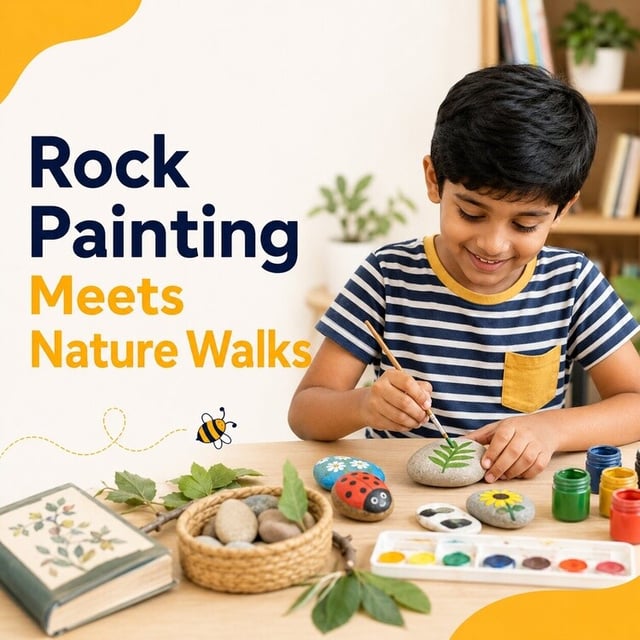
Combining rock collection with painting creates a genuinely satisfying nature-plus-craft activity — the walk builds observation skill, the painting builds creative expression, and the finished rocks offer lasting, displayable results.
Rock painting paired with nature walks combines two genuinely valuable activities — outdoor observation and creative expression — into a single, satisfying project producing lasting, displayable results.
The collection walk
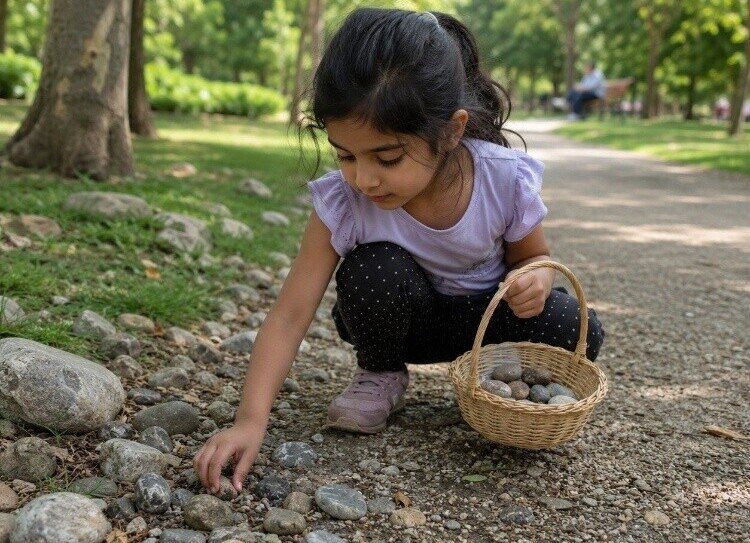
A dedicated walk specifically focused on finding good "canvas" rocks — smooth, reasonably flat, and a size comfortable for small hands — builds observational attention (assessing many rocks to find the right ones) while getting genuine outdoor time and movement.
Preparing rocks for painting
A simple wash and thorough dry before painting ensures better paint adhesion; acrylic paints (widely available and inexpensive) work well and remain vibrant after drying, unlike some other paint types that fade significantly.
Painting project ideas beyond simple decoration
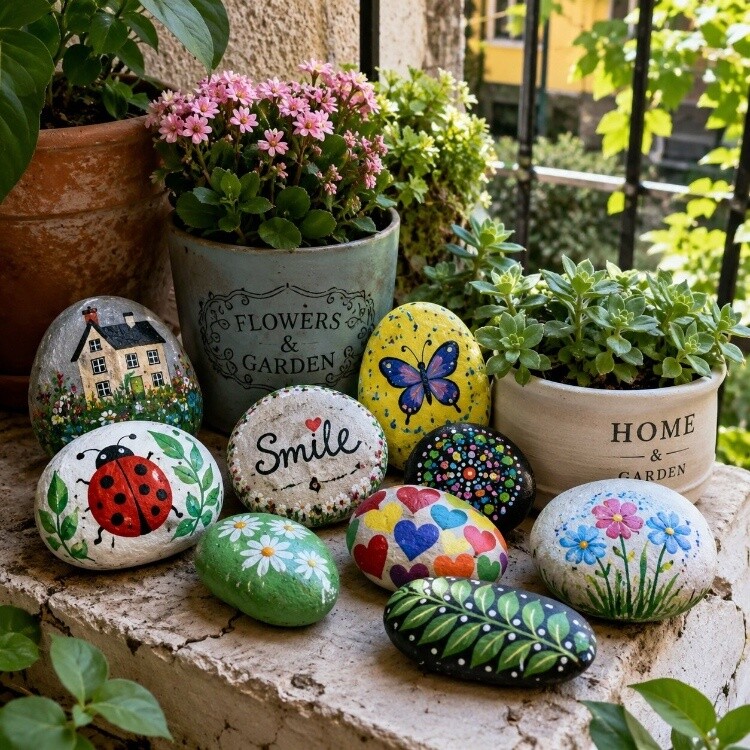
Nature-inspired designs — patterns and images inspired by what was observed on the walk (a bird, a leaf shape, a flower) connects the two activities meaningfully rather than treating them as separate steps.
Rock bugs and creatures — painting rocks as ladybugs, owls, or other simple creatures — a genuinely popular, achievable design format for younger children.
Word and message rocks — simple encouraging words or family names — building early writing practice into the craft.
Mandala and pattern rocks — for older children, more intricate geometric pattern work building fine motor precision and patience.
A garden or balcony rock garden — the finished painted rocks arranged as a small decorative garden feature, giving the project a genuine ongoing home and purpose beyond a one-off craft.
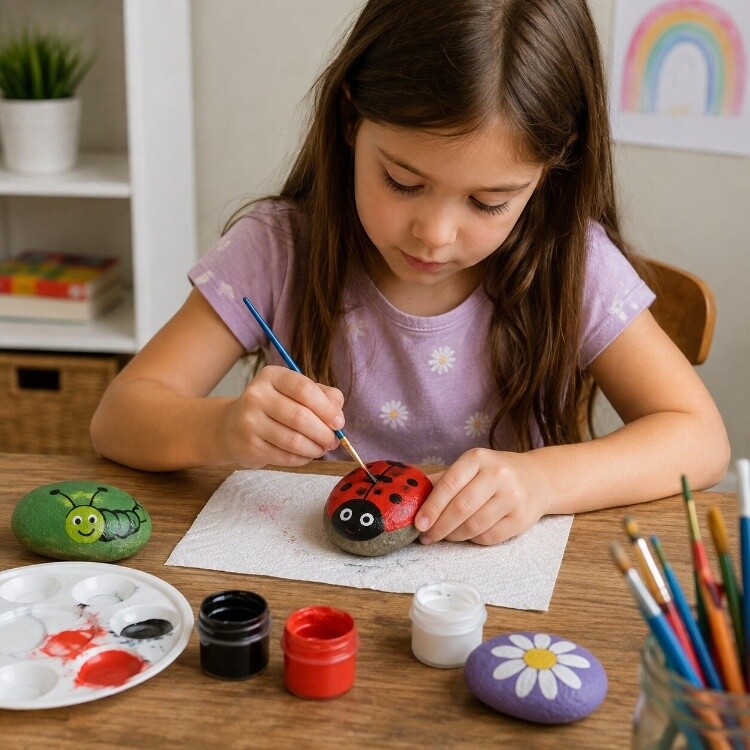
The hide-and-seek extension activity
Painted rocks hidden around a colony or park for other children (siblings, cousins, or a neighbourhood group) to find — sometimes formalised as a "kindness rocks" project where finding a rock comes with an invitation to keep it or re-hide it for someone else — adds a genuinely social, community dimension to the craft.
Why this combination works particularly well developmentally
The walk-and-collect phase builds observational attention and physical activity; the preparation and painting phase builds patience, fine motor skill, and creative decision-making; and the display or hiding phase builds either pride in creation (display) or generosity and community connection (hiding for others) — a single activity touching multiple developmental areas.
Managing the sustainability angle thoughtfully
Taking only loose rocks already displaced from their natural setting (not disturbing riverbeds or removing rocks from protected areas) models basic environmental responsibility alongside the fun — a small but genuine teaching moment about taking only what's appropriate from natural spaces.