
 Summer Camp
 Reading Writing
 Book Club
 Calligraphy
 Creative Writing
 English Speaking
 Handwriting
 Library
 Phonics
 Story Telling
 Art and Craft
 Clay Moulding
 Drawing
 Painting
 Pottery
 Sketching
 Drama Theatre
 Personality Development
 Public Speaking
 Languages
 Arabic
 Chinese
 French
 German
 Hindi
Hindi Italian
 Japanese
 Korean
 Persian
 Portuguese
 Russian
 Spanish
 Turkish
 Uzbek
Uzbek Sports and Fitness
 Aerobics
 Athletics
 Badminton
 Basket Ball
 Chess
Chess Cricket
 Football
 Golf
Golf Gymnastics
 Hulahoop
 Karate
 Martial Arts
 Pickleball
 Rugby
Rugby Skating
 Swimming
 Taekwondo
 Tennis
 Volleyball
 Yoga
Yoga Zumba
Zumba Tuition Classes
 Accounts
 Biology
 Business Studies
 CBSE
CBSE Chemistry
 Commerce
 Economics
 Homework Classes
 IB Board
 IGCSE
IGCSE Mathematics
 Physics
 Psychology
 Science
 Social Studies
 Vedic Maths
 Dance and Music
 Ballet
 Bhangra
 Bharatnatyam
 Bollywood Dance
 Casio
Casio Dandiya and Garba
 Drums
Drums Flute
Flute Guitar
 Harmonium
 Hip Hop
 Jazz
Jazz Kathak
 Keyboard
 Piano
Piano Salsa
Salsa Shlokas
 Sitar
Sitar Tabla
Tabla Ukulele
 Violin
 Vocal
Vocal Play School
 STEM
STEM
 Abacus
 App Development
 Artificial intelligence
 Basic Computer Courses
 Canva
Canva Coding
 Graphic Design
 Lego
Lego Python
 Robotics
 Rubiks Cube
 Scrabble
 Scratch
 Website Development
 Winter Camp
 Workshops
 Diwali Workshop
 Easter
 Ganesh Mahotsav
 Guru Nanak Jayanti Workshop
 Holi
Holi Independence day workshop
 Janmashtami Workshop
 Mothers day
 Navratri Workshops
 Raksha Bandhan workshop
 Ramayana Workshop
 Spring Camp
 Valentines Day Workshops
 Festive
 Daycare
 Cooking and Food
 Spring Camp
 Contests and Competitions
 Special abled
 Republic Day Workshops
 Mela
Mela
 Mela
Mela Cognitive Development
 Mother-Toddler Program
-Jul-03-2026-06-59-25-1926-AM.webp?width=30&height=30&name=Smart_20Skills_20(2)-Jul-03-2026-06-59-25-1926-AM.webp) Smart Skills
Smart Skills
 Financial Literacy
 Mental Wellbeing
 Meditation
 Reiki
Reiki


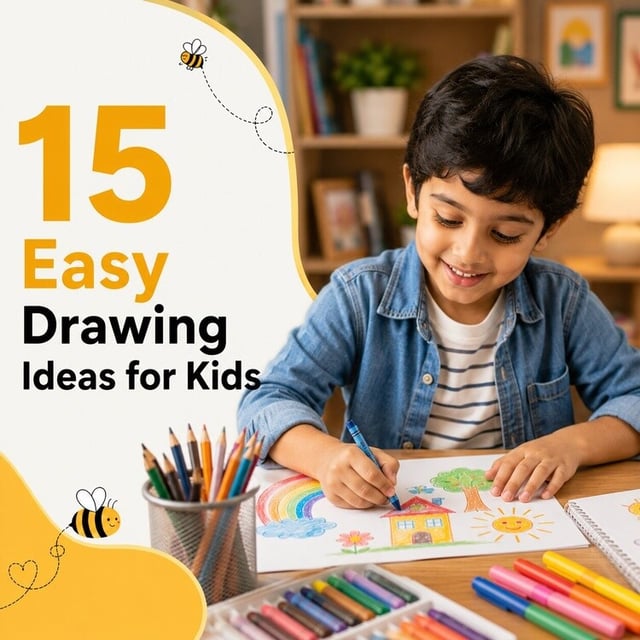
Drawing builds fine motor skills, creative expression, and focus simultaneously — these 15 ideas are chosen for being genuinely achievable for young children, building confidence rather than frustration, with seasonal and festival themes woven throughout.
Drawing is one of the most accessible creative activities available — requiring minimal materials and offering genuine developmental benefit across fine motor skill, creative expression, and sustained focus. These ideas are specifically chosen to be achievable, building confidence rather than the frustration that overly complex drawing prompts can cause.
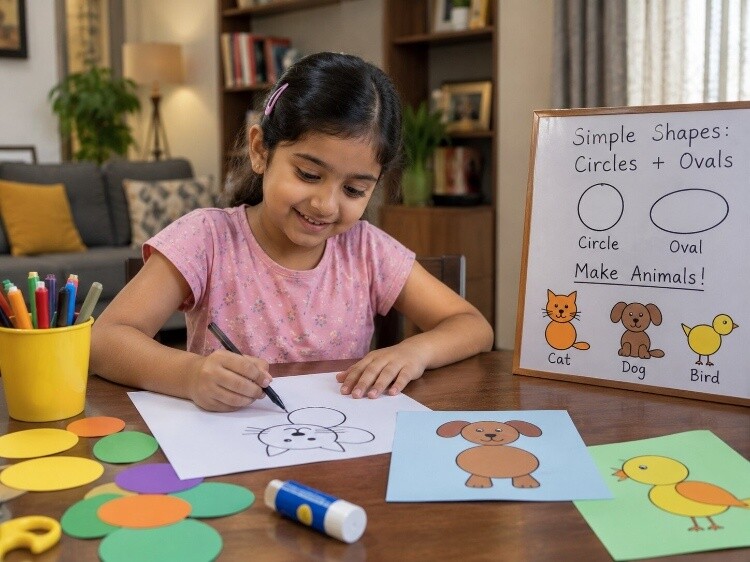
Simple animal shapes built from basic geometric forms
Circles and ovals combined to build a cat, dog, or bird teaches that complex drawings break down into simple, achievable component shapes.
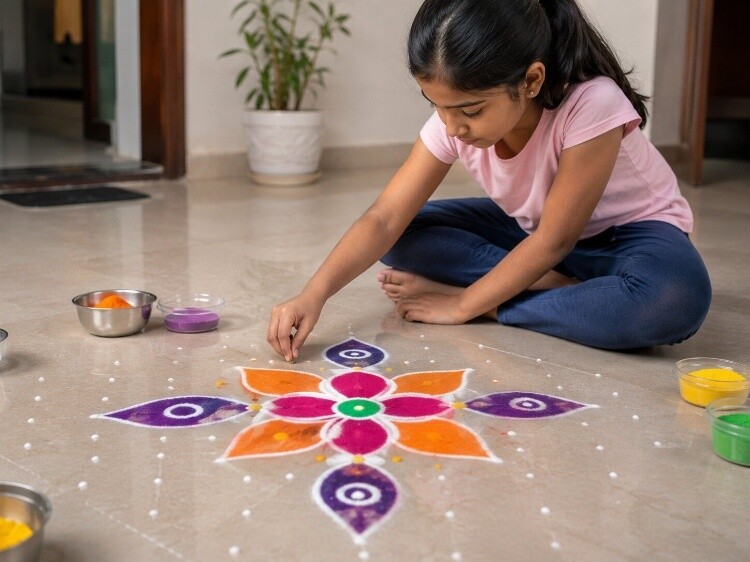
A rangoli pattern using dot-grid guides
Drawing simple rangoli patterns builds symmetry understanding while connecting to a genuinely familiar cultural art form.
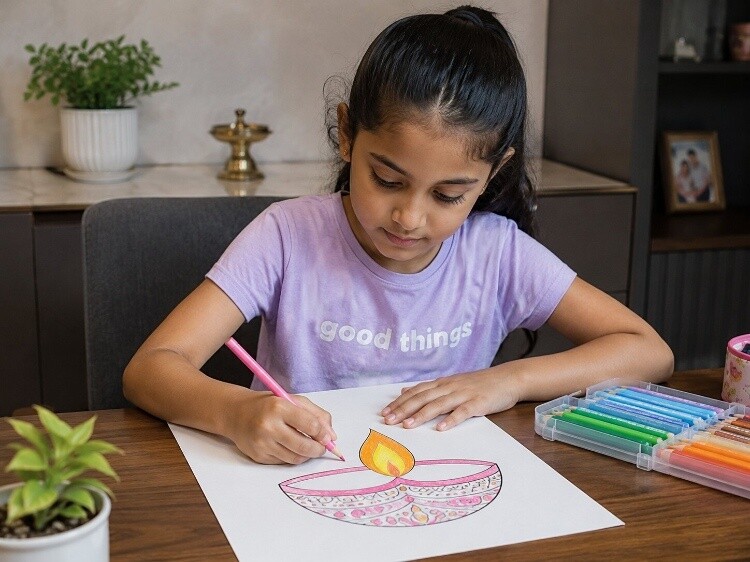
A diya with simple flame and pattern details
A seasonally relevant, achievable subject around Diwali, building confidence through a genuinely recognisable, culturally connected drawing.
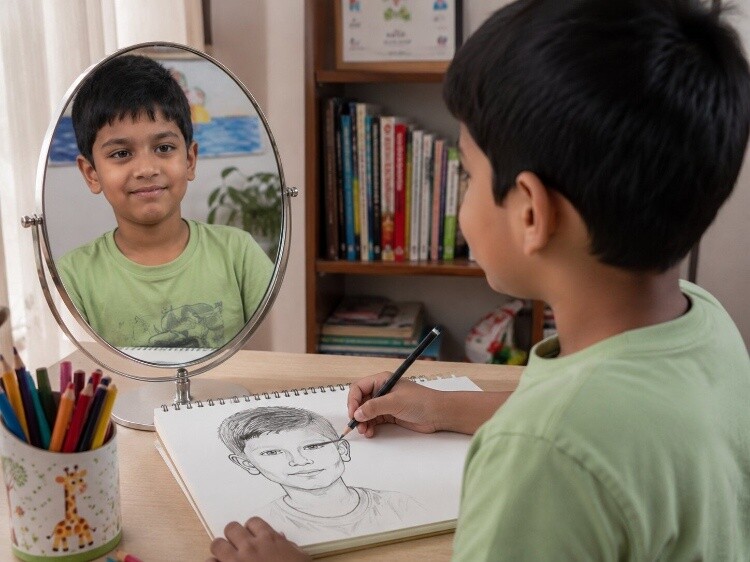
Self-portrait using a mirror
Drawing themselves while looking in a mirror builds observational drawing skill in a genuinely engaging, personally meaningful format.
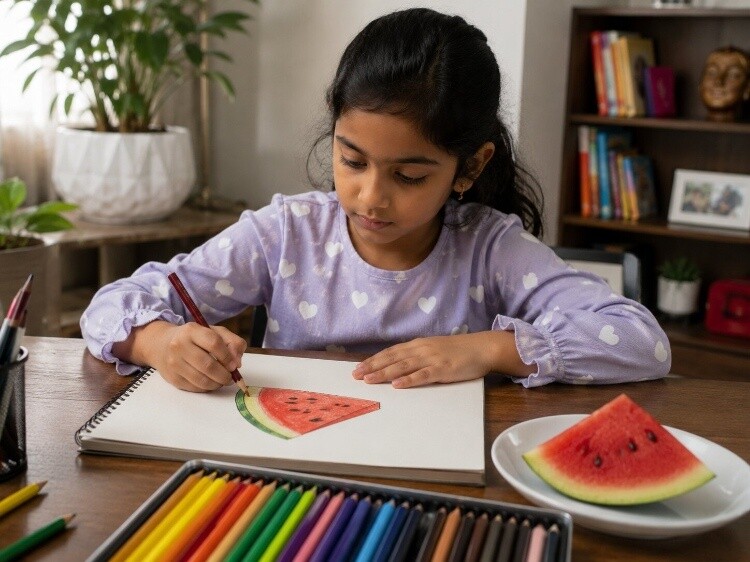
A favourite food item, drawn from observation
Drawing an actual fruit or snack placed in front of them builds observational accuracy alongside creative expression.
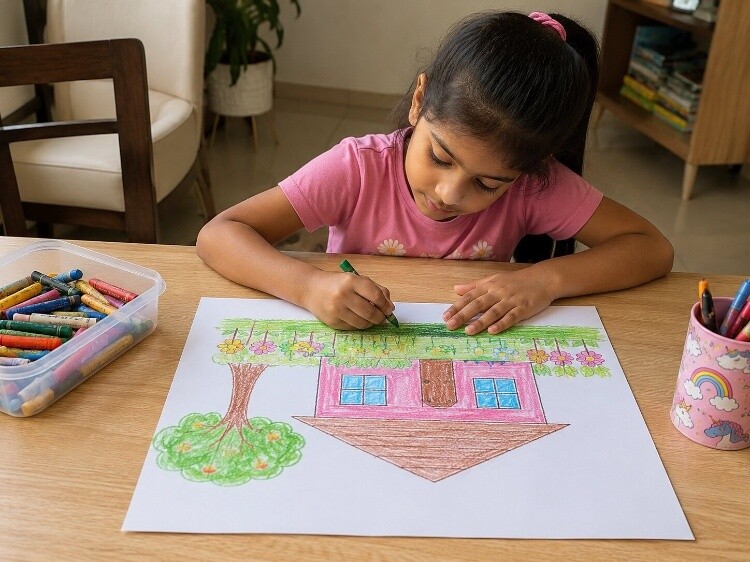
A simple house with a garden
A classic, achievable subject that builds spatial layout thinking within a drawing.
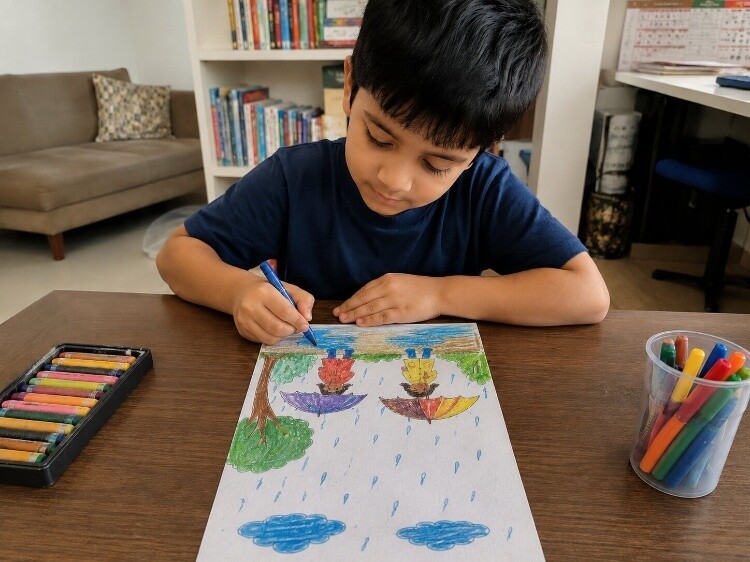
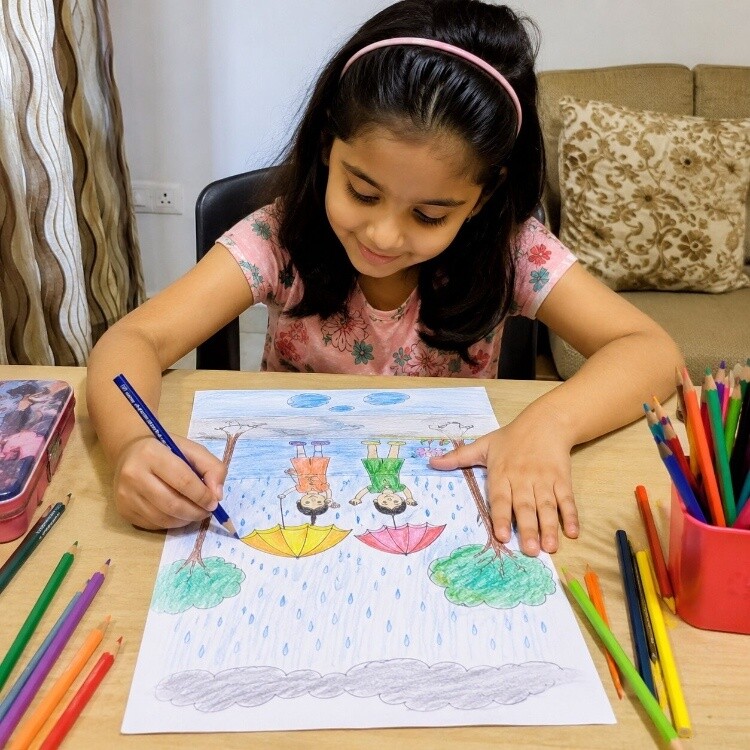
Monsoon scene with umbrellas and rain
A seasonally relevant scene that many children find genuinely enjoyable to draw, given how central monsoon is to Indian childhood experience.
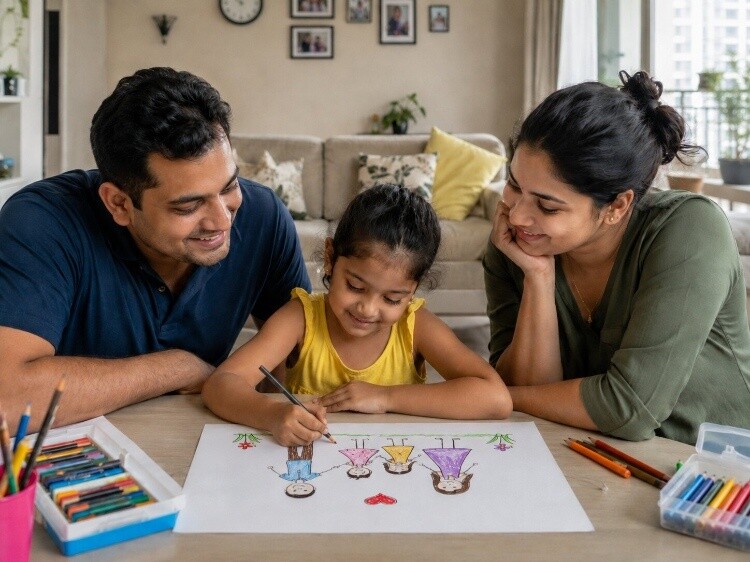
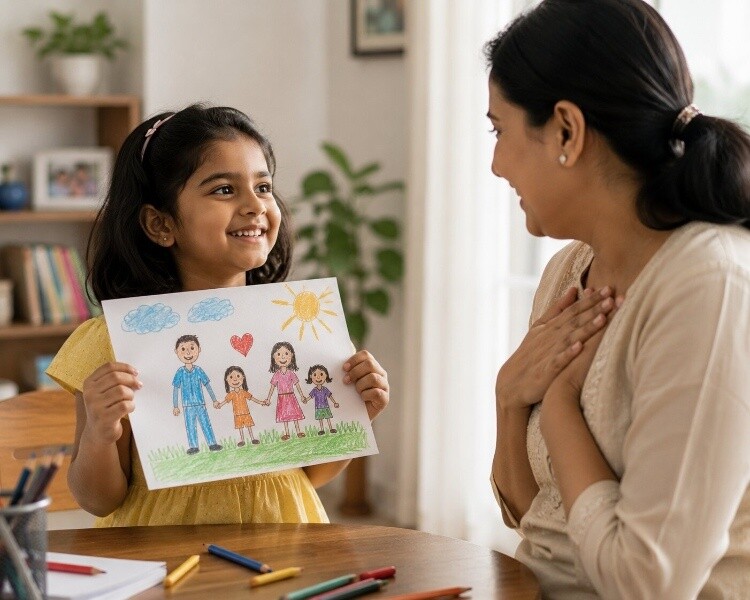
A family portrait, simplified
Drawing family members, even in simple stick-figure-plus-detail style, builds both drawing skill and emotional connection to the subject.
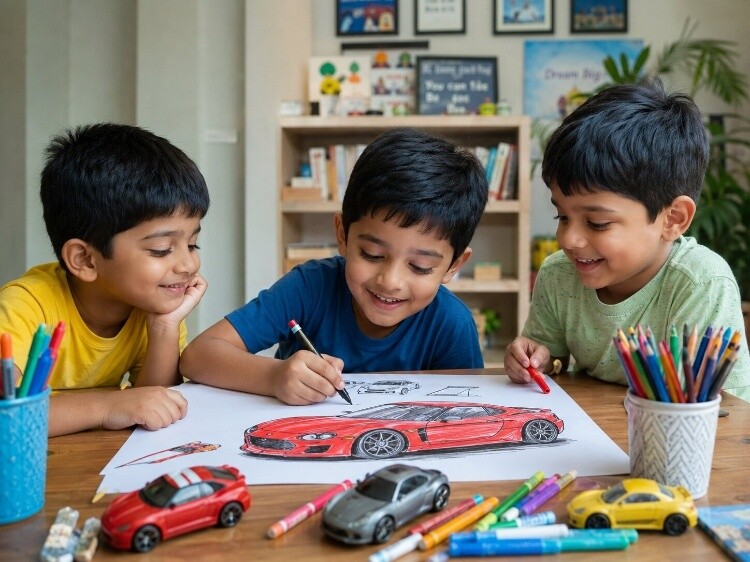
A vehicle they're genuinely interested in
Whether it's a car, an auto-rickshaw, or a train, drawing a genuinely interesting subject maintains motivation better than an arbitrary prompt.
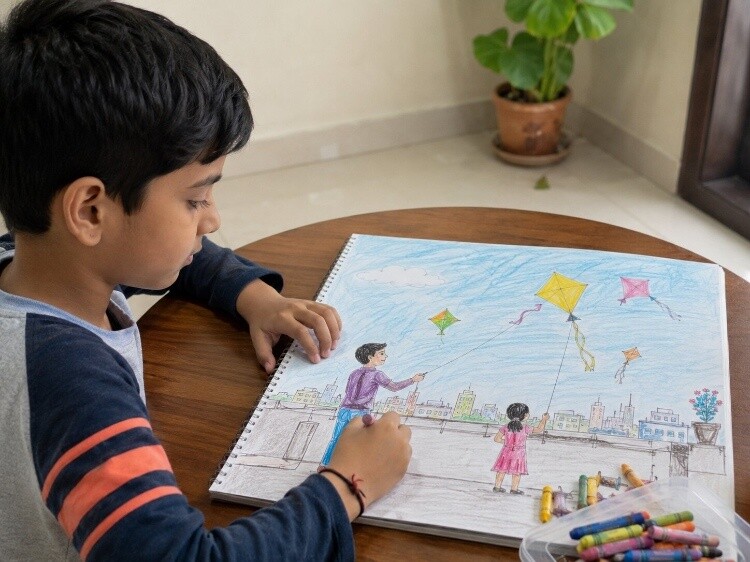
Kite flying scene for Makar Sankranti season
A seasonally relevant, dynamic scene connecting drawing practice to a specific festival tradition.
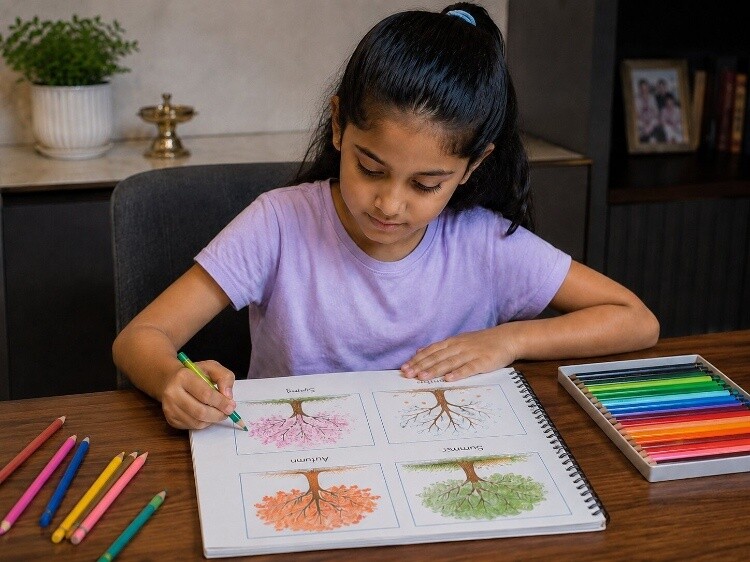
A tree through the seasons (four small drawings)
Drawing the same tree in different seasons builds both observational thinking and an understanding of change over time.
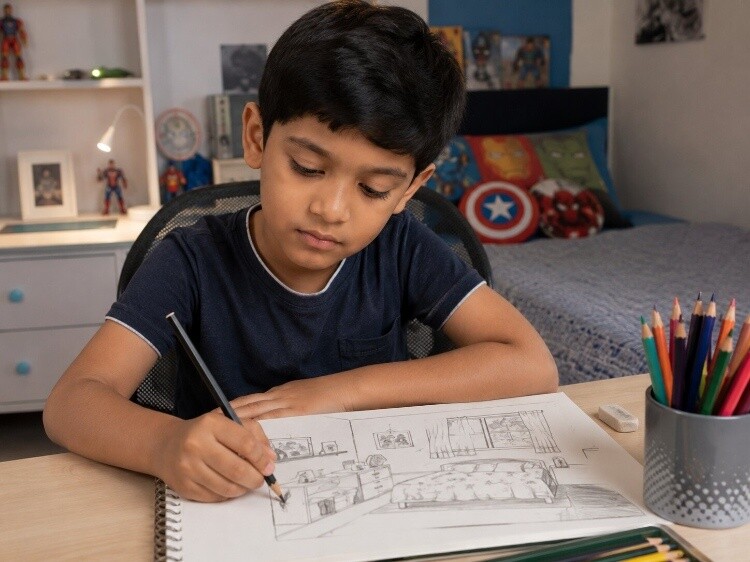
Their own bedroom or a favourite room, from memory
Drawing a genuinely familiar space from memory builds spatial memory and observational recall.
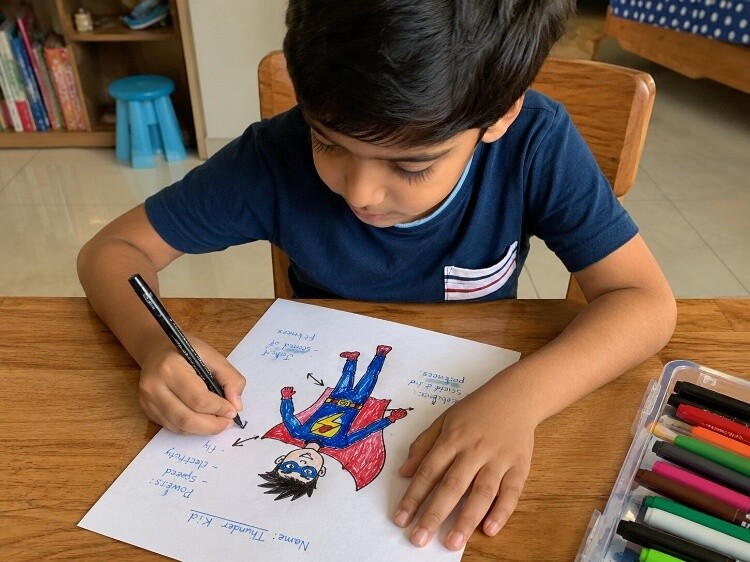
A superhero or character they've invented
Open-ended character design builds creative thinking alongside drawing skill, with genuine motivation from inventing something original.
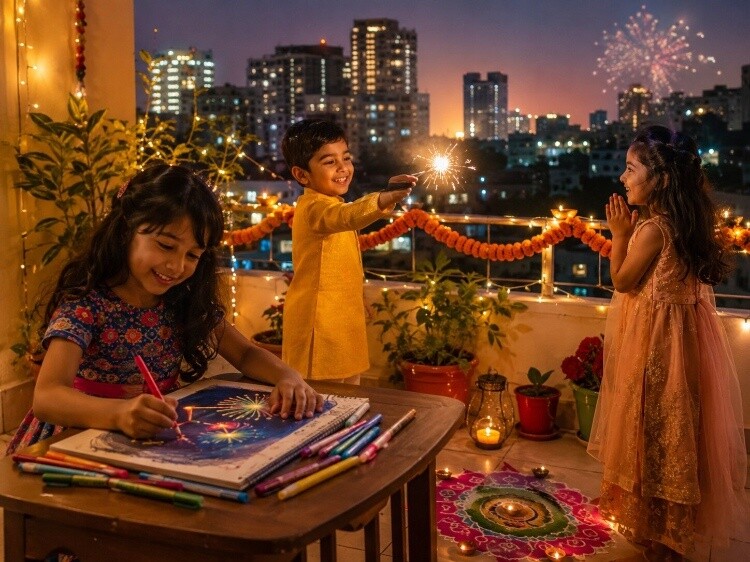
Diwali fireworks or festival lights
A vibrant, colour-focused subject that many children find genuinely exciting to draw, especially with bright colours and dynamic shapes.
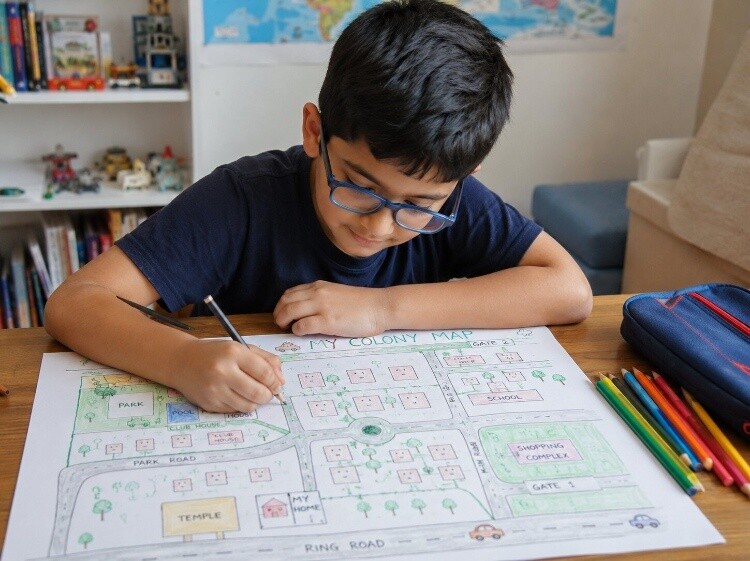
A map of their own colony or neighbourhood
Drawing a simplified map of a genuinely familiar area builds spatial thinking alongside creative drawing, and often produces genuinely interesting, personally meaningful results.
Building confidence through achievable complexity
The common thread across these ideas: starting with genuinely achievable subjects and gradually increasing complexity as confidence builds, rather than starting with ambitious, frustrating subjects that discourage continued interest in drawing.
Avoiding the comparison trap in creative activities
Resisting the urge to compare a child's drawing to "how it should look" or to another child's more skilled work matters enormously for maintaining genuine enjoyment of the activity — the goal at this stage is building comfort and enjoyment with creative expression, not technical mastery.
Extending interest through structured classes, if genuine enthusiasm develops
For children who show sustained genuine interest and enjoyment in drawing, structured art classes can offer more advanced technique development in a supportive group environment, building on the foundation of confidence and enjoyment established through informal home practice.