
 Summer Camp
 Reading Writing
 Book Club
 Calligraphy
 Creative Writing
 English Speaking
 Handwriting
 Library
 Phonics
 Story Telling
 Art and Craft
 Clay Moulding
 Drawing
 Painting
 Pottery
 Sketching
 Drama Theatre
 Personality Development
 Public Speaking
 Languages
 Arabic
 Chinese
 French
 German
 Hindi
Hindi Italian
 Japanese
 Korean
 Persian
 Portuguese
 Russian
 Spanish
 Turkish
 Uzbek
Uzbek Sports and Fitness
 Aerobics
 Athletics
 Badminton
 Basket Ball
 Chess
Chess Cricket
 Football
 Golf
Golf Gymnastics
 Hulahoop
 Karate
 Martial Arts
 Pickleball
 Rugby
Rugby Skating
 Swimming
 Taekwondo
 Tennis
 Volleyball
 Yoga
Yoga Zumba
Zumba Tuition Classes
 Accounts
 Biology
 Business Studies
 CBSE
CBSE Chemistry
 Commerce
 Economics
 Homework Classes
 IB Board
 IGCSE
IGCSE Mathematics
 Physics
 Psychology
 Science
 Social Studies
 Vedic Maths
 Dance and Music
 Ballet
 Bhangra
 Bharatnatyam
 Bollywood Dance
 Casio
Casio Dandiya and Garba
 Drums
Drums Flute
Flute Guitar
 Harmonium
 Hip Hop
 Jazz
Jazz Kathak
 Keyboard
 Piano
Piano Salsa
Salsa Shlokas
 Sitar
Sitar Tabla
Tabla Ukulele
 Violin
 Vocal
Vocal Play School
 STEM
STEM
 Abacus
 App Development
 Artificial intelligence
 Basic Computer Courses
 Canva
Canva Coding
 Graphic Design
 Lego
Lego Python
 Robotics
 Rubiks Cube
 Scrabble
 Scratch
 Website Development
 Winter Camp
 Workshops
 Diwali Workshop
 Easter
 Ganesh Mahotsav
 Guru Nanak Jayanti Workshop
 Holi
Holi Independence day workshop
 Janmashtami Workshop
 Mothers day
 Navratri Workshops
 Raksha Bandhan workshop
 Ramayana Workshop
 Spring Camp
 Valentines Day Workshops
 Festive
 Daycare
 Cooking and Food
 Spring Camp
 Contests and Competitions
 Special abled
 Republic Day Workshops
 Mela
Mela
 Mela
Mela Cognitive Development
 Mother-Toddler Program
-Jul-03-2026-06-59-25-1926-AM.webp?width=30&height=30&name=Smart_20Skills_20(2)-Jul-03-2026-06-59-25-1926-AM.webp) Smart Skills
Smart Skills
 Financial Literacy
 Mental Wellbeing
 Meditation
 Reiki
Reiki




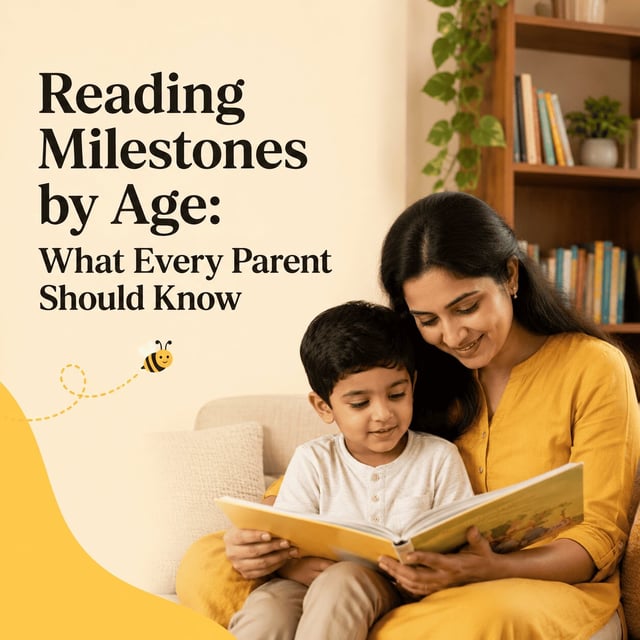
Reading development varies more than most parents expect — a wide range of "normal" exists at every age. Here's a realistic milestone guide by age, plus how to tell the difference between a normal variation and something worth checking.
Every parent eventually compares notes — at a birthday party, in a school WhatsApp group, or simply overhearing another parent mention their child is "already reading chapter books." If your child isn't there yet, it's easy to spiral into worry. Most of the time, that worry isn't necessary.
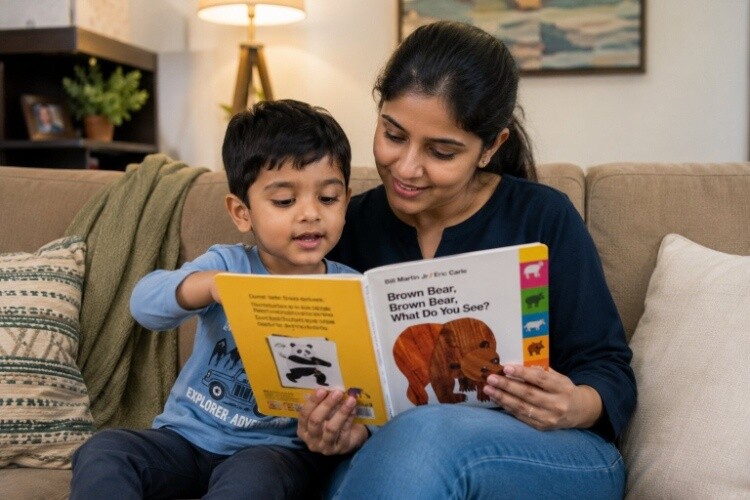
Age 2-3: pre-reading foundations
No actual reading yet. What matters at this stage: enjoying being read to, recognising familiar books by their cover, and starting to understand that print carries meaning (pointing at words, "reading" a familiar book from memory).
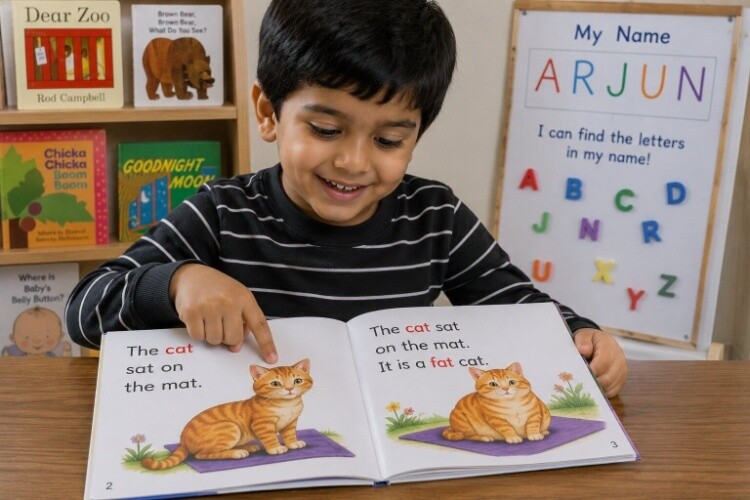
Age 3-4: print awareness
Recognising some letters, especially in their own name. Understanding books are read left to right, top to bottom (in English). Enjoying rhyming and repetitive stories.
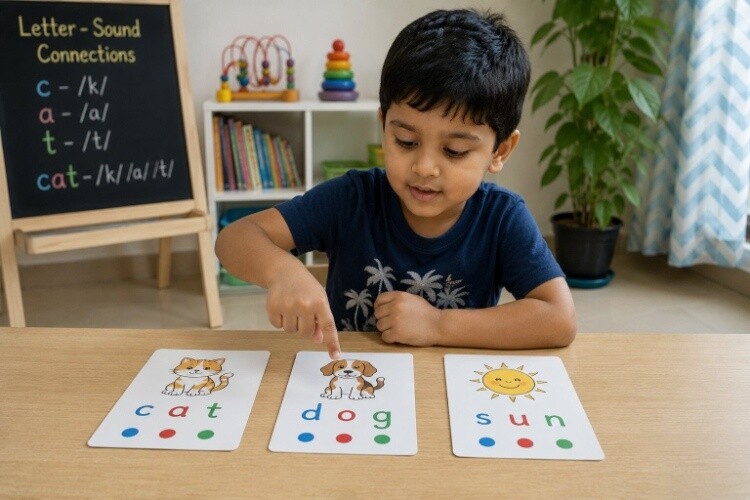
Age 4-5: letter-sound connections
Recognising most or all alphabet letters and their sounds. Beginning to sound out very simple three-letter words (cat, dog, sun). Wide variation here is completely normal — some children this age can already read simple sentences, others are still learning letter sounds.
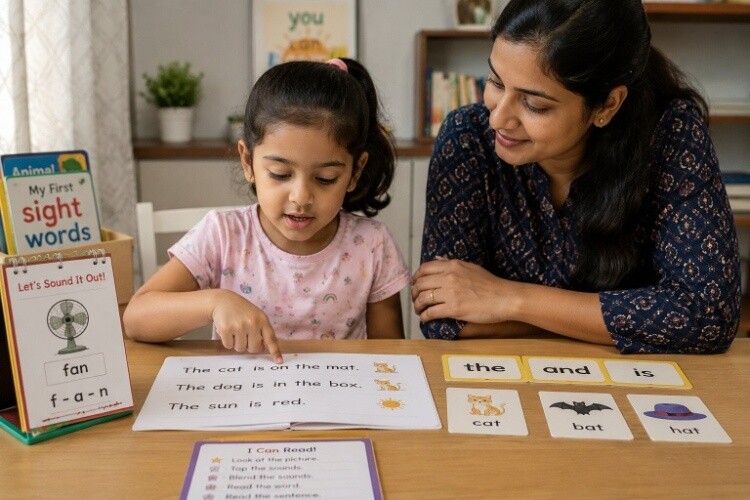
Age 5-6: early decoding
Sounding out simple words with growing confidence. Recognising a small set of common "sight words" (the, and, is) that don't follow regular phonics rules. Reading very simple sentences, often slowly and with effort.
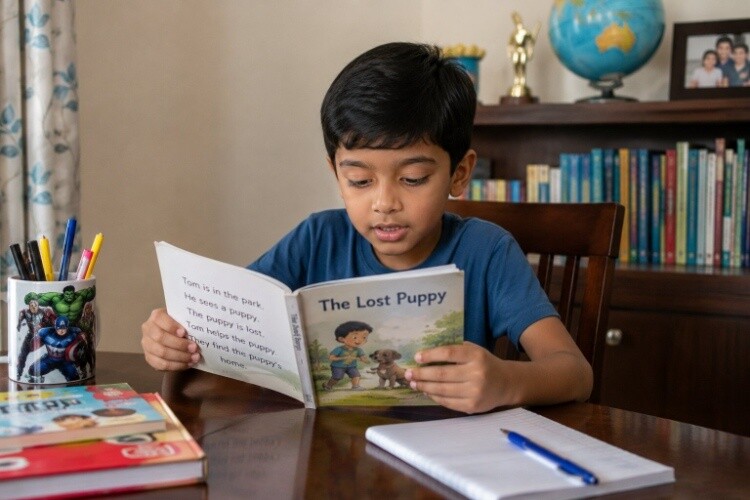
Age 6-7: building fluency
Reading short, simple books independently, though often still sounding out unfamiliar words. This is typically when Grade 1 reading assessments happen in CBSE/ICSE schools — and also when parent anxiety tends to peak, because school starts formally comparing.
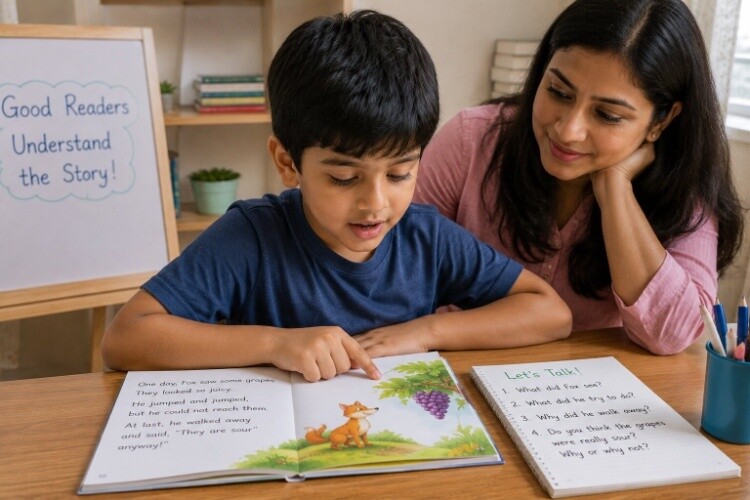
Age 7-8: comprehension catches up
Reading becomes smoother, and the focus shifts from "can they read the words" to "do they understand what they read." A child who reads fluently but can't answer questions about the story afterward may need comprehension support rather than more phonics drilling.
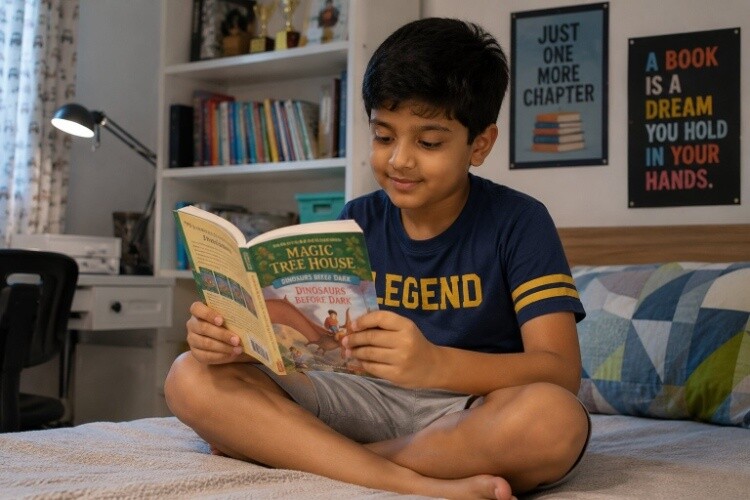
Age 8-9: reading for pleasure begins (or doesn't)
By this age, many children either enjoy reading independently for fun or actively avoid it. This is often less about ability and more about whether reading has felt like pressure or pleasure up to this point.
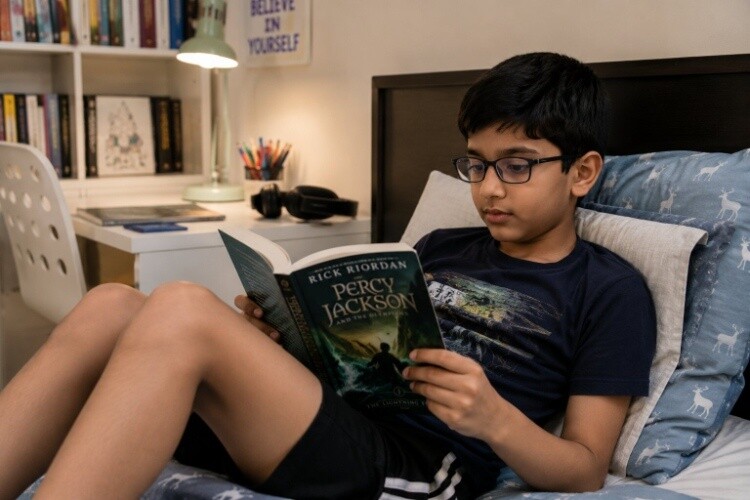
Age 9-12: independent, varied reading
Reading chapter books, developing genre preferences, and reading silently for extended periods. Comprehension of more complex, multi-layered stories develops through this range.
The wide range that's actually normal
At every single age above, there's roughly a 12-18 month spread of what's considered developmentally typical. A child reading simple sentences at 5 and a child reading simple sentences at 6.5 are both within normal range — school systems sometimes create pressure that doesn't reflect how naturally varied real development is.
What genuinely deserves attention
A significant, sudden regression (a child who was reading and stops), persistent difficulty with letter-sound connection well past age 6-7 despite consistent practice, or a child who shows visible distress specifically around reading tasks — these are worth raising with the school or a paediatrician, not because something is necessarily wrong, but because early support genuinely helps if there is a gap.
The pressure trap worth avoiding
School bus commutes are often filled with parents comparing reading levels, and WhatsApp groups amplify this further. It's worth remembering that reading ability at age 6 has very little correlation with reading ability — or overall academic success — by age 12. Kids catch up. Confidence, once damaged by pressure, takes much longer to rebuild than a reading skill does.