
 Summer Camp
 Reading Writing
 Book Club
 Calligraphy
 Creative Writing
 English Speaking
 Handwriting
 Library
 Phonics
 Story Telling
 Art and Craft
 Clay Moulding
 Drawing
 Painting
 Pottery
 Sketching
 Drama Theatre
 Personality Development
 Public Speaking
 Languages
 Arabic
 Chinese
 French
 German
 Hindi
Hindi Italian
 Japanese
 Korean
 Persian
 Portuguese
 Russian
 Spanish
 Turkish
 Uzbek
Uzbek Sports and Fitness
 Aerobics
 Athletics
 Badminton
 Basket Ball
 Chess
Chess Cricket
 Football
 Golf
Golf Gymnastics
 Hulahoop
 Karate
 Martial Arts
 Pickleball
 Rugby
Rugby Skating
 Swimming
 Taekwondo
 Tennis
 Volleyball
 Yoga
Yoga Zumba
Zumba Tuition Classes
 Accounts
 Biology
 Business Studies
 CBSE
CBSE Chemistry
 Commerce
 Economics
 Homework Classes
 IB Board
 IGCSE
IGCSE Mathematics
 Physics
 Psychology
 Science
 Social Studies
 Vedic Maths
 Dance and Music
 Ballet
 Bhangra
 Bharatnatyam
 Bollywood Dance
 Casio
Casio Dandiya and Garba
 Drums
Drums Flute
Flute Guitar
 Harmonium
 Hip Hop
 Jazz
Jazz Kathak
 Keyboard
 Piano
Piano Salsa
Salsa Shlokas
 Sitar
Sitar Tabla
Tabla Ukulele
 Violin
 Vocal
Vocal Play School
 STEM
STEM
 Abacus
 App Development
 Artificial intelligence
 Basic Computer Courses
 Canva
Canva Coding
 Graphic Design
 Lego
Lego Python
 Robotics
 Rubiks Cube
 Scrabble
 Scratch
 Website Development
 Winter Camp
 Workshops
 Diwali Workshop
 Easter
 Ganesh Mahotsav
 Guru Nanak Jayanti Workshop
 Holi
Holi Independence day workshop
 Janmashtami Workshop
 Mothers day
 Navratri Workshops
 Raksha Bandhan workshop
 Ramayana Workshop
 Spring Camp
 Valentines Day Workshops
 Festive
 Daycare
 Cooking and Food
 Spring Camp
 Contests and Competitions
 Special abled
 Republic Day Workshops
 Mela
Mela
 Mela
Mela Cognitive Development
 Mother-Toddler Program
-Jul-03-2026-06-59-25-1926-AM.webp?width=30&height=30&name=Smart_20Skills_20(2)-Jul-03-2026-06-59-25-1926-AM.webp) Smart Skills
Smart Skills
 Financial Literacy
 Mental Wellbeing
 Meditation
 Reiki
Reiki
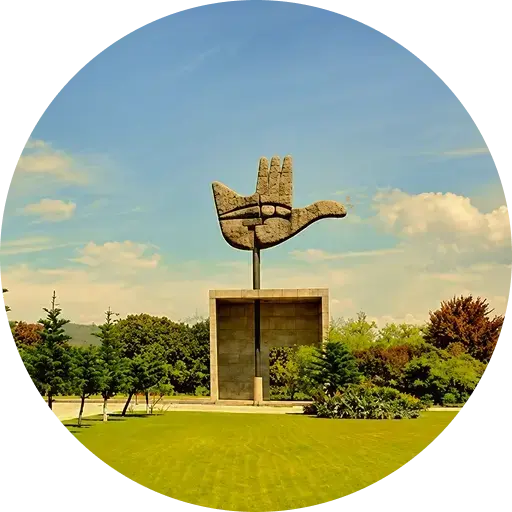



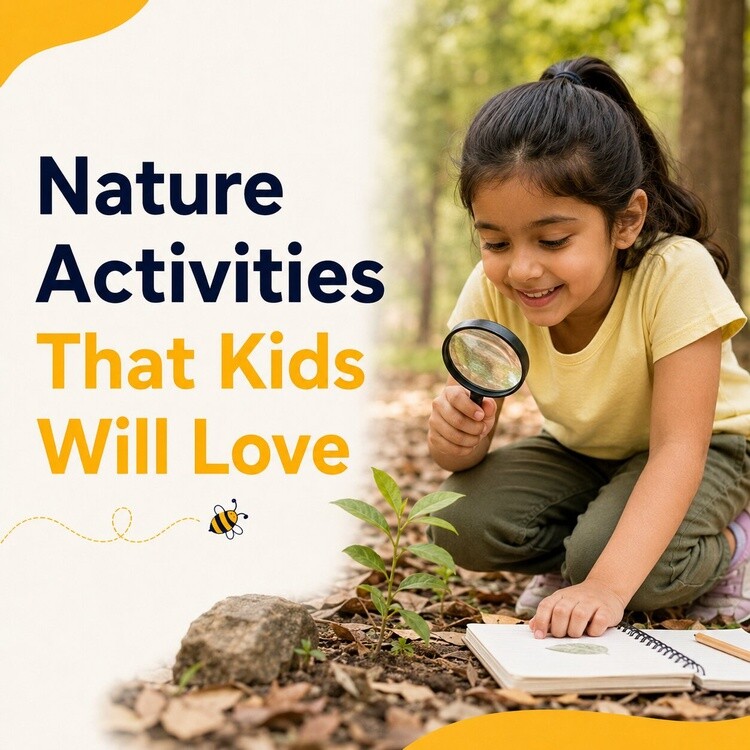
Nature engagement doesn't require wilderness — Delhi NCR's parks, gardens, and even balconies offer genuine nature-connection opportunities. These activities work with accessible urban green spaces.
Nature-based childhood doesn't require a forest — colony parks, society gardens, and even a well-used balcony provide genuine opportunities for the sensory richness and wonder that nature engagement offers, particularly valuable for children growing up in dense urban environments.
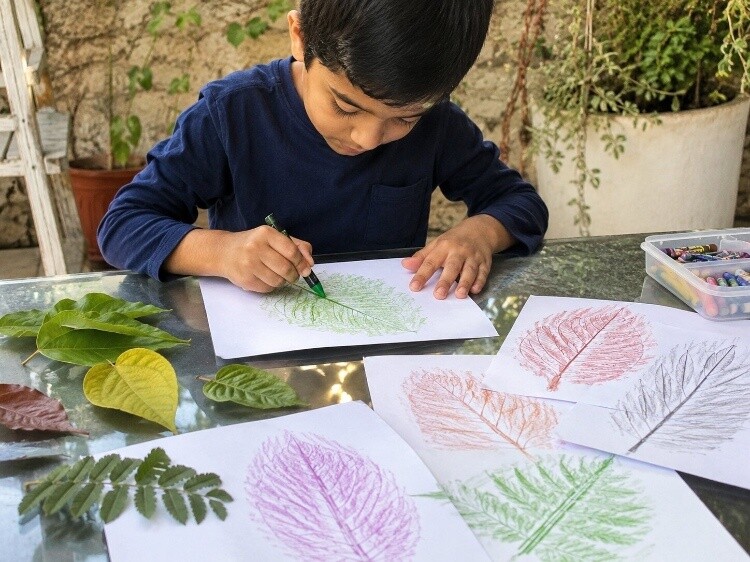
Leaf and texture rubbing collections
Paper over leaves, crayon rubbings revealing vein patterns — a simple, repeatable nature-art activity.
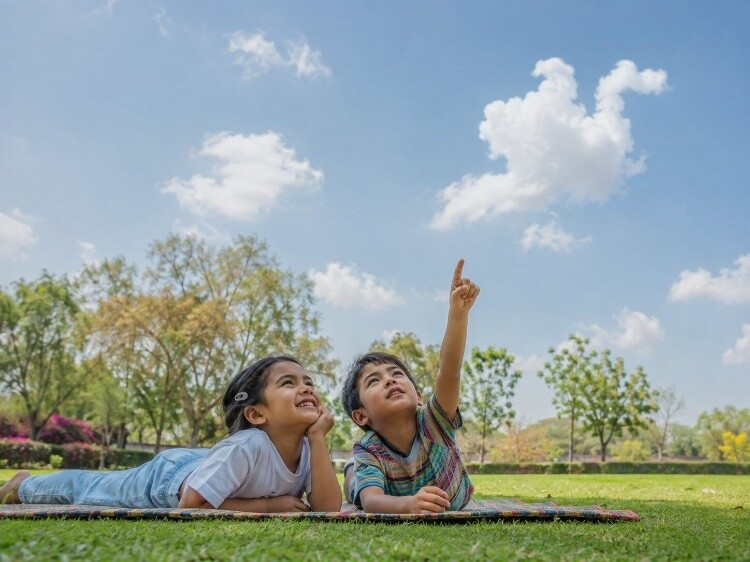
Cloud shape spotting
Lying on grass (a mat helps) identifying shapes in passing clouds — pure, free, endlessly available wonder.
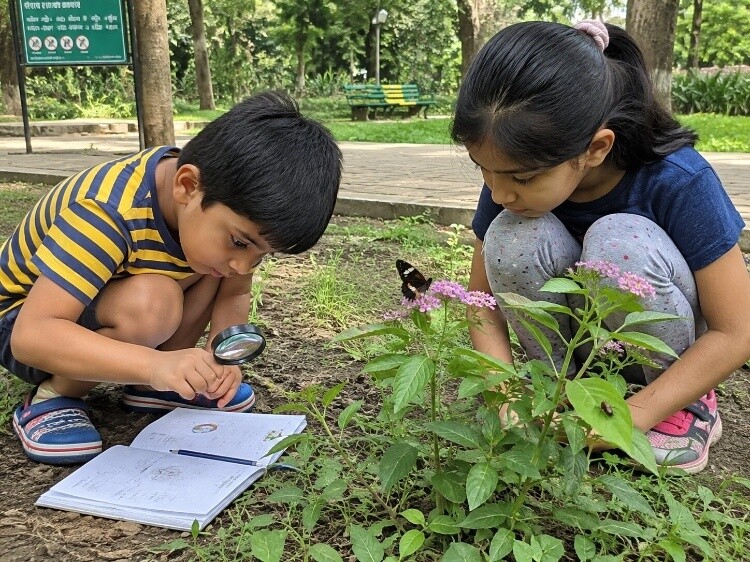
Bug and insect observation
Ants, butterflies, and beetles in any green space, observed patiently rather than disturbed — early biology through simple watching.
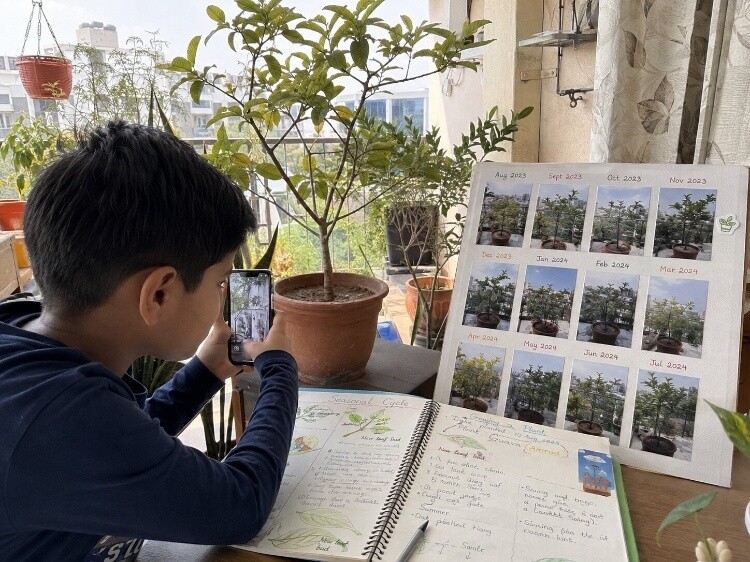
Seasonal change tracking
The same tree or plant observed and photographed monthly, building genuine understanding of seasonal cycles even within Delhi's compressed seasonal variety.
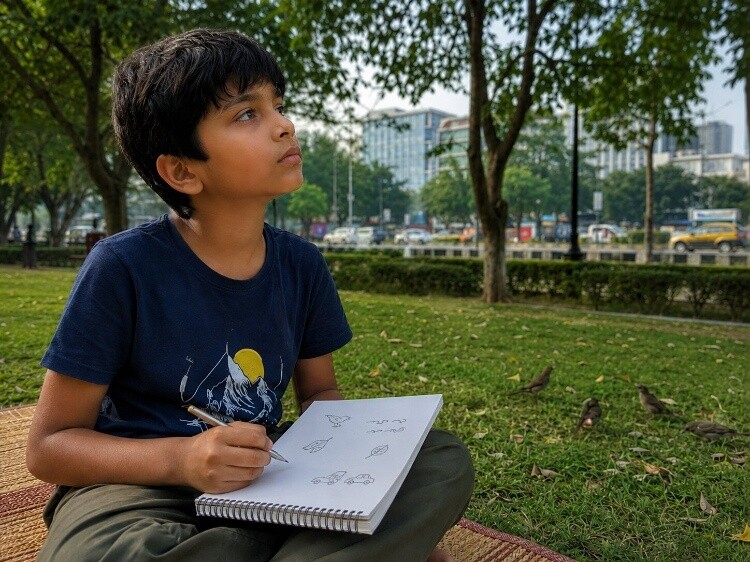
Sound mapping outdoors
Sitting quietly and cataloguing every sound heard — birds, wind, distant traffic — building auditory nature-awareness.
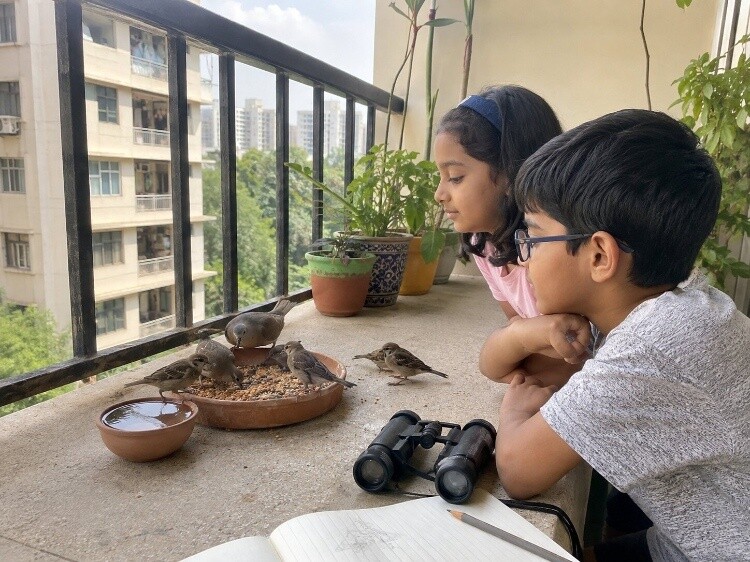
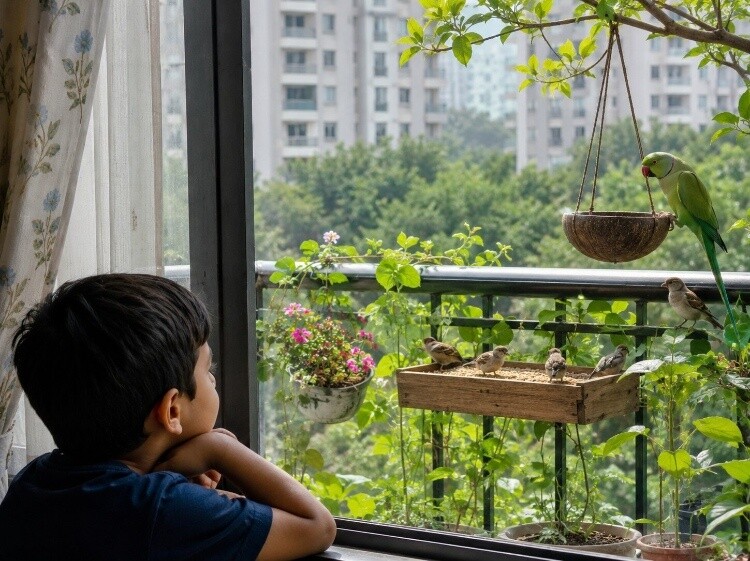
Simple bird feeding stations
A balcony or window ledge feeder (even a simple dish of grains and water) inviting genuine urban wildlife observation.
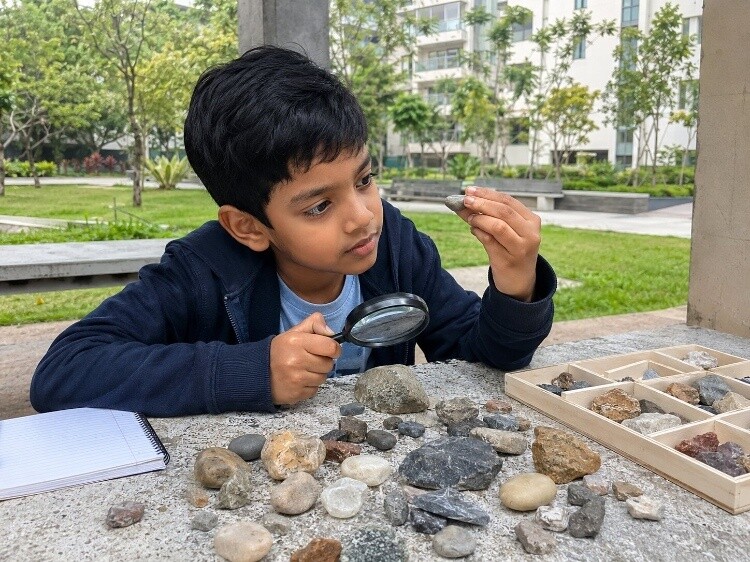
Rock and stone collecting
Sorting and examining stones by colour, texture, and shape found on walks — geology's gentlest introduction.
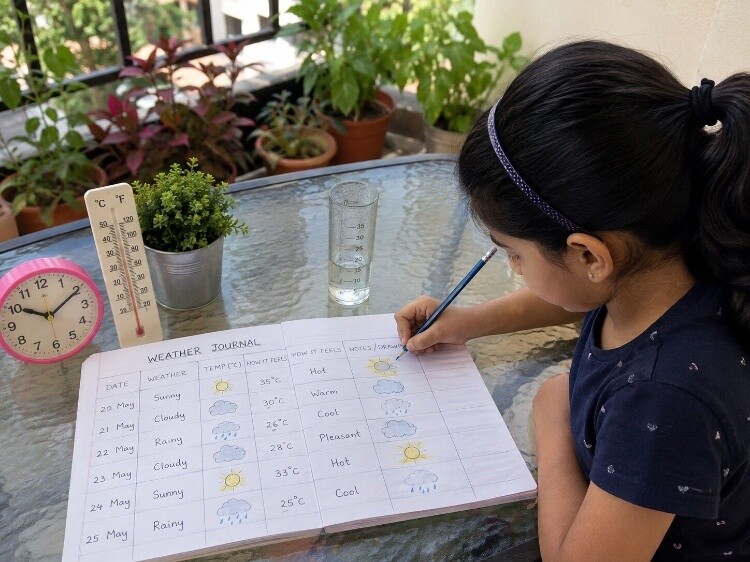
Weather observation journals
Daily simple weather recording (sunny, cloudy, rainy, temperature-feel) building both science habit and climate awareness.
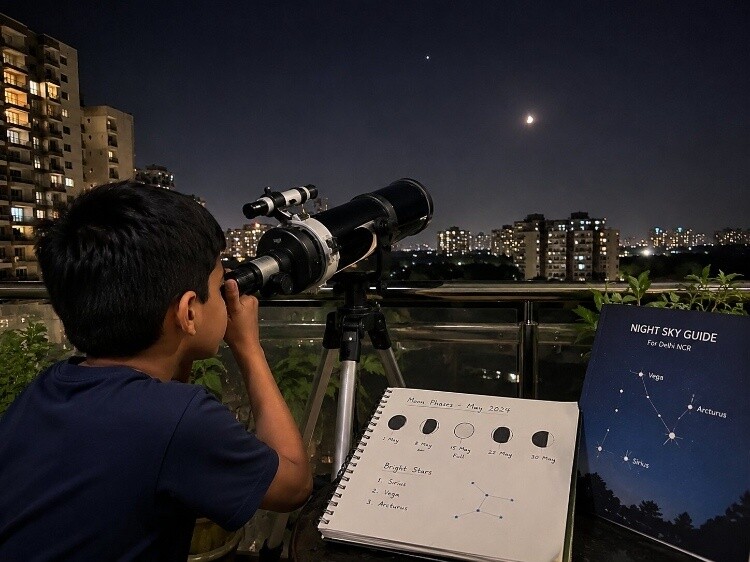
Star and moon watching
Even with significant urban light pollution, moon-phase tracking and the brightest visible stars offer genuine astronomy entry points.
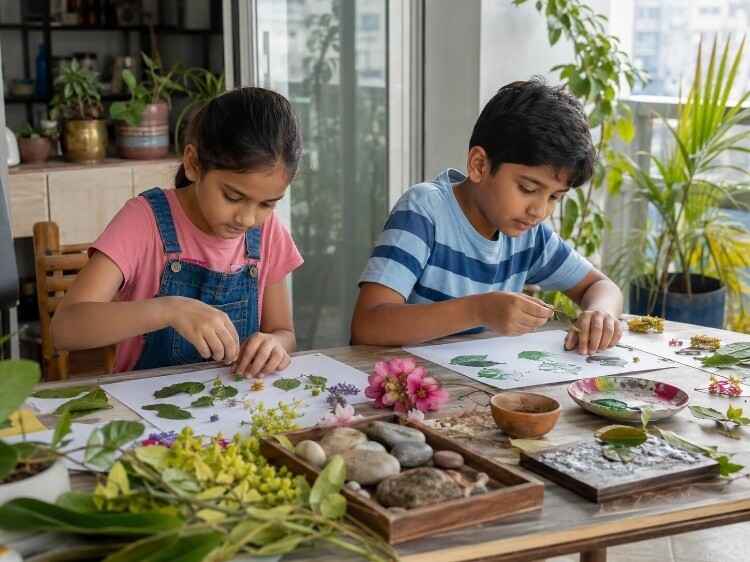
Nature-inspired art
Collected natural materials (leaves, flowers, small stones) arranged into art, or used as printing and stamping tools.
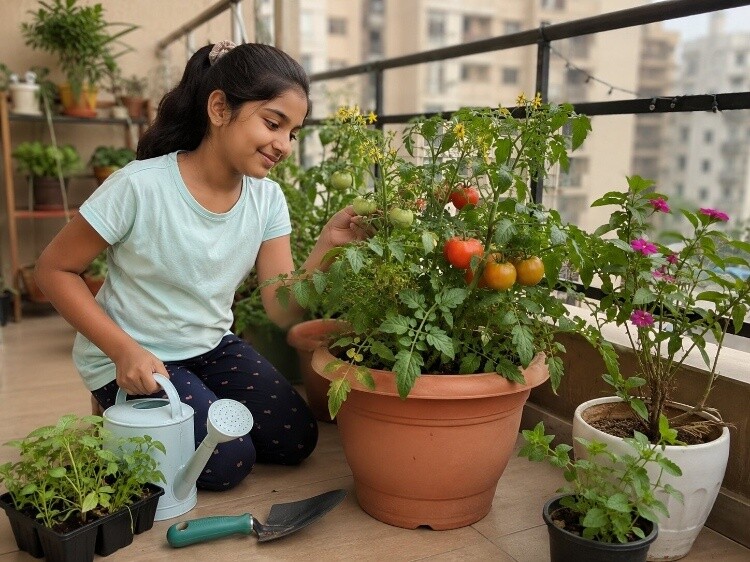
Container gardening
Even a single balcony pot growing something edible or flowering, tended through a full cycle.
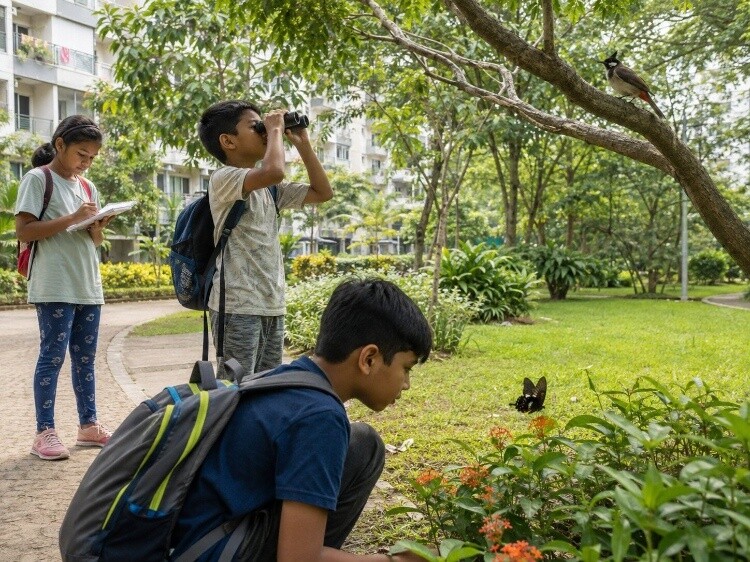
Urban wildlife spotting walks
A deliberate "how many different birds/insects/plants can we spot" walk through the colony or a nearby park — turning an ordinary walk into focused nature attention.
The accessible-nature reframe that matters
Many parents assume genuine nature connection requires trips to forests, hills, or wildlife sanctuaries — while such trips offer genuine value, they're neither necessary nor sufficient for building nature awareness and appreciation, which develops just as effectively through regular, sustained attention to the nature genuinely accessible day to day.
Addressing genuine urban green-space limitations honestly
Delhi NCR's air quality and green space vary significantly by specific location and season — on days with genuinely poor air quality, indoor nature-adjacent activities (nature documentaries, plant care, nature books) substitute reasonably without abandoning nature engagement altogether.
Building the habit of attention, more than any specific activity
The deeper skill nature activities build is genuine observational attention — noticing details, patterns, and changes that a hurried, distracted pace misses entirely. This attention habit, built through nature activities, tends to transfer into broader observational and scientific thinking beyond nature specifically.