
 Summer Camp
 Reading Writing
 Book Club
 Calligraphy
 Creative Writing
 English Speaking
 Handwriting
 Library
 Phonics
 Story Telling
 Art and Craft
 Clay Moulding
 Drawing
 Painting
 Pottery
 Sketching
 Drama Theatre
 Personality Development
 Public Speaking
 Languages
 Arabic
 Chinese
 French
 German
 Hindi
Hindi Italian
 Japanese
 Korean
 Persian
 Portuguese
 Russian
 Spanish
 Turkish
 Uzbek
Uzbek Sports and Fitness
 Aerobics
 Athletics
 Badminton
 Basket Ball
 Chess
Chess Cricket
 Football
 Golf
Golf Gymnastics
 Hulahoop
 Karate
 Martial Arts
 Pickleball
 Rugby
Rugby Skating
 Swimming
 Taekwondo
 Tennis
 Volleyball
 Yoga
Yoga Zumba
Zumba Tuition Classes
 Accounts
 Biology
 Business Studies
 CBSE
CBSE Chemistry
 Commerce
 Economics
 Homework Classes
 IB Board
 IGCSE
IGCSE Mathematics
 Physics
 Psychology
 Science
 Social Studies
 Vedic Maths
 Dance and Music
 Ballet
 Bhangra
 Bharatnatyam
 Bollywood Dance
 Casio
Casio Dandiya and Garba
 Drums
Drums Flute
Flute Guitar
 Harmonium
 Hip Hop
 Jazz
Jazz Kathak
 Keyboard
 Piano
Piano Salsa
Salsa Shlokas
 Sitar
Sitar Tabla
Tabla Ukulele
 Violin
 Vocal
Vocal PlaySchools
 Preschool
 STEM
STEM
 Abacus
 App Development
 Artificial intelligence
 Basic Computer Courses
 Canva
Canva Coding
 Graphic Design
 Lego
Lego Python
 Robotics
 Rubiks Cube
 Scrabble
 Scratch
 Website Development
 Winter Camp
 Workshops
 Diwali Workshop
 Easter
 Ganesh Mahotsav
 Guru Nanak Jayanti Workshop
 Holi
Holi Independence day workshop
 Janmashtami Workshop
 Mothers day
 Navratri Workshops
 Raksha Bandhan workshop
 Ramayana Workshop
 Spring Camp
 Valentines Day Workshops
 Festive
 Daycare
 Cooking and Food
 Spring Camp
 Contests and Competitions
 Special abled
 Republic Day Workshops
 Mela
Mela
 Mela
Mela Cognitive Development
 Mother-Toddler Program
-Jul-03-2026-06-59-25-1926-AM.webp?width=30&height=30&name=Smart_20Skills_20(2)-Jul-03-2026-06-59-25-1926-AM.webp) Smart Skills
Smart Skills
 Financial Literacy





Forcing, bribing, and negotiating over food usually backfires long-term. The most effective approach is removing food as a battleground entirely — offer, don't force, and let appetite regulate itself over days, not meals.
Every evening becomes the same fight. You've made something nutritious, your child pushes it around the plate, and forty minutes later you're negotiating — one more bite for a story, finish the roti and you can watch TV. By the time dinner is "done," everyone's exhausted and nobody's actually enjoyed the meal.
Here's the thing that's hard to accept in the moment: children regulate their appetite over days, not single meals. A child who eats very little at dinner often makes up for it at breakfast or the next day. When we panic over one skipped meal, we accidentally teach food to be a source of tension rather than nourishment.
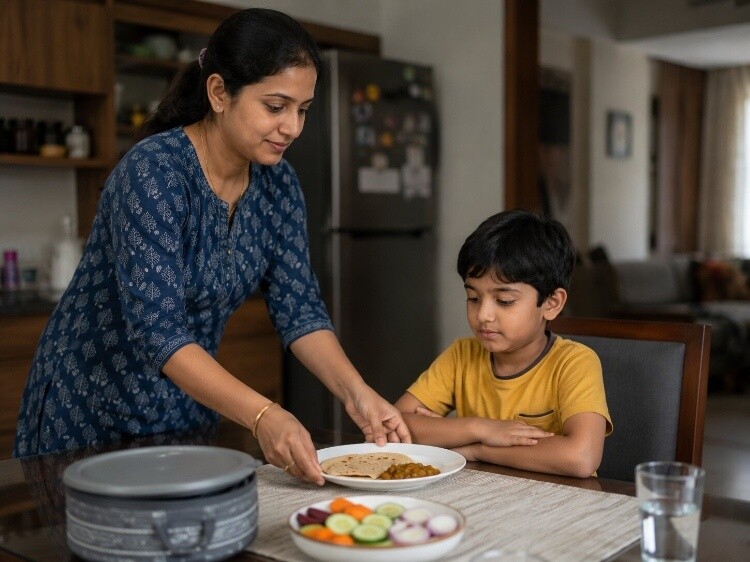
Stop negotiating, start offering
The moment food becomes a bargaining chip — "finish this and you get screen time" — you've made the food less important than the reward. Kids notice this fast. Instead, simply place the food on the table without commentary. If they eat, no big reaction needed. If they don't, no big reaction either.
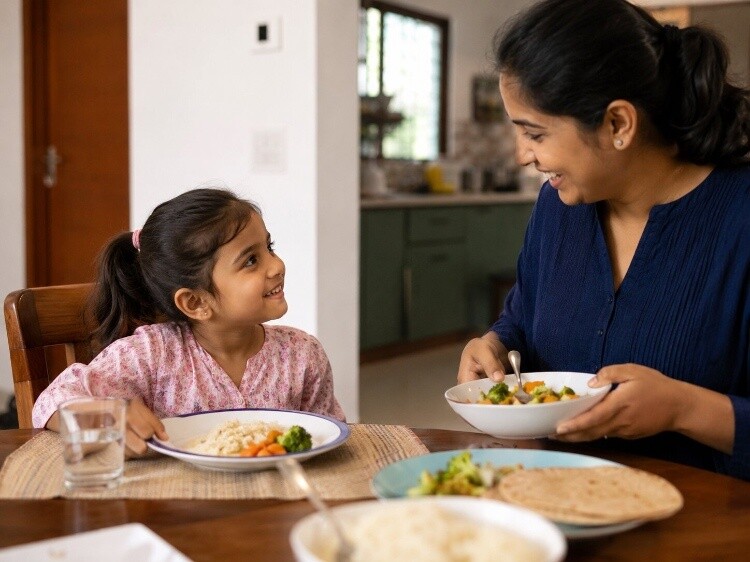
Serve small portions, allow seconds
A plate that looks like a mountain of vegetables is genuinely overwhelming to a small child. Serve less than you think they'll eat. If they finish and want more, that's a win they created themselves — which matters more than a portion you decided on.
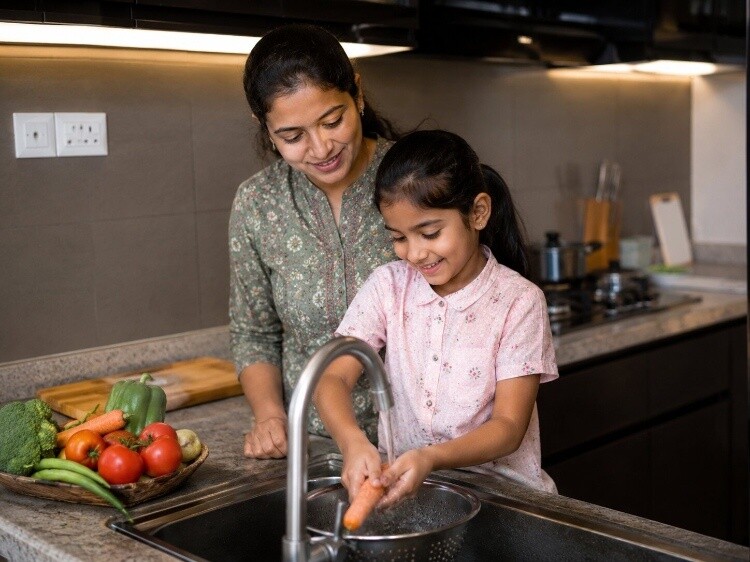
Involve them in the process, even a little
A child who helped roll the roti or wash the vegetables is more likely to try what's on the plate. This doesn't need to be elaborate — even choosing between two vegetables for dinner gives a sense of control that reduces resistance.
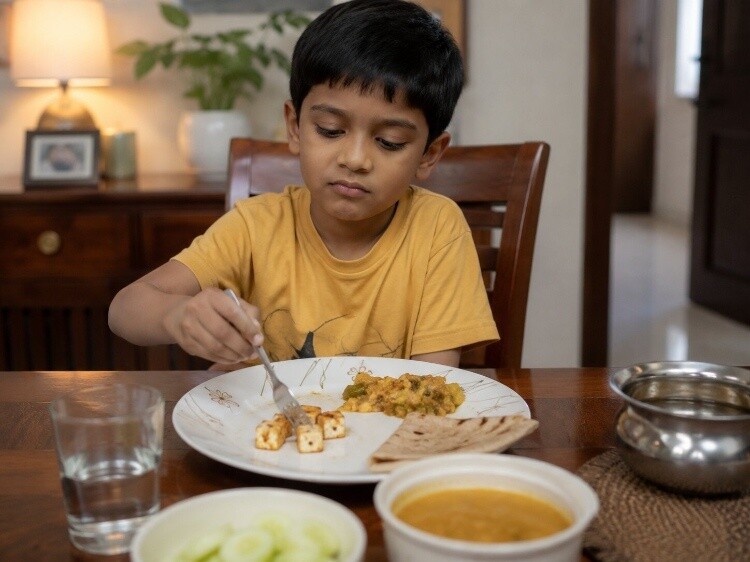
Keep offering the disliked food, without pressure
Research consistently shows it can take 10-15 exposures before a child accepts a new food. One rejected attempt doesn't mean "he doesn't like paneer" forever. Keep a small portion on the plate occasionally, with zero expectation, and let familiarity do the work over weeks.
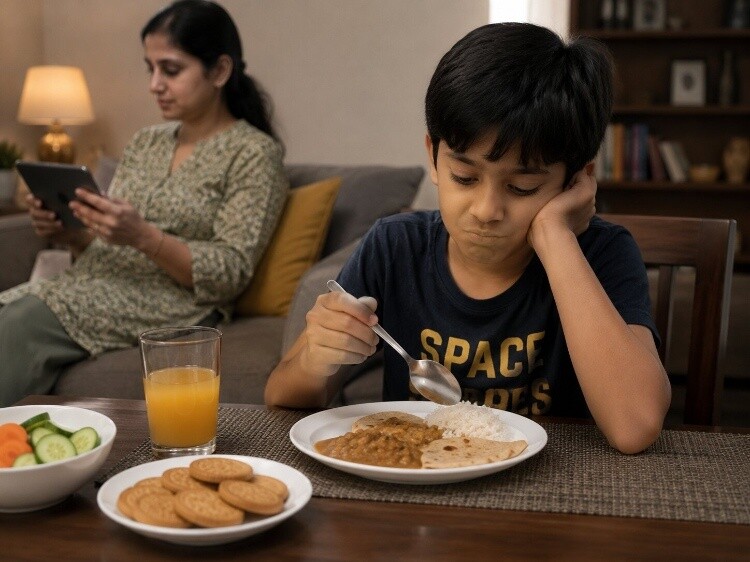
Watch what happens between meals
Often the real issue isn't dinner — it's the biscuit or juice given at 5 PM "so they don't get cranky" that quietly kills dinner appetite. If snacking is frequent, dinner resistance is often not pickiness at all, just genuine lack of hunger.

When to actually be concerned
Occasional picky phases are developmentally normal, especially between ages 2-6. What's worth a paediatrician conversation: consistent weight loss, extreme food aversions limited to only 3-4 foods total, or visible distress (gagging, crying) around most meals — not just dinner refusal.
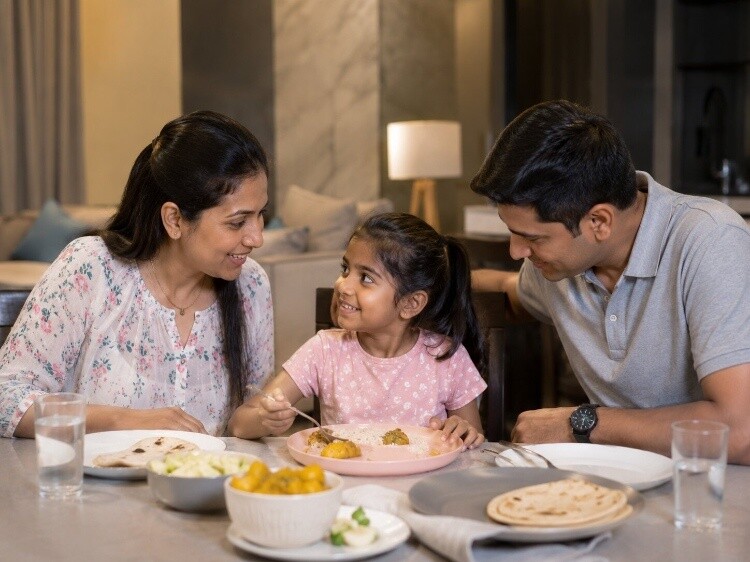
The reassurance that helps most
Most picky eaters grow out of it without any dramatic intervention — mostly through repeated, pressure-free exposure and a household where food isn't a fight. The parents who worry the most are often already doing everything right; the hardest part is simply staying calm through the phase.