
 Summer Camp
 Reading Writing
 Book Club
 Calligraphy
 Creative Writing
 English Speaking
 Handwriting
 Library
 Phonics
 Story Telling
 Art and Craft
 Clay Moulding
 Drawing
 Painting
 Pottery
 Sketching
 Drama Theatre
 Personality Development
 Public Speaking
 Languages
 Arabic
 Chinese
 French
 German
 Hindi
Hindi Italian
 Japanese
 Korean
 Persian
 Portuguese
 Russian
 Spanish
 Turkish
 Uzbek
Uzbek Sports and Fitness
 Aerobics
 Athletics
 Badminton
 Basket Ball
 Chess
Chess Cricket
 Football
 Golf
Golf Gymnastics
 Hulahoop
 Karate
 Martial Arts
 Pickleball
 Rugby
Rugby Skating
 Swimming
 Taekwondo
 Tennis
 Volleyball
 Yoga
Yoga Zumba
Zumba Tuition Classes
 Accounts
 Biology
 Business Studies
 CBSE
CBSE Chemistry
 Commerce
 Economics
 Homework Classes
 IB Board
 IGCSE
IGCSE Mathematics
 Physics
 Psychology
 Science
 Social Studies
 Vedic Maths
 Dance and Music
 Ballet
 Bhangra
 Bharatnatyam
 Bollywood Dance
 Casio
Casio Dandiya and Garba
 Drums
Drums Flute
Flute Guitar
 Harmonium
 Hip Hop
 Jazz
Jazz Kathak
 Keyboard
 Piano
Piano Salsa
Salsa Shlokas
 Sitar
Sitar Tabla
Tabla Ukulele
 Violin
 Vocal
Vocal Play School
 STEM
STEM
 Abacus
 App Development
 Artificial intelligence
 Basic Computer Courses
 Canva
Canva Coding
 Graphic Design
 Lego
Lego Python
 Robotics
 Rubiks Cube
 Scrabble
 Scratch
 Website Development
 Winter Camp
 Workshops
 Diwali Workshop
 Easter
 Ganesh Mahotsav
 Guru Nanak Jayanti Workshop
 Holi
Holi Independence day workshop
 Janmashtami Workshop
 Mothers day
 Navratri Workshops
 Raksha Bandhan workshop
 Ramayana Workshop
 Spring Camp
 Valentines Day Workshops
 Festive
 Daycare
 Cooking and Food
 Spring Camp
 Contests and Competitions
 Special abled
 Republic Day Workshops
 Mela
Mela
 Mela
Mela Cognitive Development
 Mother-Toddler Program
-Jul-03-2026-06-59-25-1926-AM.webp?width=30&height=30&name=Smart_20Skills_20(2)-Jul-03-2026-06-59-25-1926-AM.webp) Smart Skills
Smart Skills
 Financial Literacy
 Mental Wellbeing
 Meditation
 Reiki
Reiki





Between 2 and 3, running smooths out, jumping arrives, and climbing ambition peaks. These activities channel the physical surge — in flats, parks, and everywhere between.
The 2-3 year old body is a development engine demanding fuel: this is the year of first real jumps, emerging balance, and climbing everything climbable. The activity list is really an energy-channeling list.
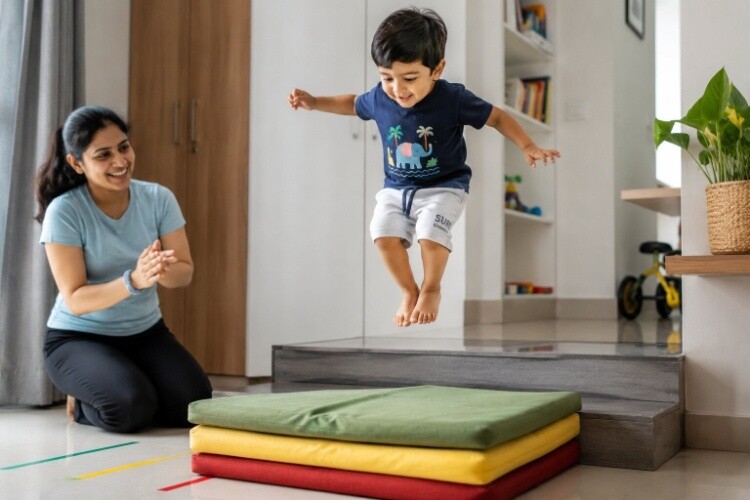
Jumping practice — off the last step, over tape lines, into cushion piles
Two-feet-together jumping typically emerges this year and demands endless practice.
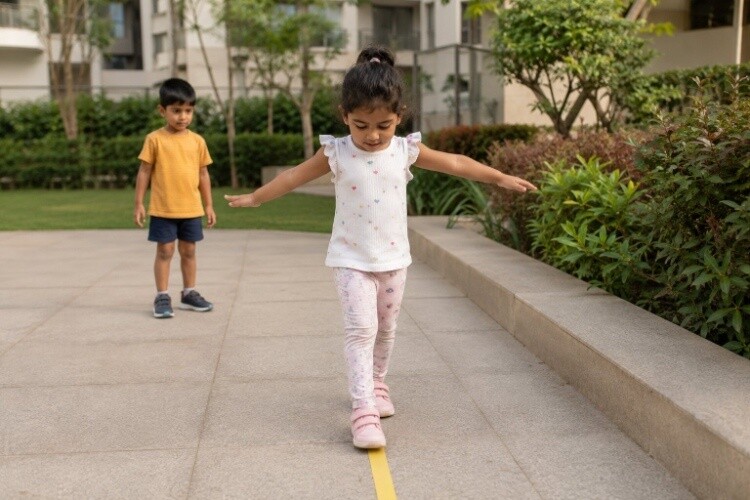
Balance walking — floor tape lines, low garden edges
Precursor to beam-walking, built through daily low-stakes practice.
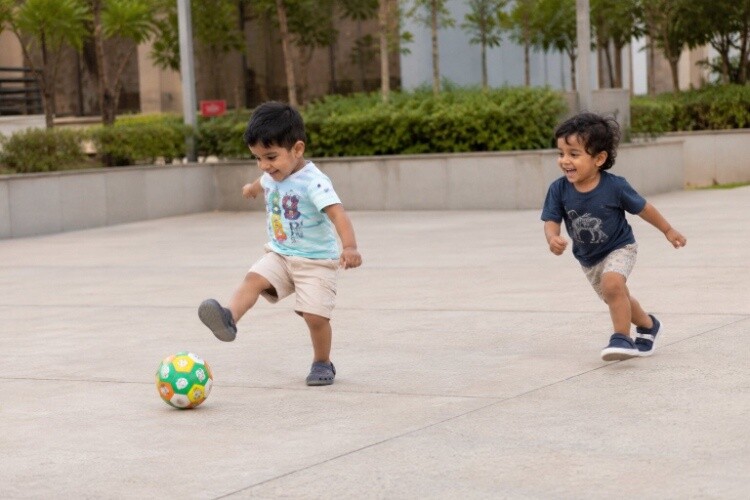
Kick and chase ball games
Deliberate kicking matures now; a lightweight ball and open space complete the setup.
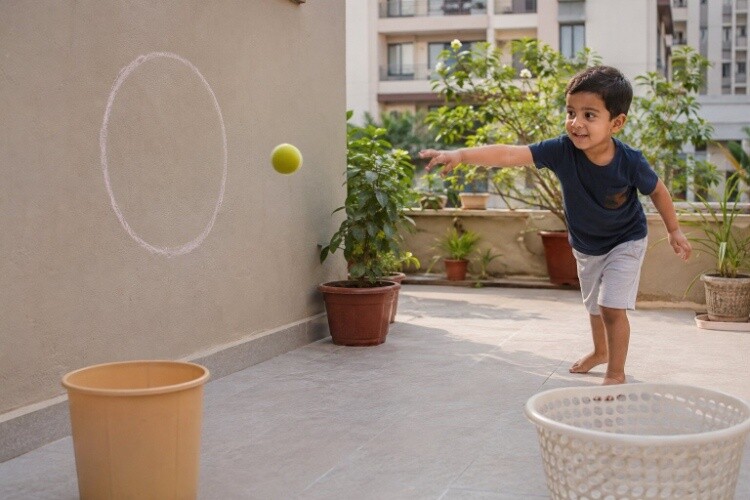
Throwing at big targets
A bucket, a laundry basket, a chalk circle on the wall — throwing accuracy begins.
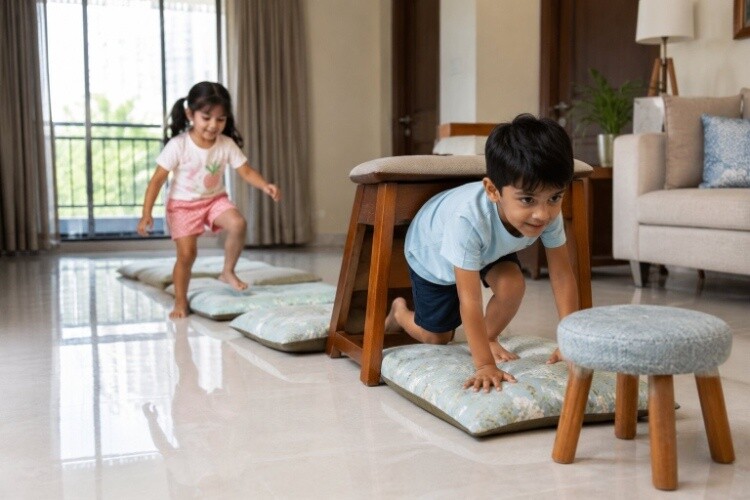
Cushion obstacle courses
Over the cushions, under the chair-bridge, around the stool — following a course adds sequencing to movement.
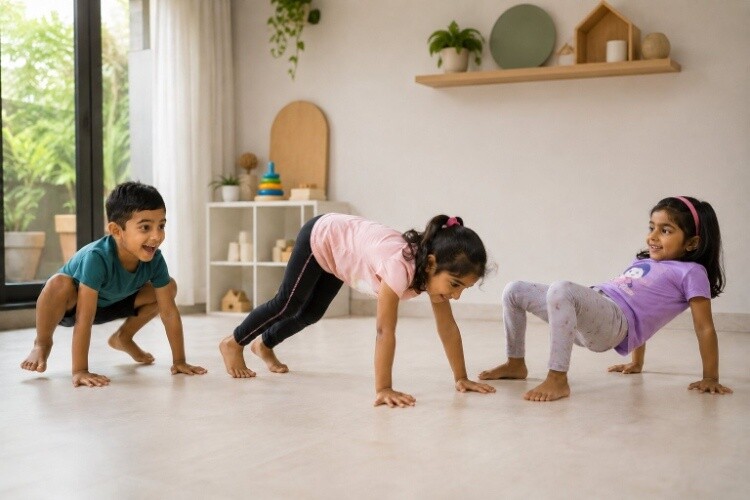
Animal movement games
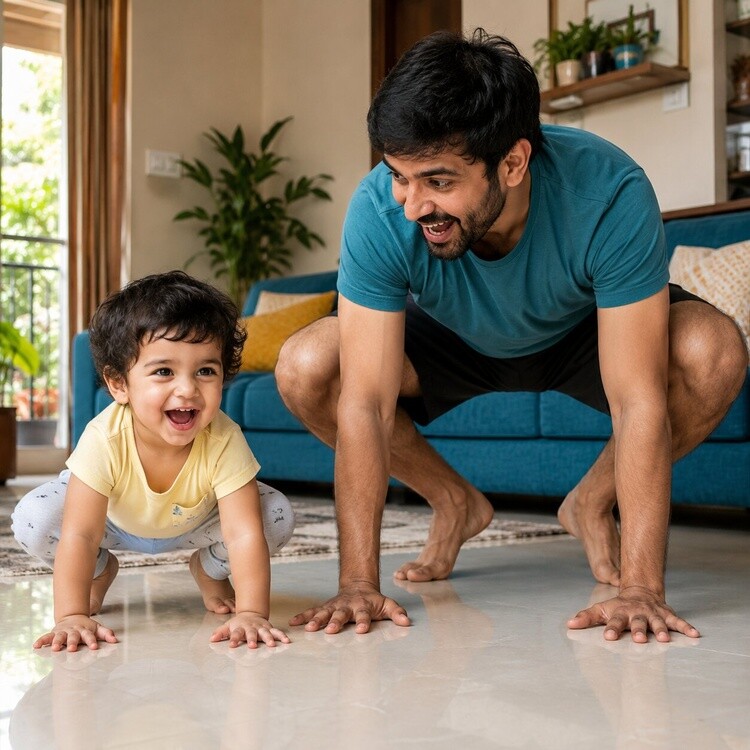
Frog jumps, bear walks, crab crawls — strength training disguised as a zoo.
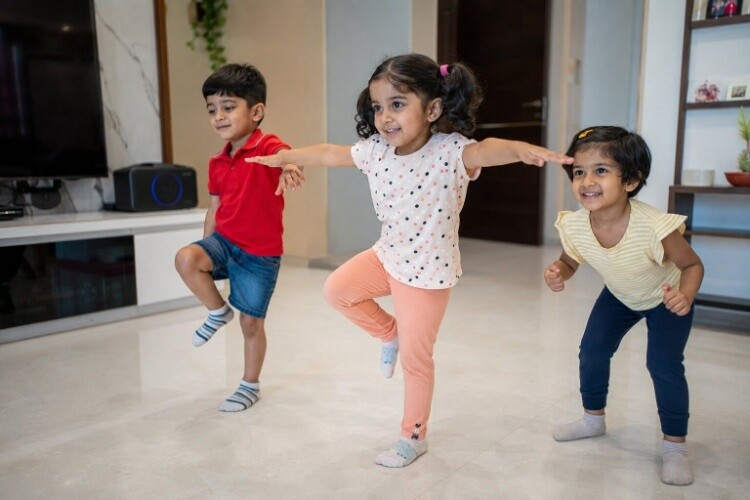
Dance and freeze
Movement control (the freeze) is the hidden skill inside the game.
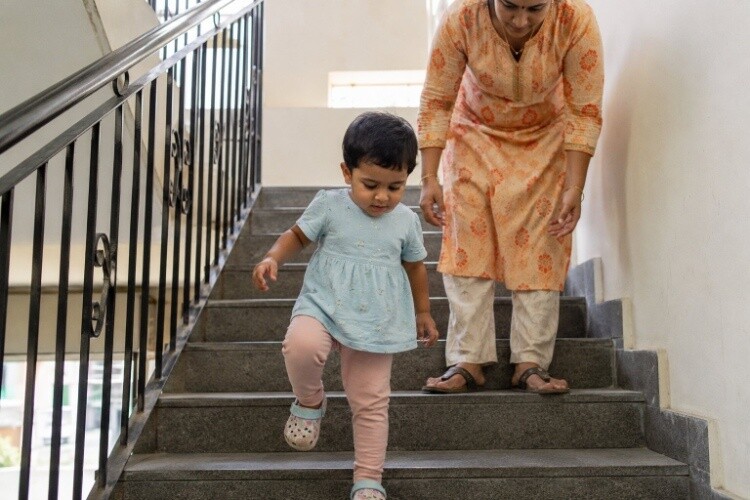
Stair practice with supervision
Alternating feet on stairs develops across this year; society staircases offer daily practice.
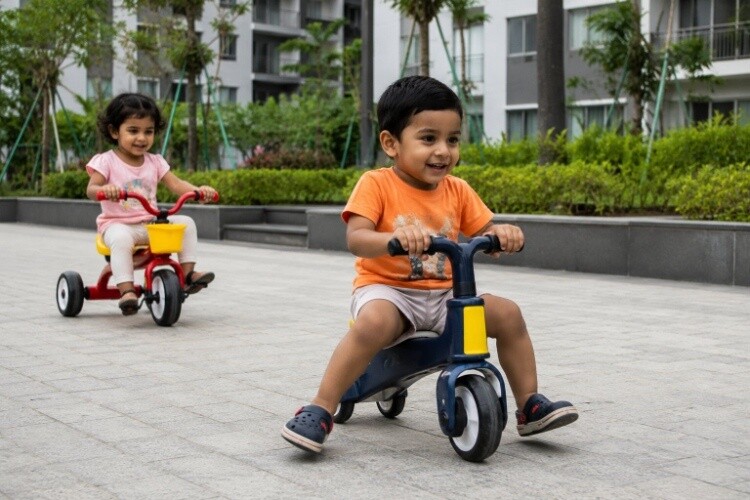
Ride-on vehicles and early tricycles
Foot-propelled ride-ons transition toward first pedal attempts near three.
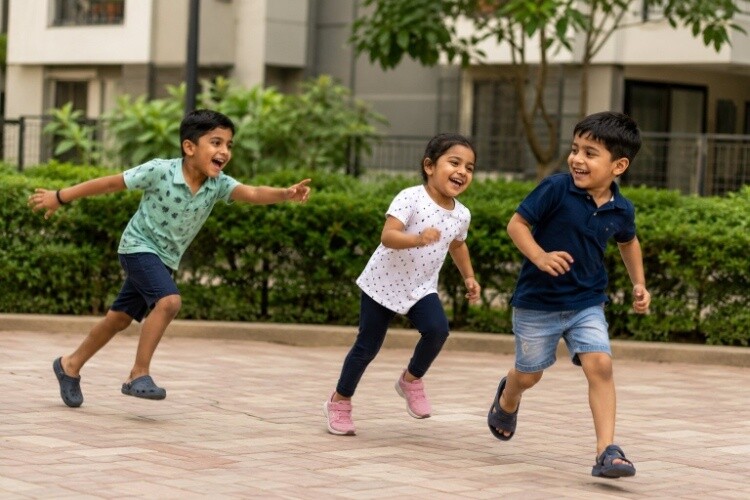
Chasing games — "I'm going to catch you!"
Sprint bursts, direction changes, and shrieking joy; cardio at its most fun.
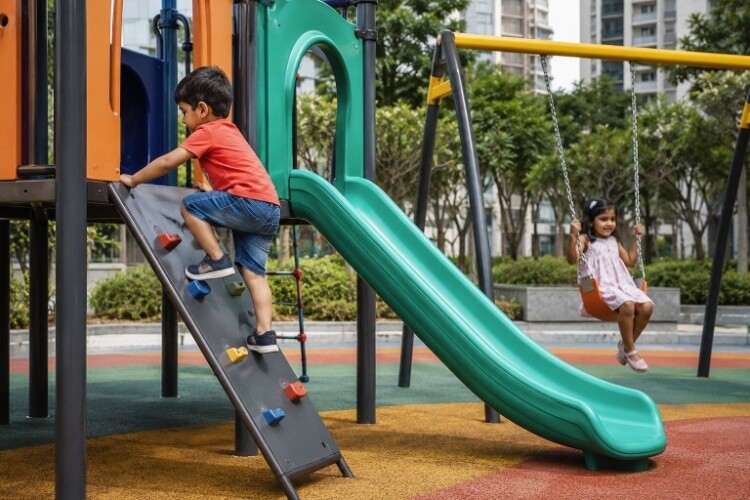
Playground circuits — slide, climb, swing, repeat
Playground equipment engineered precisely for this development.
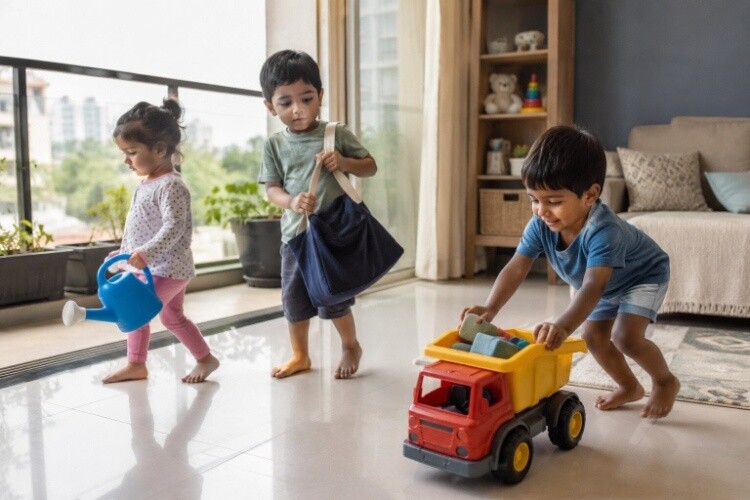
Carrying and pushing "heavy" things
A watering bottle, a small bag, a loaded toy truck — proprioceptive heavy work that toddler bodies seek and that often calms wild energy.
The climbing dilemma, addressed
The urge to climb everything is developmental hunger, not defiance. The workable response: designated yes-climbing (playground structures, cushion mountains, a mattress on the floor) offered generously, alongside consistent no-climbing boundaries (balcony rails, kitchen counters, window grills) held absolutely. Toddlers offered legitimate climbing outlets contest the boundaries less.
Small-flat energy management
Delhi summers and monsoons confine this age's energy indoors for weeks; the indoor entries above (cushion courses, animal walks, dance, jumping practice) are survival tools, best deployed in a morning burst before energy curdles into chaos.
Why this year's movement matters later
The balance, coordination, and body confidence built through 2-3 year old play form the literal foundation for every future sport — the child who jumped, balanced, and climbed freely at two arrives at football or swimming or dance at five with the movement vocabulary already installed. This is also the age when toddler gym and movement classes become available and genuinely useful, particularly for flat-dwelling families short on safe climbing and running space — structured big-movement time, weatherproof and equipment-rich.