

 Reading Writing
 Book Club
 Calligraphy
 Creative Writing
 English Speaking
 Handwriting
 Library
 Phonics
 Story Telling
 Art and Craft
 Clay Moulding
 Drawing
 Painting
 Pottery
 Sketching
 Drama Theatre
 Personality Development
 Public Speaking
 Languages
 Arabic
 Chinese
 French
 German
 Hindi
 Italian
 Japanese
 Korean
 Persian
 Portuguese
 Russian
 Spanish
 Turkish
 Uzbek
 Sports and Fitness
 Aerobics
 Athletics
 Badminton
 Basket Ball
 Chess
 Cricket
 Football
 Golf
 Gymnastics
 Hulahoop
 Karate
 Martial Arts
 Pickleball
 Rugby
 Skating
 Swimming
 Taekwondo
 Tennis
 Volleyball
 Yoga
 Zumba
 Tuition Classes
 Accounts
 Biology
 Business Studies
 CBSE
 Chemistry
 Commerce
 Economics
 Homework Classes
 IB Board
 IGCSE
 Mathematics
 Physics
 Psychology
 Science
 Social Studies
 Vedic Maths
 Dance and Music
 Ballet
 Bhangra
 Bharatnatyam
 Bollywood Dance
 Casio
 Dandiya and Garba
 Drums
 Flute
 Guitar
 Harmonium
 Hip Hop
 Jazz
 Kathak
 Keyboard
 Piano
 Salsa
 Shlokas
 Sitar
 Tabla
 Ukulele
 Violin
 Vocal
 Play School
 STEM
 Abacus
 App Development
 Artificial intelligence
 Basic Computer Courses
 Canva
 Coding
 Graphic Design
 Lego
 Python
 Robotics
 Rubiks Cube
 Scrabble
 Scratch
 Website Development
 Workshops
 Diwali Workshops
 Guru Nanak Jayanti Workshop
 Halloween
 Independence day workshop
 Navratri Workshops
 Raksha Bandhan workshop
 Ramayana Workshop
 Spring Camp
 Valentines Day Workshops
 Festive
 Daycare
 Cooking and Food
 Spring Camp
 Contests and Competitions
 Special abled
 Republic Day Workshops
 Mela
 Mela
 Cognitive Development
 Mother-Toddler Program
 Music
 Dance
 Smart Skills
 Financial Literacy
 Mental Wellbeing
 Meditation
 Reiki





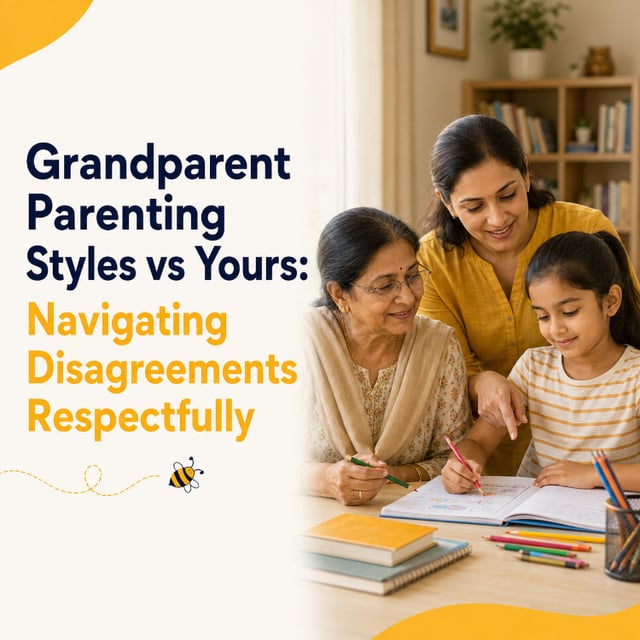
Disagreements between parents and grandparents over parenting approach are genuinely common in joint and extended family households, worth navigating with a specific, respectful framework rather than either avoidance or conflict.
Parenting philosophy disagreements with grandparents — over discipline, screen time, food, academic pressure, and countless smaller daily choices — are genuinely common across joint and extended family households, worth navigating with deliberate, respectful strategy rather than either chronic avoidance or repeated conflict.
Why these disagreements arise so naturally, worth understanding before addressing them
Grandparents generally raised their own children within a different informational and cultural context — considerably less access to current child development research, different prevailing social norms around discipline and child-rearing, and often, genuine survival and resource-constraint pressures that shaped very different priorities than many current parents navigate. This isn't a claim that grandparent approaches were simply wrong or less caring — most reflect genuine care within a different context — but understanding this origin helps frame disagreements as reflecting genuine context difference rather than either party's parenting failure or lack of care.
Common specific disagreement areas worth anticipating
Discipline approach, particularly around physical discipline (more normalised in many grandparents' own upbringing and early parenting era) versus current positive-discipline-oriented approaches many contemporary parents prefer. Screen time and technology, where grandparents sometimes hold either more permissive views (screens as harmless, convenient entertainment) or more restrictive views (screens as fundamentally suspect compared to their own generation's entertainment) than current parents' more nuanced, research-informed middle positions. Food and health choices, particularly around quantity ("eat more, you're too thin"), sweets and treats as expressions of affection, and sometimes traditional remedies or practices that current parents may not share confidence in. And academic pressure and achievement expectations, where grandparents' own era of more limited economic opportunity sometimes generates either more intense pressure (academic achievement as the singular clear path to security they navigated) or, conversely, more relaxed expectations (having successfully raised children without today's intensified competitive academic culture).


Distinguish genuine non-negotiables from areas of legitimate flexibility
Safety and core values warrant firm, clearly communicated boundaries; many other areas (food quantity preferences, minor routine differences) can reasonably flex without requiring rigid uniformity across caregivers.
Lead conversations with specific reasoning, not generational dismissal
Explaining the specific reasoning behind a preferred approach ("the doctor recommended this because...") tends to land considerably better than framing requests in terms of outdated versus modern thinking, which reads as dismissive of genuine care and experience regardless of the actual disagreement's substance.
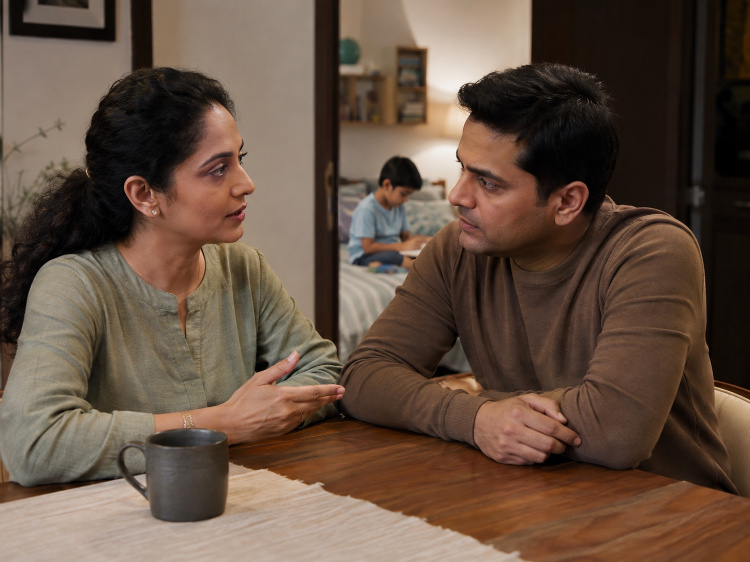
Have difficult conversations privately, away from the child
Presenting reasonably consistent messaging in the child's presence, even where full agreement hasn't been reached, reduces the confusion and potential manipulation-of-inconsistency that children, even young ones, often learn to navigate when they sense adult disagreement.
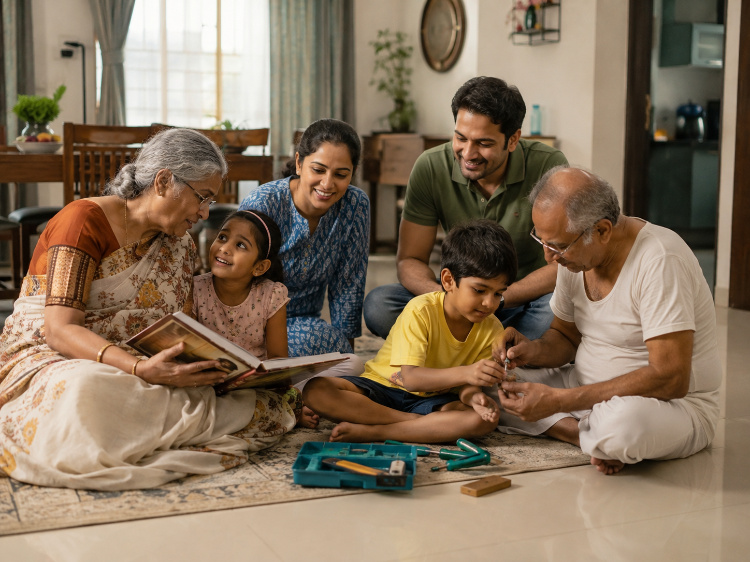
Actively seek and acknowledge genuine value in grandparent involvement, even amid disagreement
Patience, storytelling and cultural transmission, hands-on practical skills, and simply additional loving attention are genuine, valuable contributions worth explicitly recognising, which tends to make grandparents more receptive to specific requests when they don't feel their overall contribution is being dismissed alongside the specific disagreement.
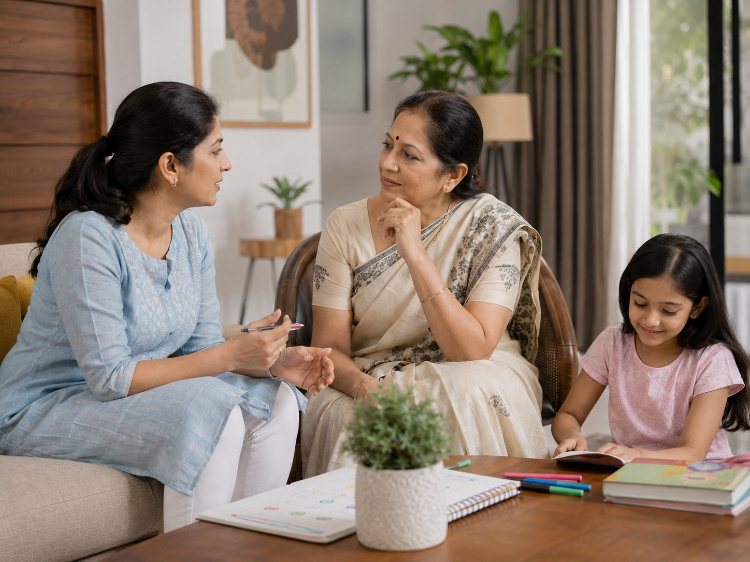
Choose battles deliberately rather than contesting every difference
Some disagreements matter enough to address directly; others are genuinely minor enough to simply accept as reasonable variation across caregivers, and discernment between these categories reduces both the frequency and intensity of necessary difficult conversations.
When disagreements persist despite genuine effort
For persistent, significant disagreements that resist respectful conversation, involving a neutral third party (sometimes another trusted family member, occasionally a family counselor for particularly entrenched conflict) can help, though for most families, the respectful, specific-reasoning-based conversation approach, applied consistently over time, gradually shifts even initially resistant grandparent positions more often than dramatic single confrontations achieve.
The relationship worth protecting throughout this navigation
Ultimately, the grandparent-grandchild relationship carries genuine, irreplaceable value worth protecting even through necessary disagreement navigation — approaching these conversations with the explicit goal of preserving genuine warmth and connection, not just winning specific parenting-approach arguments, tends to produce better long-term family outcomes than a purely correctness-focused approach to these inevitable generational differences.