
 Summer Camp
 Reading Writing
 Book Club
 Calligraphy
 Creative Writing
 English Speaking
 Handwriting
 Library
 Phonics
 Story Telling
 Art and Craft
 Clay Moulding
 Drawing
 Painting
 Pottery
 Sketching
 Drama Theatre
 Personality Development
 Public Speaking
 Languages
 Arabic
 Chinese
 French
 German
 Hindi
Hindi Italian
 Japanese
 Korean
 Persian
 Portuguese
 Russian
 Spanish
 Turkish
 Uzbek
Uzbek Sports and Fitness
 Aerobics
 Athletics
 Badminton
 Basket Ball
 Chess
Chess Cricket
 Football
 Golf
Golf Gymnastics
 Hulahoop
 Karate
 Martial Arts
 Pickleball
 Rugby
Rugby Skating
 Swimming
 Taekwondo
 Tennis
 Volleyball
 Yoga
Yoga Zumba
Zumba Tuition Classes
 Accounts
 Biology
 Business Studies
 CBSE
CBSE Chemistry
 Commerce
 Economics
 Homework Classes
 IB Board
 IGCSE
IGCSE Mathematics
 Physics
 Psychology
 Science
 Social Studies
 Vedic Maths
 Dance and Music
 Ballet
 Bhangra
 Bharatnatyam
 Bollywood Dance
 Casio
Casio Dandiya and Garba
 Drums
Drums Flute
Flute Guitar
 Harmonium
 Hip Hop
 Jazz
Jazz Kathak
 Keyboard
 Piano
Piano Salsa
Salsa Shlokas
 Sitar
Sitar Tabla
Tabla Ukulele
 Violin
 Vocal
Vocal Play School
 STEM
STEM
 Abacus
 App Development
 Artificial intelligence
 Basic Computer Courses
 Canva
Canva Coding
 Graphic Design
 Lego
Lego Python
 Robotics
 Rubiks Cube
 Scrabble
 Scratch
 Website Development
 Winter Camp
 Workshops
 Diwali Workshop
 Easter
 Ganesh Mahotsav
 Guru Nanak Jayanti Workshop
 Holi
Holi Independence day workshop
 Janmashtami Workshop
 Mothers day
 Navratri Workshops
 Raksha Bandhan workshop
 Ramayana Workshop
 Spring Camp
 Valentines Day Workshops
 Festive
 Daycare
 Cooking and Food
 Spring Camp
 Contests and Competitions
 Special abled
 Republic Day Workshops
 Mela
Mela
 Mela
Mela Cognitive Development
 Mother-Toddler Program
-Jul-03-2026-06-59-25-1926-AM.webp?width=30&height=30&name=Smart_20Skills_20(2)-Jul-03-2026-06-59-25-1926-AM.webp) Smart Skills
Smart Skills
 Financial Literacy
 Mental Wellbeing
 Meditation
 Reiki
Reiki



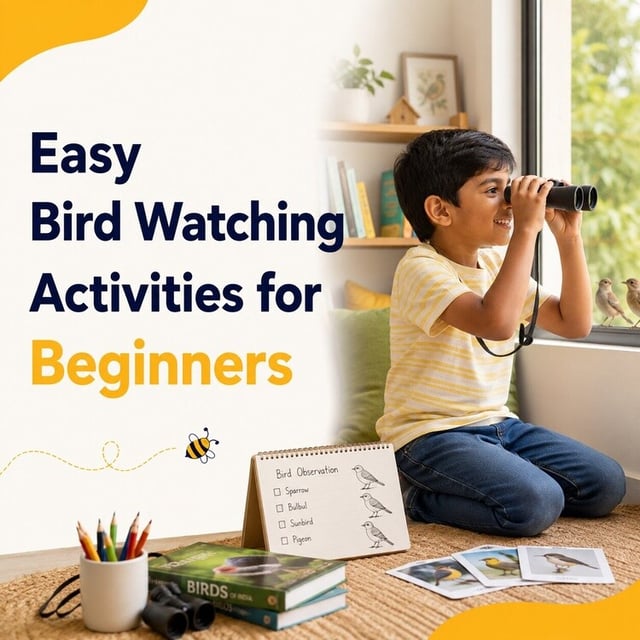
Bird watching is one of the most accessible nature hobbies available in Delhi NCR, requiring no special equipment to start — and the region hosts genuinely rich birdlife even in dense urban settings.
Bird watching stands out among nature hobbies for its remarkably low barrier to entry — no special equipment required to begin, genuinely rich birdlife present across Delhi NCR even in urban settings, and an activity families can pursue together from any balcony, park, or garden.
Getting started without any equipment
Simply beginning to notice and distinguish the birds already present in daily life — the ubiquitous pigeons and crows, but also mynas, sparrows, parakeets, and kites that most families overlook entirely until deliberately looking — is genuinely the entire starting point.
Common Delhi NCR birds worth learning to identify first
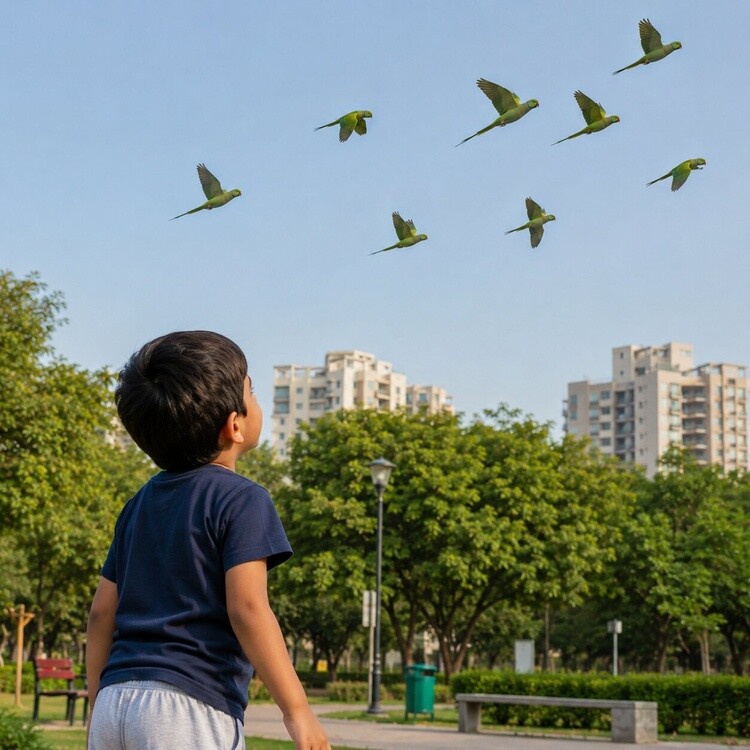
House sparrows (increasingly notable given documented urban decline, making their presence genuinely worth celebrating), common mynas, rose-ringed parakeets (the loud green flocks common across the region), black kites (frequently visible overhead), red-vented bulbuls, and the ever-present pigeons and crows — a manageable first list of 6-8 species covers most urban sightings.
Simple activities for beginning bird watchers
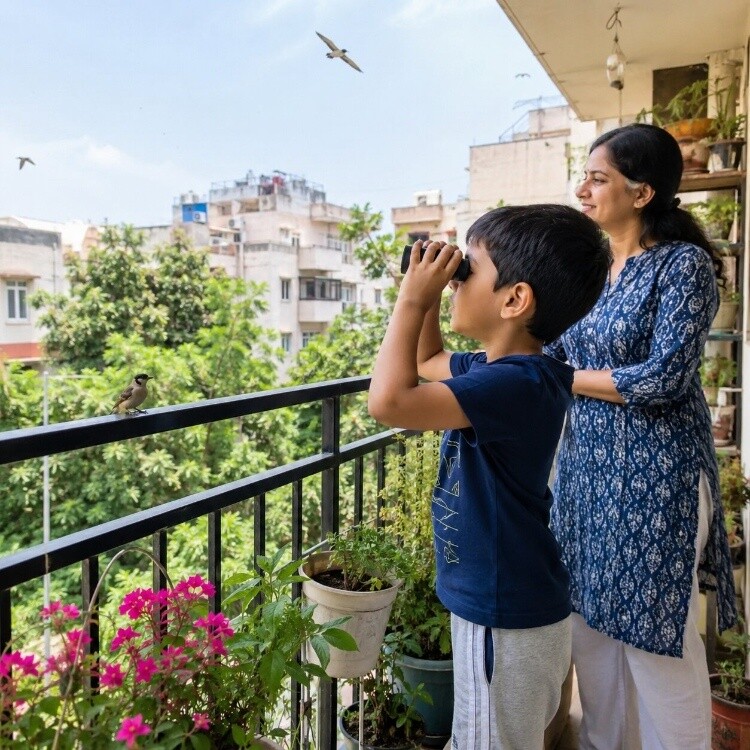
The daily bird count — a few minutes each morning noting which birds are visible from a window or balcony, building both observation skill and genuine species familiarity over weeks.
Bird feeding stations — a simple dish of grains, water, or (for specific species) fruit attracts consistent visitors for easier, closer observation.
Sound identification — learning to distinguish a few common bird calls builds identification skill even without visual confirmation.
Park bird walks — a slow, quiet walk through any park or garden, specifically looking (rather than just passing through), often reveals surprising diversity even in heavily used urban green spaces.
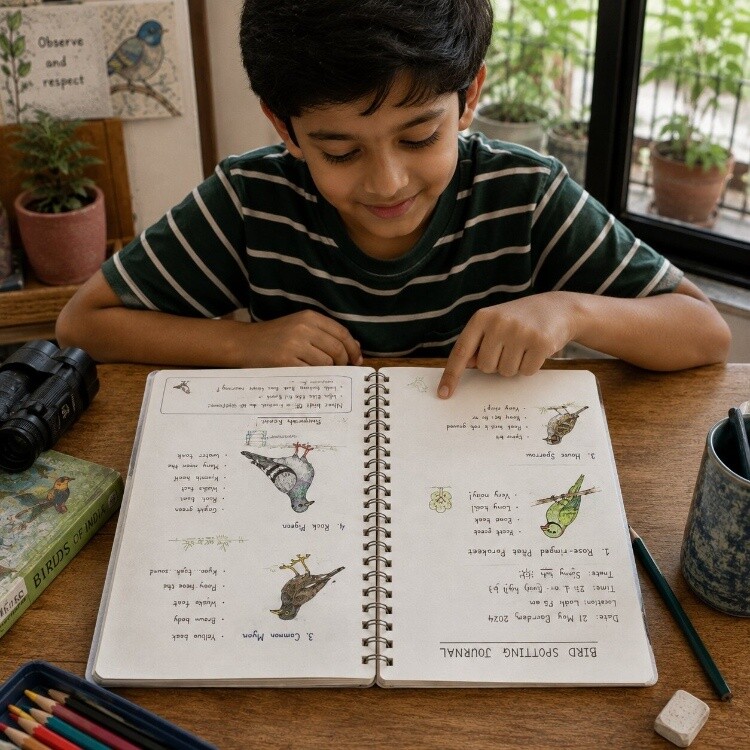
A simple bird journal — recording date, location, and species spotted (with simple child drawings rather than requiring photography) builds both the observation habit and a genuinely satisfying growing record.
Equipment that helps once interest is established
A basic pair of binoculars (inexpensive options are genuinely adequate for beginners) meaningfully improves the experience once a child shows sustained interest, though entirely optional for starting out. Simple bird identification apps (several free, India-specific options exist) help with identification without requiring physical guidebooks.
Why bird watching particularly suits children
The activity requires and builds patience and quiet observation — skills increasingly valuable given how much of modern childhood moves at high stimulation speed. The clear, achievable goal structure (spot and identify) satisfies the collection-and-categorisation instinct many children naturally have. And the activity is genuinely free, requires no travel, and can be practiced in any spare five minutes.
Connecting to broader environmental awareness
Regular bird watching often naturally builds broader environmental consciousness — noticing habitat changes, understanding food chains through direct observation, and developing genuine care about local environmental conditions through the concrete, relatable lens of birds children have come to recognise individually.