
 Summer Camp
 Reading Writing
 Book Club
 Calligraphy
 Creative Writing
 English Speaking
 Handwriting
 Library
 Phonics
 Story Telling
 Art and Craft
 Clay Moulding
 Drawing
 Painting
 Pottery
 Sketching
 Drama Theatre
 Personality Development
 Public Speaking
 Languages
 Arabic
 Chinese
 French
 German
 Hindi
Hindi Italian
 Japanese
 Korean
 Persian
 Portuguese
 Russian
 Spanish
 Turkish
 Uzbek
Uzbek Sports and Fitness
 Aerobics
 Athletics
 Badminton
 Basket Ball
 Chess
Chess Cricket
 Football
 Golf
Golf Gymnastics
 Hulahoop
 Karate
 Martial Arts
 Pickleball
 Rugby
Rugby Skating
 Swimming
 Taekwondo
 Tennis
 Volleyball
 Yoga
Yoga Zumba
Zumba Tuition Classes
 Accounts
 Biology
 Business Studies
 CBSE
CBSE Chemistry
 Commerce
 Economics
 Homework Classes
 IB Board
 IGCSE
IGCSE Mathematics
 Physics
 Psychology
 Science
 Social Studies
 Vedic Maths
 Dance and Music
 Ballet
 Bhangra
 Bharatnatyam
 Bollywood Dance
 Casio
Casio Dandiya and Garba
 Drums
Drums Flute
Flute Guitar
 Harmonium
 Hip Hop
 Jazz
Jazz Kathak
 Keyboard
 Piano
Piano Salsa
Salsa Shlokas
 Sitar
Sitar Tabla
Tabla Ukulele
 Violin
 Vocal
Vocal Play School
 STEM
STEM
 Abacus
 App Development
 Artificial intelligence
 Basic Computer Courses
 Canva
Canva Coding
 Graphic Design
 Lego
Lego Python
 Robotics
 Rubiks Cube
 Scrabble
 Scratch
 Website Development
 Winter Camp
 Workshops
 Diwali Workshop
 Easter
 Ganesh Mahotsav
 Guru Nanak Jayanti Workshop
 Holi
Holi Independence day workshop
 Janmashtami Workshop
 Mothers day
 Navratri Workshops
 Raksha Bandhan workshop
 Ramayana Workshop
 Spring Camp
 Valentines Day Workshops
 Festive
 Daycare
 Cooking and Food
 Spring Camp
 Contests and Competitions
 Special abled
 Republic Day Workshops
 Mela
Mela
 Mela
Mela Cognitive Development
 Mother-Toddler Program
-Jul-03-2026-06-59-25-1926-AM.webp?width=30&height=30&name=Smart_20Skills_20(2)-Jul-03-2026-06-59-25-1926-AM.webp) Smart Skills
Smart Skills
 Financial Literacy
 Mental Wellbeing
 Meditation
 Reiki
Reiki



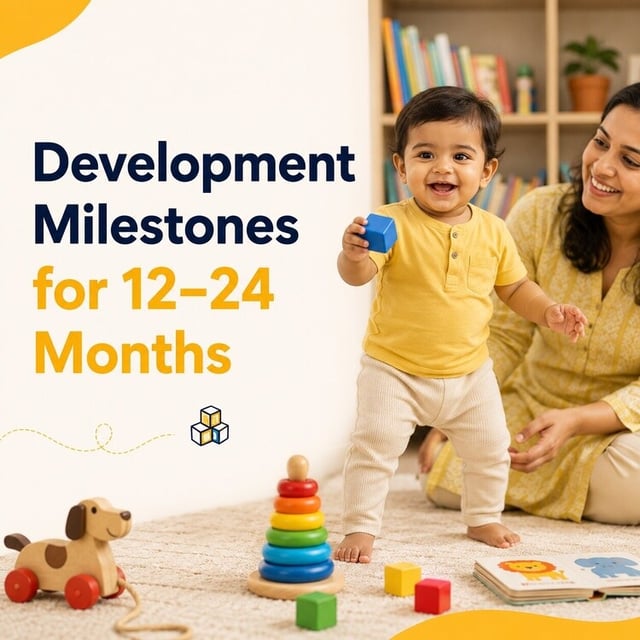
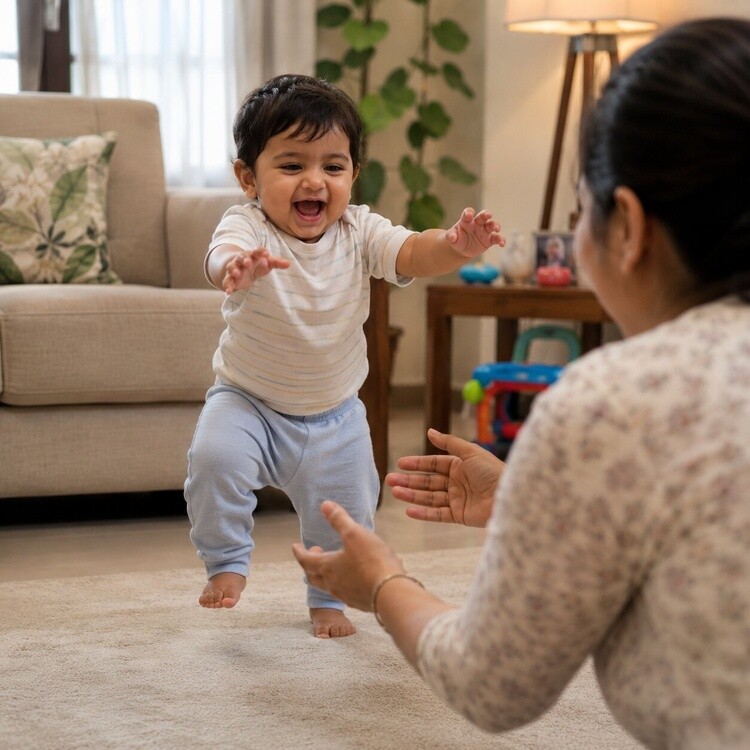
The second year transforms a baby into a walking, talking, opinionated toddler. Here's what typically develops between 12 and 24 months — with the reassurance that the normal range is wider than milestone charts suggest.
No single year of childhood packs in more visible transformation than the second one. The child who turns one as a crawling babbler typically turns two walking, running, talking, and negotiating. Here's the map — held loosely.
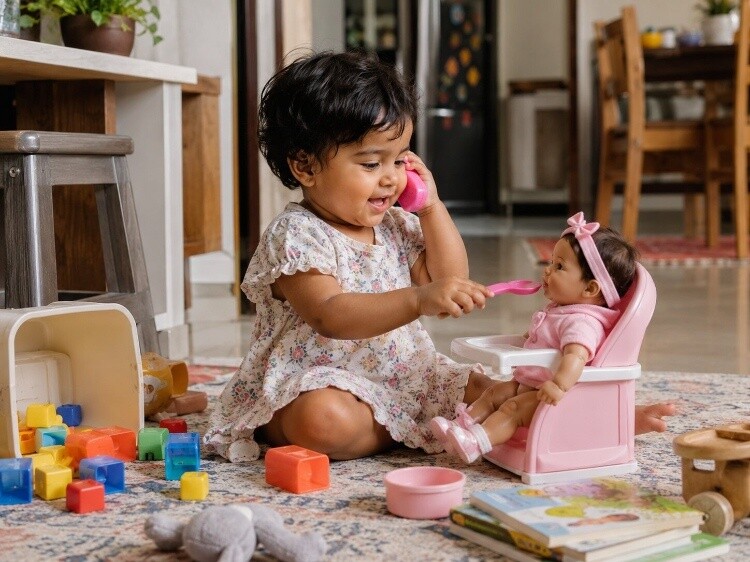
Cognitive and play development
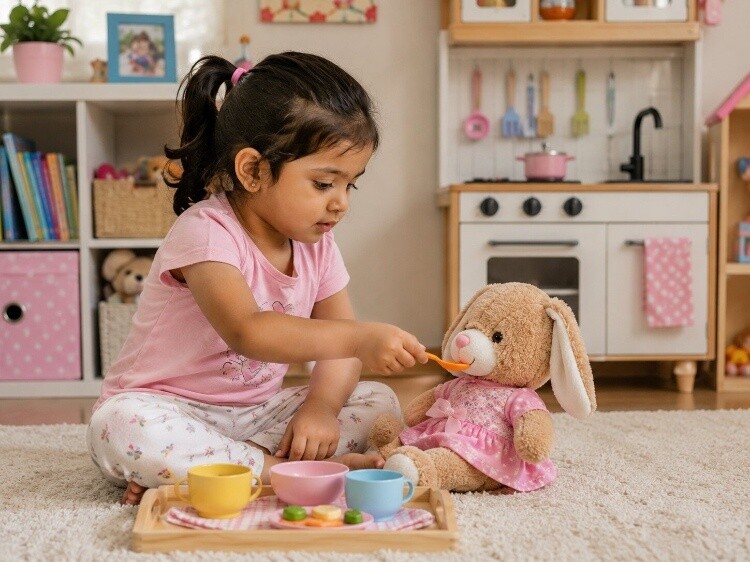
Pretend play emerges — feeding a doll, "talking" on a toy phone — a major cognitive leap. Object permanence solidifies. Simple problem-solving develops: using a stool to reach, turning containers to empty them. Favourite books, songs, and routines become fiercely held preferences.
Social and emotional development
Separation anxiety often peaks in this period — a sign of healthy attachment, not spoiling. Parallel play (playing alongside, not yet with, other children) is the norm; true cooperative play comes later. And tantrums begin — the developmental collision of strong wants, minimal language, and an immature regulation system. They are a feature of this age, not a discipline failure.
Self-help skills
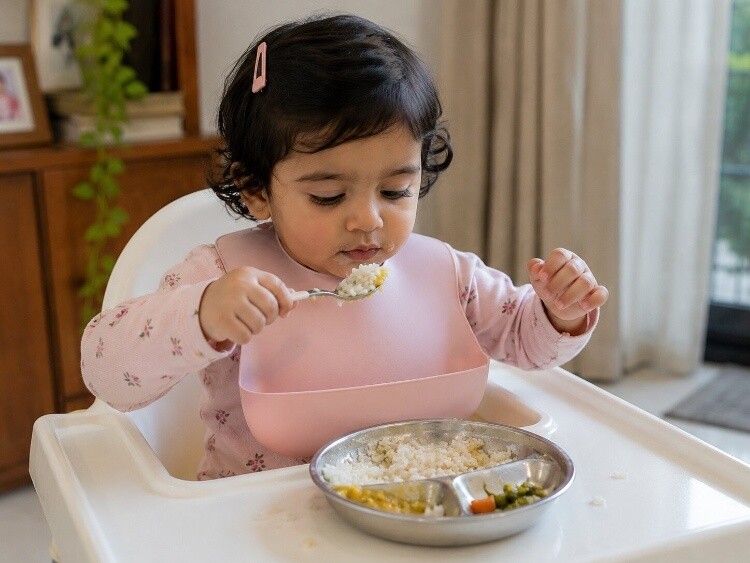
Attempts at self-feeding with spoon and fingers, helping with dressing (arms up, foot out), and drinking from an open cup with spills all typically develop across this year.
What genuinely merits a paediatrician conversation
Not walking by 18 months. No words by 16-18 months, or no pointing and gesturing to communicate. Loss of previously acquired skills at any point. Apparent lack of interest in people and social engagement. Any of these warrants a calm conversation — early support, when needed, is most effective precisely because it's early.
The comparison trap, toddler edition
Park benches and family WhatsApp groups turn milestone variation into competitive anxiety. Worth holding onto: within the normal ranges, earlier milestones predict nothing about later ability. The 10-month walker and the 16-month walker are indistinguishable at age five.