
 Summer Camp
 Reading Writing
 Book Club
 Calligraphy
 Creative Writing
 English Speaking
 Handwriting
 Library
 Phonics
 Story Telling
 Art and Craft
 Clay Moulding
 Drawing
 Painting
 Pottery
 Sketching
 Drama Theatre
 Personality Development
 Public Speaking
 Languages
 Arabic
 Chinese
 French
 German
 Hindi
Hindi Italian
 Japanese
 Korean
 Persian
 Portuguese
 Russian
 Spanish
 Turkish
 Uzbek
Uzbek Sports and Fitness
 Aerobics
 Athletics
 Badminton
 Basket Ball
 Chess
Chess Cricket
 Football
 Golf
Golf Gymnastics
 Hulahoop
 Karate
 Martial Arts
 Pickleball
 Rugby
Rugby Skating
 Swimming
 Taekwondo
 Tennis
 Volleyball
 Yoga
Yoga Zumba
Zumba Tuition Classes
 Accounts
 Biology
 Business Studies
 CBSE
CBSE Chemistry
 Commerce
 Economics
 Homework Classes
 IB Board
 IGCSE
IGCSE Mathematics
 Physics
 Psychology
 Science
 Social Studies
 Vedic Maths
 Dance and Music
 Ballet
 Bhangra
 Bharatnatyam
 Bollywood Dance
 Casio
Casio Dandiya and Garba
 Drums
Drums Flute
Flute Guitar
 Harmonium
 Hip Hop
 Jazz
Jazz Kathak
 Keyboard
 Piano
Piano Salsa
Salsa Shlokas
 Sitar
Sitar Tabla
Tabla Ukulele
 Violin
 Vocal
Vocal Play School
 STEM
STEM
 Abacus
 App Development
 Artificial intelligence
 Basic Computer Courses
 Canva
Canva Coding
 Graphic Design
 Lego
Lego Python
 Robotics
 Rubiks Cube
 Scrabble
 Scratch
 Website Development
 Winter Camp
 Workshops
 Diwali Workshop
 Easter
 Ganesh Mahotsav
 Guru Nanak Jayanti Workshop
 Holi
Holi Independence day workshop
 Janmashtami Workshop
 Mothers day
 Navratri Workshops
 Raksha Bandhan workshop
 Ramayana Workshop
 Spring Camp
 Valentines Day Workshops
 Festive
 Daycare
 Cooking and Food
 Spring Camp
 Contests and Competitions
 Special abled
 Republic Day Workshops
 Mela
Mela
 Mela
Mela Cognitive Development
 Mother-Toddler Program
-Jul-03-2026-06-59-25-1926-AM.webp?width=30&height=30&name=Smart_20Skills_20(2)-Jul-03-2026-06-59-25-1926-AM.webp) Smart Skills
Smart Skills
 Financial Literacy
 Mental Wellbeing
 Meditation
 Reiki
Reiki



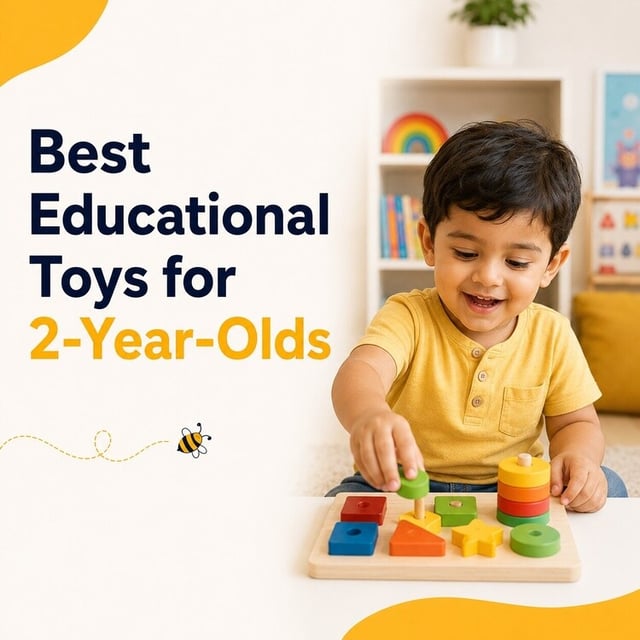
At two, the best "educational" toys support pretend play, problem-solving, and language — not letters and numbers. Here's what genuinely earns shelf space, and the marketing claims to ignore.
The toy industry's "educational" labelling grows louder at age two, as parents begin thinking about learning. But what two-year-olds developmentally need from toys has little to do with alphabet recitation.
What "educational" genuinely means at two
The skills under construction: pretend play (the engine of cognitive and social development), language, fine and gross motor control, and early problem-solving. Toys that serve these are educational regardless of labels; toys that recite letters at a passive child mostly aren't.
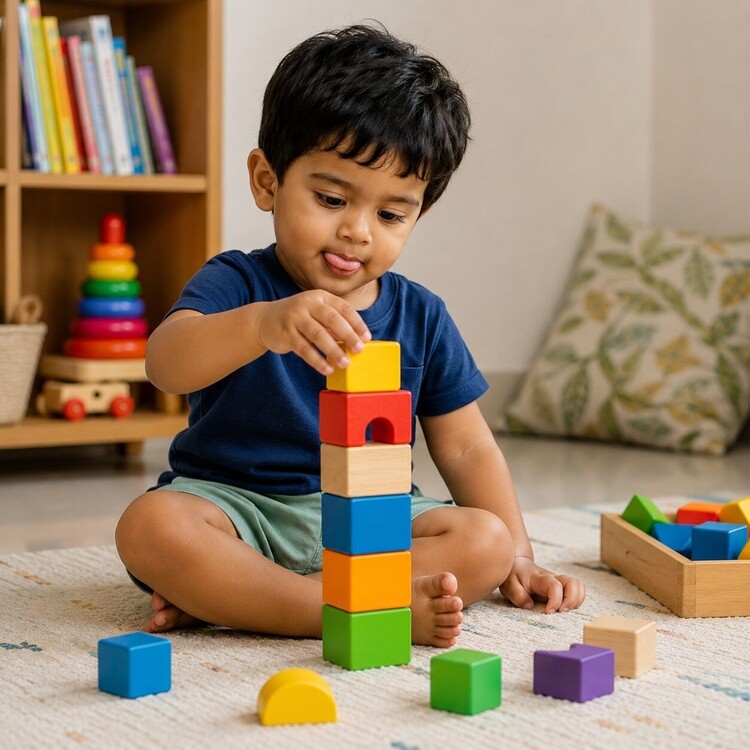
Toy categories that earn their place
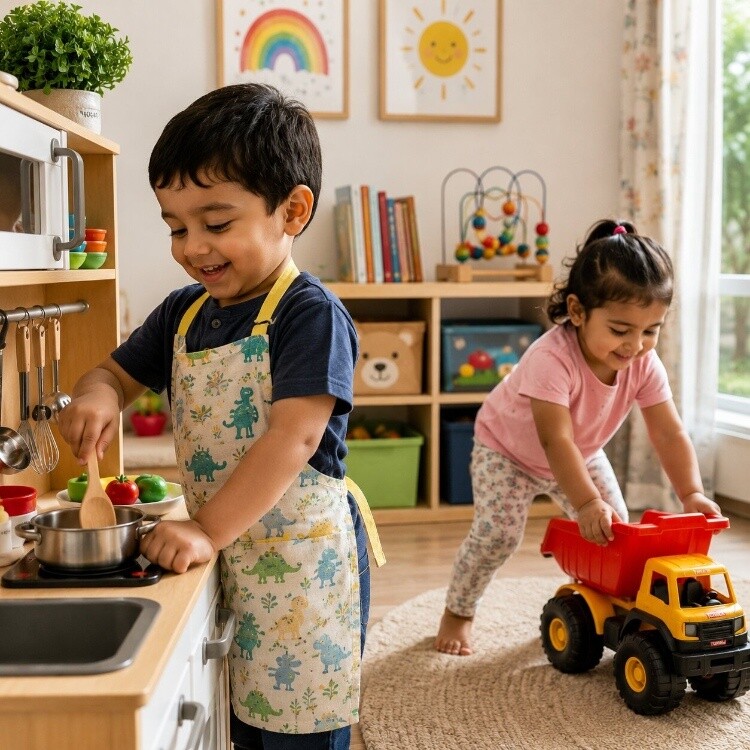
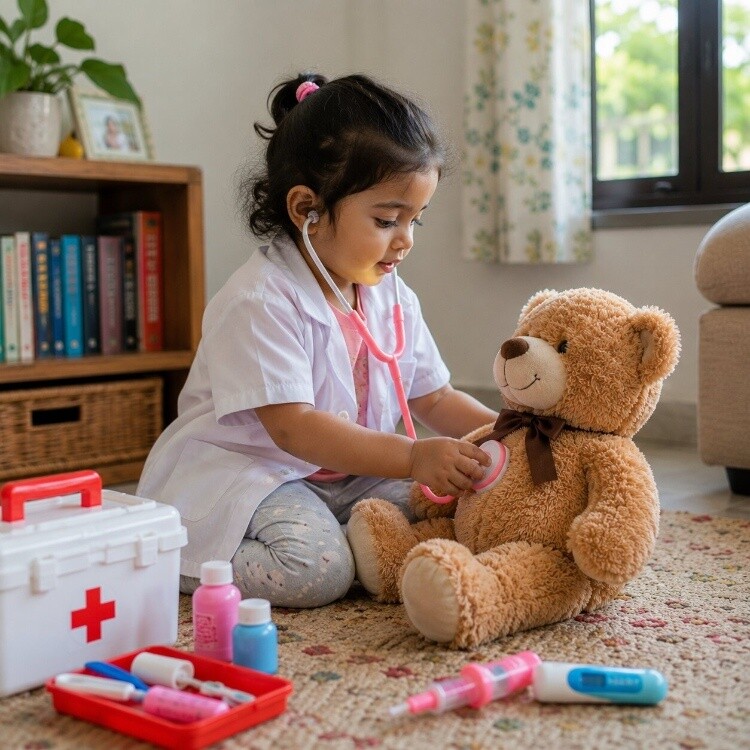
Pretend play sets — a toy kitchen (or a dedicated shelf of real steel utensils), doctor kits, tool sets. This is the headline category for the age.
Dolls and soft toys with accessories — feeding, dressing, and caring for a doll rehearses empathy and daily routines; genuinely valuable for all children, boys included.
Chunky construction blocks — big Lego-style bricks or wooden blocks; building begins in earnest now.
Simple puzzles, progressing from 2 to 12 pieces — problem-solving with visible completion satisfaction.
Push vehicles, and ride-ons propelled by feet — gross motor development with high engagement.
Shape sorters and lock-boxes — latches, lids, keys, and openings — mechanical problem-solving toddlers adore.
Play food and market sets — cutting velcro vegetables, "shopping," and serving — pretend play with rich language potential.
Crayons, chunky chalk, and dough — creative material basics that outperform most electronic art toys.
Musical instruments — a real (toddler-sized) drum or shaker over a button that plays recorded music.
Books — still the highest-value "toy" per rupee at every age.
What to skip
Alphabet-and-number electronic toys — memorising letter sounds at two is neither expected nor advantageous, and buttons that recite them build nothing. Tablets and "learning" apps marketed for toddlers. Anything where the toy performs while the child watches — the ratio to seek is a toy that's 10% of the play and a child who's 90%.
The gender note, made gently
Kitchens and dolls for boys, blocks and vehicles for girls — every category serves every child's development, and two-year-olds haven't yet learned which aisle marketing intends for them. Following the child's actual interest serves them better than the packaging's suggestion.
Household objects remain undefeated
The steel utensil shelf, the dabba collection, the old phone (dead, cleaned) for pretend calls, cardboard boxes — the free tier continues matching the paid tier at this age. Money spent best goes toward a few quality open-ended items over many single-purpose ones.