
 Summer Camp
 Reading Writing
 Book Club
 Calligraphy
 Creative Writing
 English Speaking
 Handwriting
 Library
 Phonics
 Story Telling
 Art and Craft
 Clay Moulding
 Drawing
 Painting
 Pottery
 Sketching
 Drama Theatre
 Personality Development
 Public Speaking
 Languages
 Arabic
 Chinese
 French
 German
 Hindi
Hindi Italian
 Japanese
 Korean
 Persian
 Portuguese
 Russian
 Spanish
 Turkish
 Uzbek
Uzbek Sports and Fitness
 Aerobics
 Athletics
 Badminton
 Basket Ball
 Chess
Chess Cricket
 Football
 Golf
Golf Gymnastics
 Hulahoop
 Karate
 Martial Arts
 Pickleball
 Rugby
Rugby Skating
 Swimming
 Taekwondo
 Tennis
 Volleyball
 Yoga
Yoga Zumba
Zumba Tuition Classes
 Accounts
 Biology
 Business Studies
 CBSE
CBSE Chemistry
 Commerce
 Economics
 Homework Classes
 IB Board
 IGCSE
IGCSE Mathematics
 Physics
 Psychology
 Science
 Social Studies
 Vedic Maths
 Dance and Music
 Ballet
 Bhangra
 Bharatnatyam
 Bollywood Dance
 Casio
Casio Dandiya and Garba
 Drums
Drums Flute
Flute Guitar
 Harmonium
 Hip Hop
 Jazz
Jazz Kathak
 Keyboard
 Piano
Piano Salsa
Salsa Shlokas
 Sitar
Sitar Tabla
Tabla Ukulele
 Violin
 Vocal
Vocal Play School
 STEM
STEM
 Abacus
 App Development
 Artificial intelligence
 Basic Computer Courses
 Canva
Canva Coding
 Graphic Design
 Lego
Lego Python
 Robotics
 Rubiks Cube
 Scrabble
 Scratch
 Website Development
 Winter Camp
 Workshops
 Diwali Workshop
 Easter
 Ganesh Mahotsav
 Guru Nanak Jayanti Workshop
 Holi
Holi Independence day workshop
 Janmashtami Workshop
 Mothers day
 Navratri Workshops
 Raksha Bandhan workshop
 Ramayana Workshop
 Spring Camp
 Valentines Day Workshops
 Festive
 Daycare
 Cooking and Food
 Spring Camp
 Contests and Competitions
 Special abled
 Republic Day Workshops
 Mela
Mela
 Mela
Mela Cognitive Development
 Mother-Toddler Program
-Jul-03-2026-06-59-25-1926-AM.webp?width=30&height=30&name=Smart_20Skills_20(2)-Jul-03-2026-06-59-25-1926-AM.webp) Smart Skills
Smart Skills
 Financial Literacy
 Mental Wellbeing
 Meditation
 Reiki
Reiki




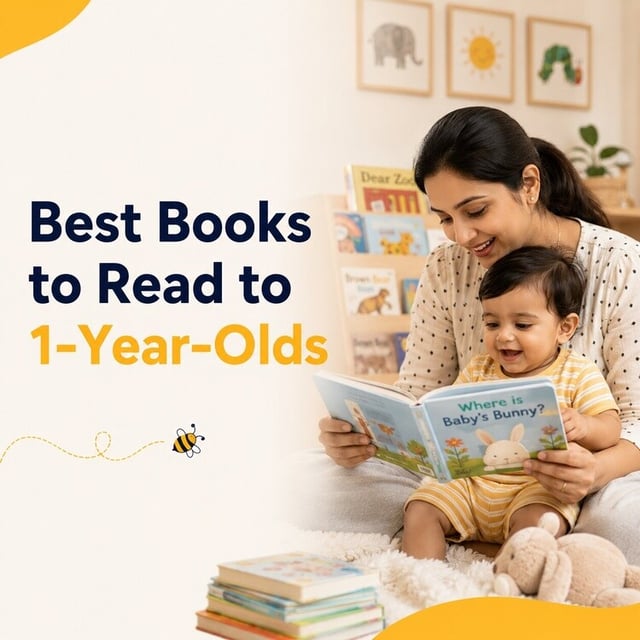
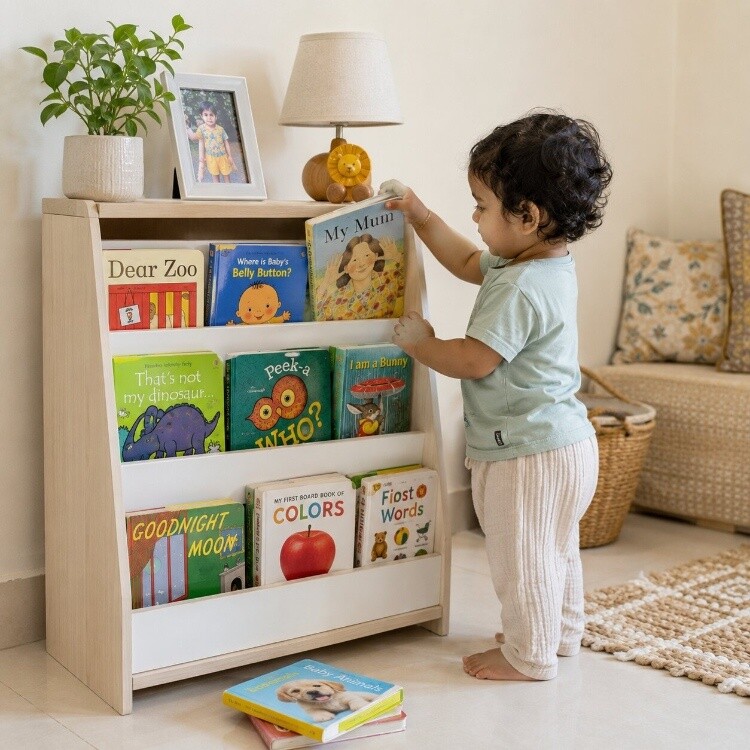
One-year-olds engage with books physically and socially before they engage with stories — the best books at this age are sturdy, visually bold, interactive, and short. Indian publishers now offer genuinely good options alongside classic international titles.
Reading to a one-year-old rarely looks like the storybook image — the child grabs pages, flips backward, walks away mid-page, and demands the same book eleven times. All of this is engagement, and all of it counts.
What makes a book right for this age
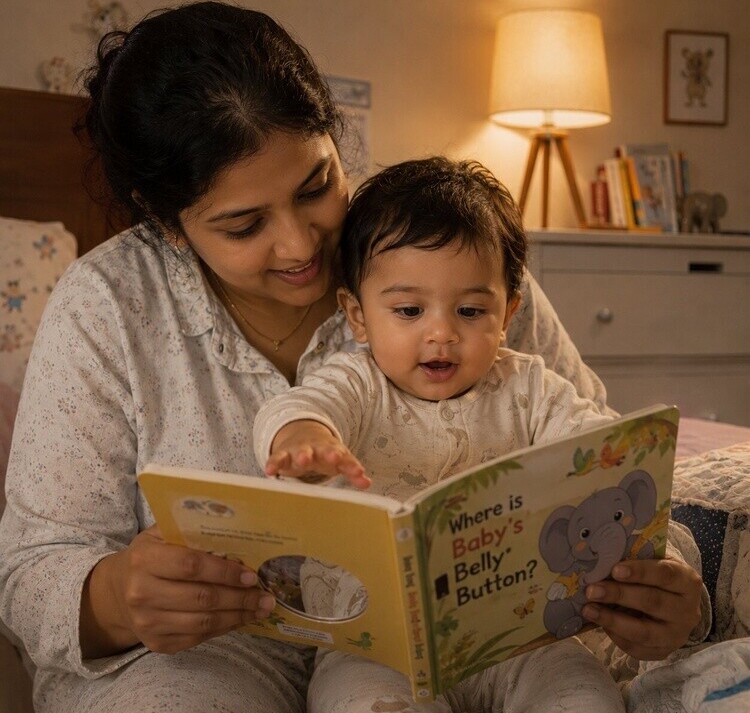
Board pages that survive handling and chewing. Bold, high-contrast images with one clear subject per page. Very short text — a few words per page, or none. Interactive elements: flaps, textures, holes to poke fingers through. Repetition and rhythm in whatever text exists.
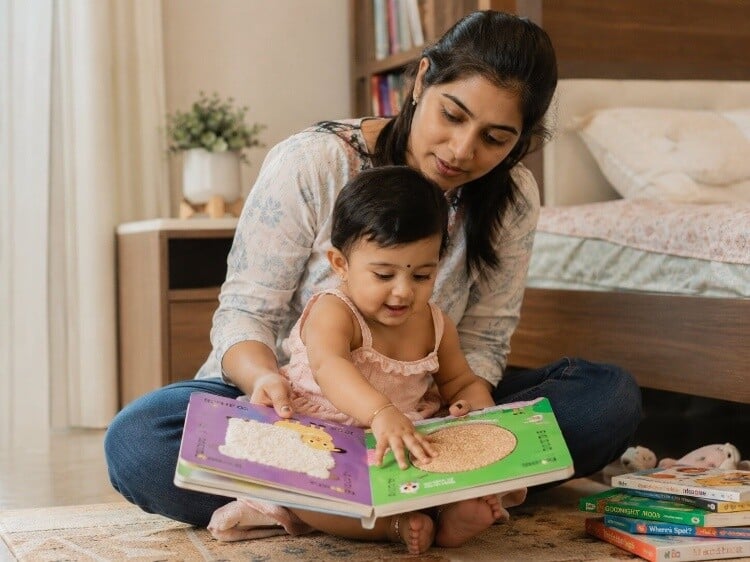
Touch-and-feel books
Texture patches turn reading into sensory play, ideal for this age's exploration style.
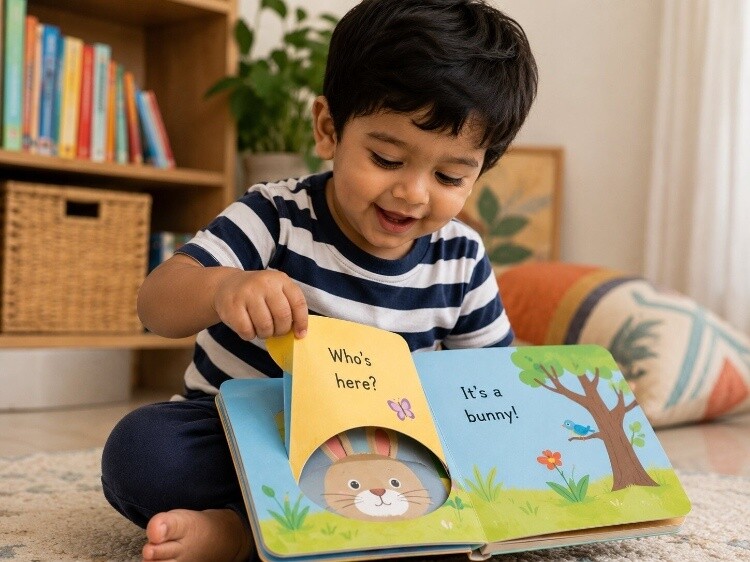
Lift-the-flap books
Peek-a-boo in book form; the anticipation and reveal mechanic is developmentally perfect for one-year-olds.
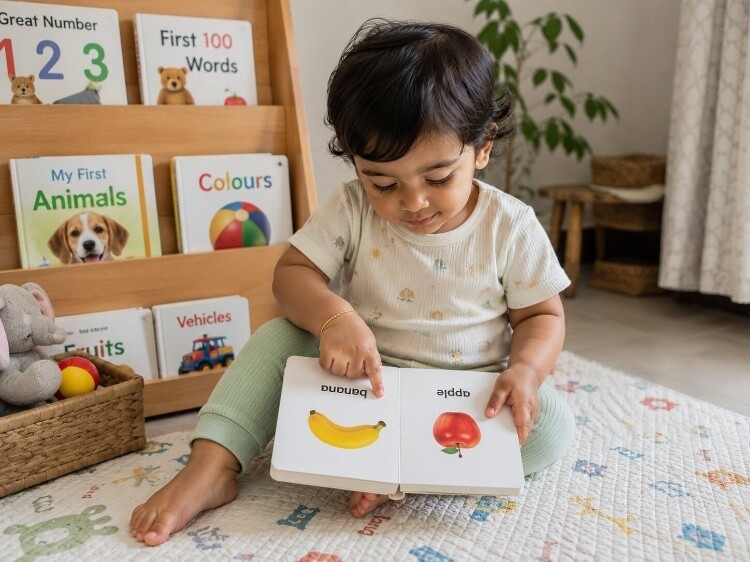
First words picture books
Single clear images with labels; these become pointing-and-naming conversations rather than read-alouds.
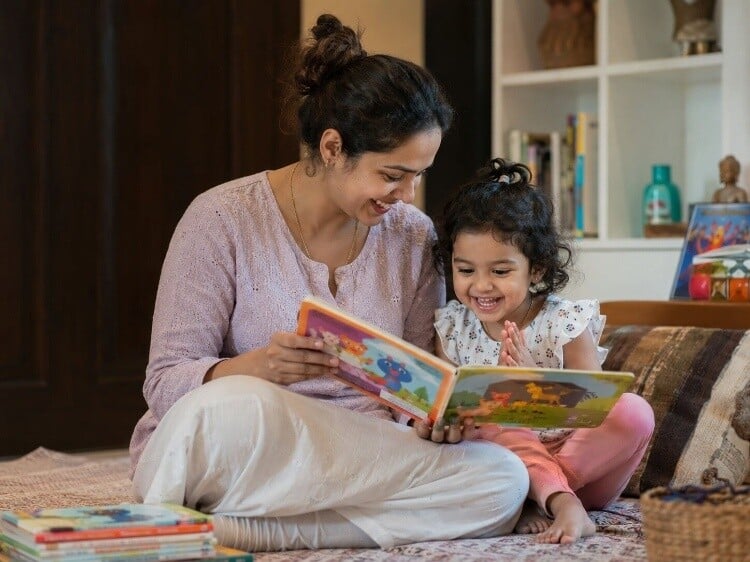
Rhythm and rhyme books
The musicality holds attention even when meaning doesn't yet.
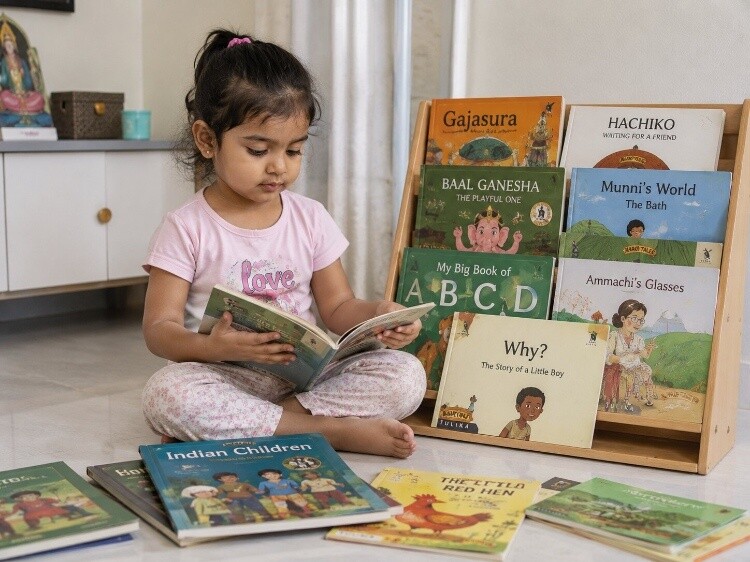
Books with Indian settings and faces
Indian publishers like Tulika, Karadi Tales, and Pratham have built genuinely strong early-years catalogues where children see familiar foods, streets, festivals, and faces — worth having alongside international classics.
How to "read" with a one-year-old, realistically
Follow their pace, not the page order. Let them hold and manipulate the book. Name what they point at rather than insisting on the text. Thirty seconds of engaged interaction beats ten minutes of restrained squirming. Ending before they're done — leaving them wanting more — builds positive association better than pushing through resistance.
The repetition they demand is the point
The same book, every day, for weeks: exhausting for adults, ideal for language mapping. Each repetition strengthens word-image connections. Surrender to the favourite book era; it passes on its own.
Building the habit that matters more than any title
A predictable daily book moment — most families find bedtime natural — matters more than which books fill it. The one-year-old who associates books with closeness and attention becomes, more often than not, the six-year-old who reads for pleasure.