
 Summer Camp
 Reading Writing
 Book Club
 Calligraphy
 Creative Writing
 English Speaking
 Handwriting
 Library
 Phonics
 Story Telling
 Art and Craft
 Clay Moulding
 Drawing
 Painting
 Pottery
 Sketching
 Drama Theatre
 Personality Development
 Public Speaking
 Languages
 Arabic
 Chinese
 French
 German
 Hindi
Hindi Italian
 Japanese
 Korean
 Persian
 Portuguese
 Russian
 Spanish
 Turkish
 Uzbek
Uzbek Sports and Fitness
 Aerobics
 Athletics
 Badminton
 Basket Ball
 Chess
Chess Cricket
 Football
 Golf
Golf Gymnastics
 Hulahoop
 Karate
 Martial Arts
 Pickleball
 Rugby
Rugby Skating
 Swimming
 Taekwondo
 Tennis
 Volleyball
 Yoga
Yoga Zumba
Zumba Tuition Classes
 Accounts
 Biology
 Business Studies
 CBSE
CBSE Chemistry
 Commerce
 Economics
 Homework Classes
 IB Board
 IGCSE
IGCSE Mathematics
 Physics
 Psychology
 Science
 Social Studies
 Vedic Maths
 Dance and Music
 Ballet
 Bhangra
 Bharatnatyam
 Bollywood Dance
 Casio
Casio Dandiya and Garba
 Drums
Drums Flute
Flute Guitar
 Harmonium
 Hip Hop
 Jazz
Jazz Kathak
 Keyboard
 Piano
Piano Salsa
Salsa Shlokas
 Sitar
Sitar Tabla
Tabla Ukulele
 Violin
 Vocal
Vocal Play School
 STEM
STEM
 Abacus
 App Development
 Artificial intelligence
 Basic Computer Courses
 Canva
Canva Coding
 Graphic Design
 Lego
Lego Python
 Robotics
 Rubiks Cube
 Scrabble
 Scratch
 Website Development
 Winter Camp
 Workshops
 Diwali Workshop
 Easter
 Ganesh Mahotsav
 Guru Nanak Jayanti Workshop
 Holi
Holi Independence day workshop
 Janmashtami Workshop
 Mothers day
 Navratri Workshops
 Raksha Bandhan workshop
 Ramayana Workshop
 Spring Camp
 Valentines Day Workshops
 Festive
 Daycare
 Cooking and Food
 Spring Camp
 Contests and Competitions
 Special abled
 Republic Day Workshops
 Mela
Mela
 Mela
Mela Cognitive Development
 Mother-Toddler Program
-Jul-03-2026-06-59-25-1926-AM.webp?width=30&height=30&name=Smart_20Skills_20(2)-Jul-03-2026-06-59-25-1926-AM.webp) Smart Skills
Smart Skills
 Financial Literacy
 Mental Wellbeing
 Meditation
 Reiki
Reiki



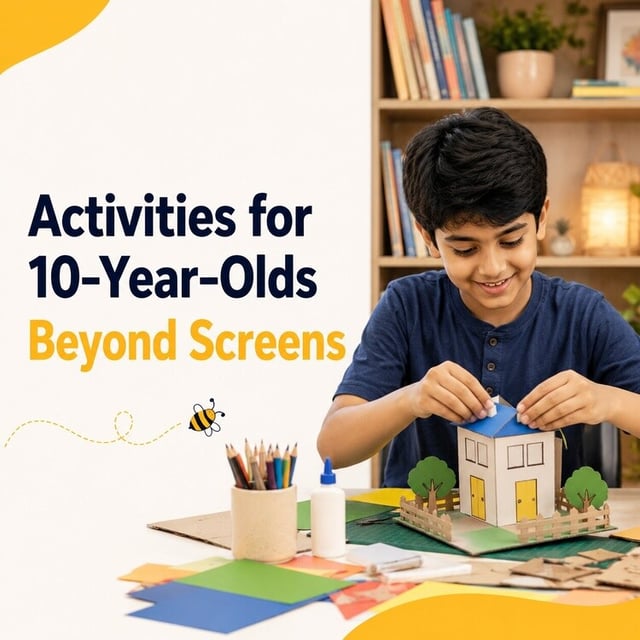
Ten-year-olds navigate real screen pull now — the alternatives need to compete on genuine appeal, not virtue. These activities are chosen for winning the actual competition for attention.
By ten, screens have real competitive pull — games, videos, social platforms increasingly part of peer culture. The screen-free alternatives that work aren't nostalgic substitutes; they're genuinely competitive experiences.
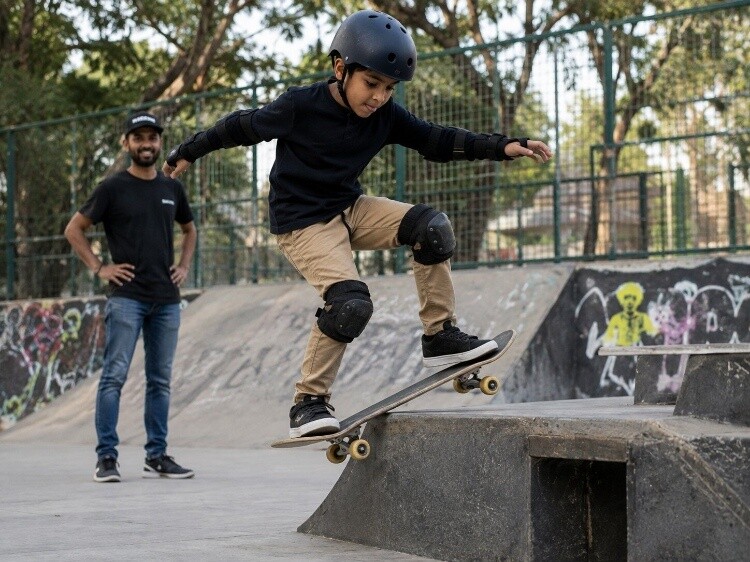
Skill-mastery projects with visible plateaus to break
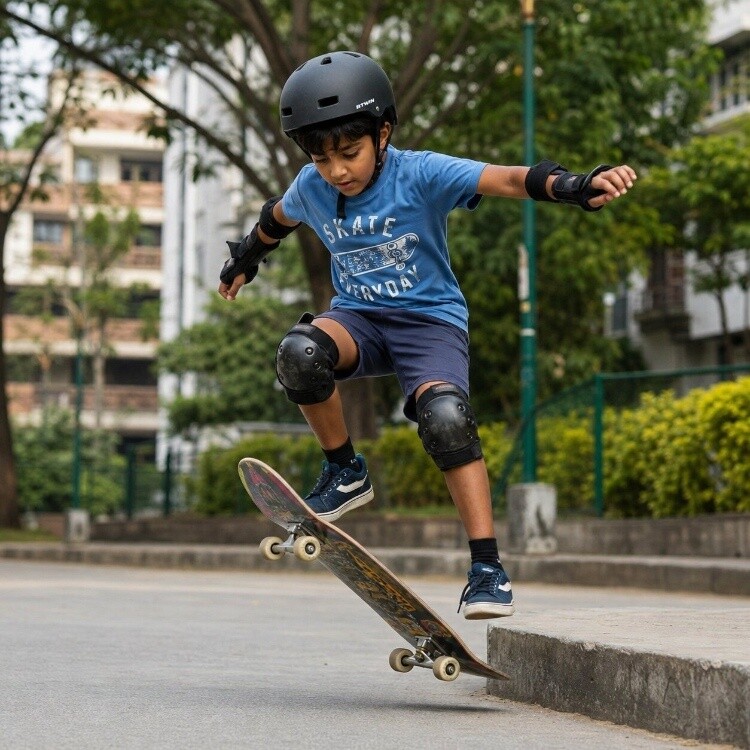
Skateboarding tricks, a musical piece, a cooking technique — the engagement of "almost got it" that games manufacture artificially, available in real skills.
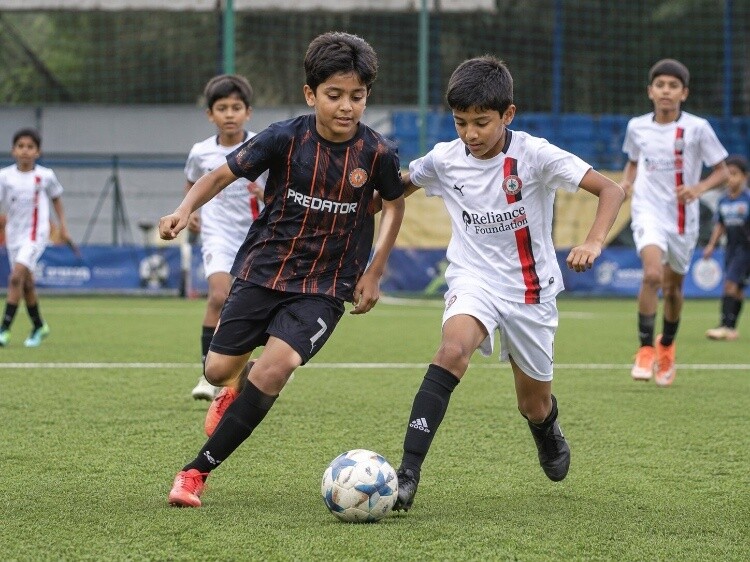
Social sport and team commitments
Football, basketball, or badminton leagues — peer connection and physical mastery combined, competing directly with gaming's social pull.
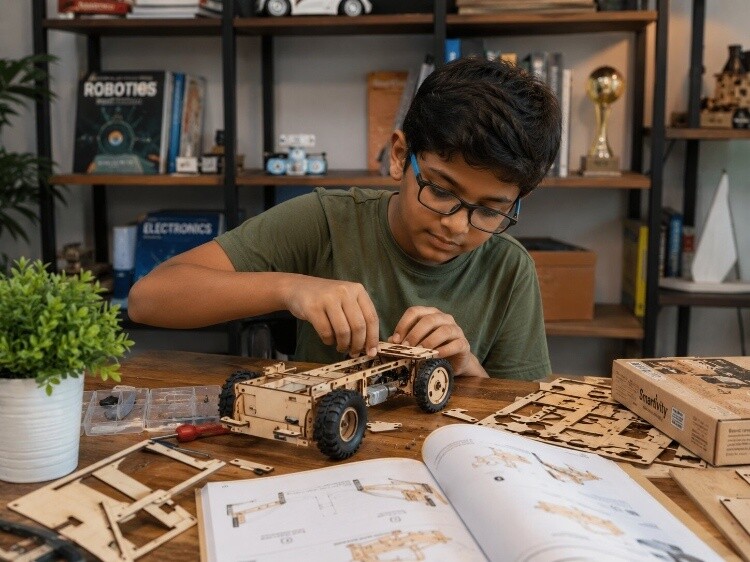
Building and making at ambition scale
Model kits, electronics projects, woodworking basics — sustained-focus making that rivals screen-absorption depth.
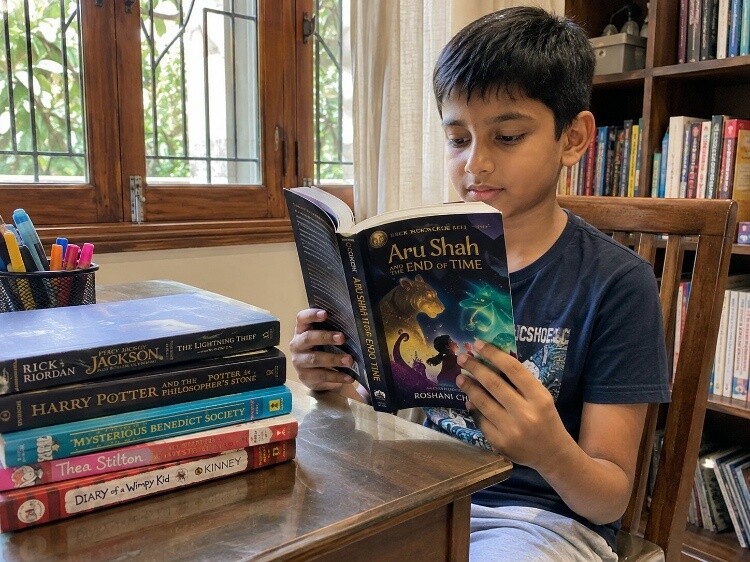
Reading series with genuine hook
Matched-interest fiction sustaining the same "one more chapter/level" pull that games exploit deliberately.
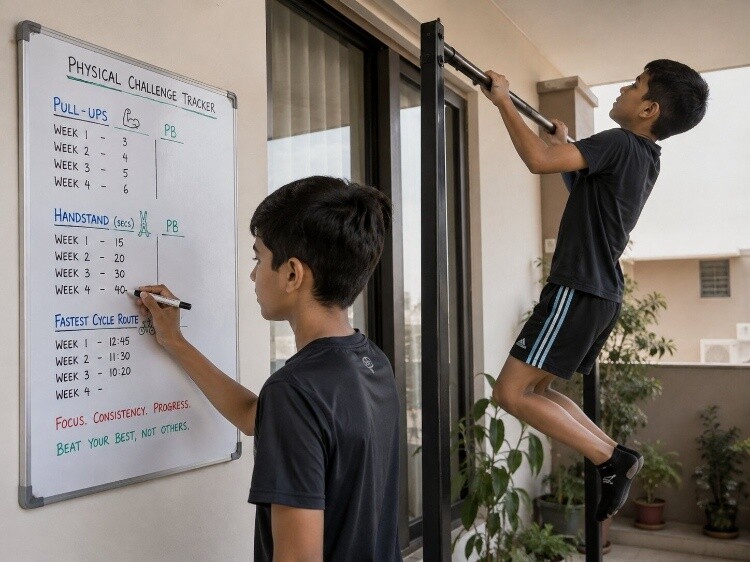
Physical challenge tracking
Personal-best projects (fastest cycle route, most pull-ups, longest handstand) — gamification applied to real bodies.

Photography and videography as craft
Real camera skills (even phone-based, taught deliberately) — creative screen-adjacent use that builds rather than consumes.
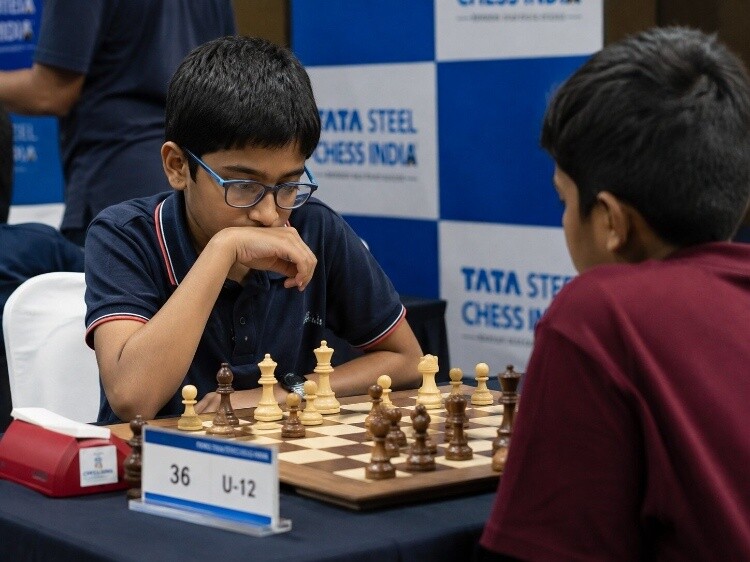
Board game and strategy game depth
Chess ratings, strategy-game campaigns, tournament participation — competitive depth without a screen.
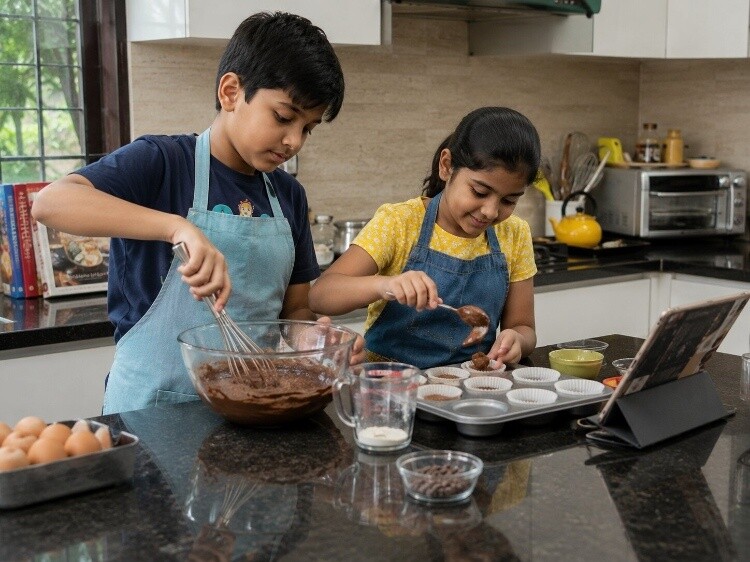
Cooking and baking projects
Weekend production runs, family-feeding stakes, technique videos watched then executed hands-on — screen-informed, screen-free execution.
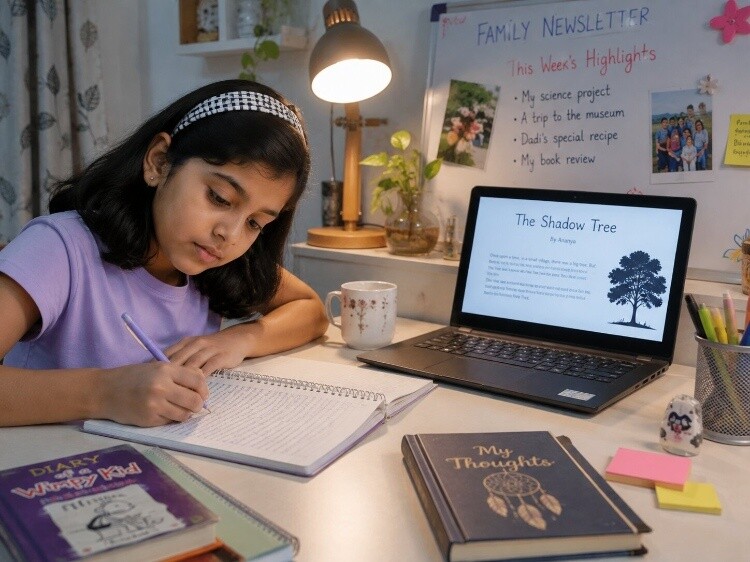
Journaling and creative writing habits
A private notebook, a story serial, a blog-style family newsletter — expression with genuine audience.

Outdoor adventure escalation
Longer cycles, hiking introductions, camping trips — the physical-world adventure that gaming simulates.
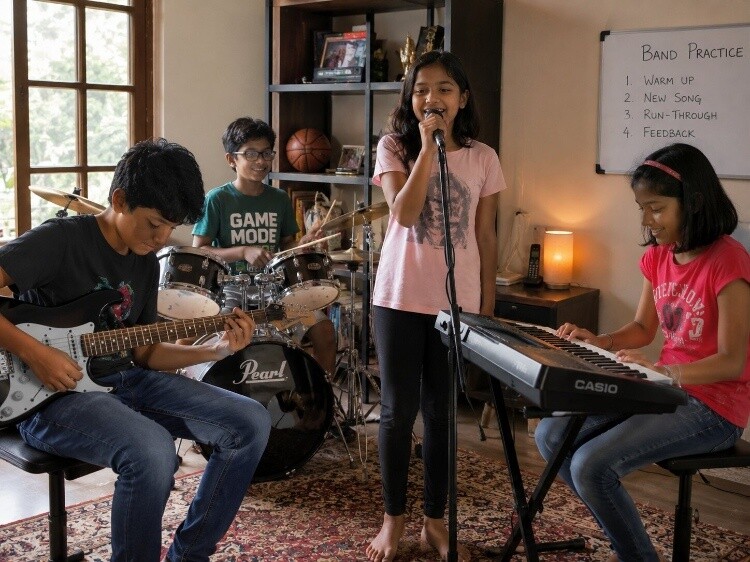
Music production, low-tech entry
An actual instrument, band formation with friends, performance goals — creative-technical satisfaction screens can't replicate physically.
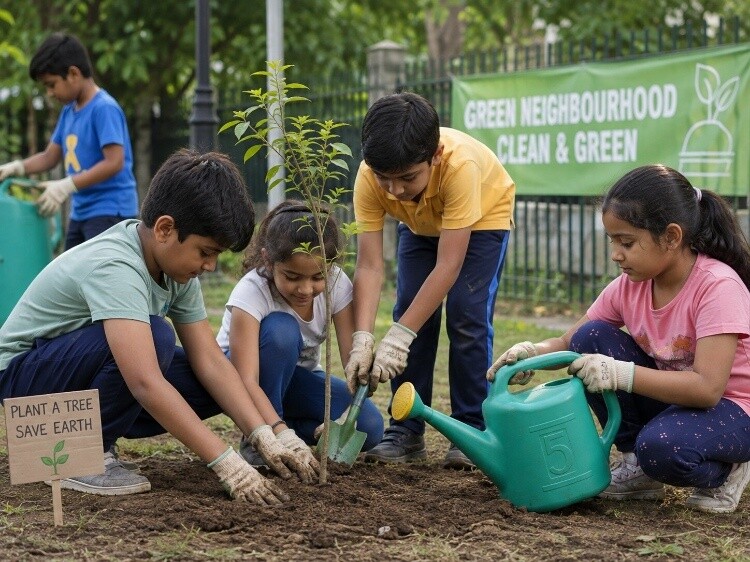
Community and helping projects
Age-appropriate volunteering, a neighbourhood improvement project, teaching younger kids a skill — purpose-driven engagement.
Why "just go play outside" often fails now
Ten-year-olds increasingly need organised alternatives rather than unstructured time alone, since much of their peer world has moved partly online — the fix isn't eliminating screens but ensuring genuinely engaging non-screen options exist with comparable social and achievement payoffs.
Negotiating screen time at this age, honestly
Ten is old enough for real conversation about screen time rather than pure parental control — co-created limits, transparent reasoning, and negotiated exceptions build cooperation that unilateral rules increasingly can't at this age, especially as peer platform use becomes genuinely social rather than purely entertainment.