
 Summer Camp
 Reading Writing
 Book Club
 Calligraphy
 Creative Writing
 English Speaking
 Handwriting
 Library
 Phonics
 Story Telling
 Art and Craft
 Clay Moulding
 Drawing
 Painting
 Pottery
 Sketching
 Drama Theatre
 Personality Development
 Public Speaking
 Languages
 Arabic
 Chinese
 French
 German
 Hindi
Hindi Italian
 Japanese
 Korean
 Persian
 Portuguese
 Russian
 Spanish
 Turkish
 Uzbek
Uzbek Sports and Fitness
 Aerobics
 Athletics
 Badminton
 Basket Ball
 Chess
Chess Cricket
 Football
 Golf
Golf Gymnastics
 Hulahoop
 Karate
 Martial Arts
 Pickleball
 Rugby
Rugby Skating
 Swimming
 Taekwondo
 Tennis
 Volleyball
 Yoga
Yoga Zumba
Zumba Tuition Classes
 Accounts
 Biology
 Business Studies
 CBSE
CBSE Chemistry
 Commerce
 Economics
 Homework Classes
 IB Board
 IGCSE
IGCSE Mathematics
 Physics
 Psychology
 Science
 Social Studies
 Vedic Maths
 Dance and Music
 Ballet
 Bhangra
 Bharatnatyam
 Bollywood Dance
 Casio
Casio Dandiya and Garba
 Drums
Drums Flute
Flute Guitar
 Harmonium
 Hip Hop
 Jazz
Jazz Kathak
 Keyboard
 Piano
Piano Salsa
Salsa Shlokas
 Sitar
Sitar Tabla
Tabla Ukulele
 Violin
 Vocal
Vocal Play School
 STEM
STEM
 Abacus
 App Development
 Artificial intelligence
 Basic Computer Courses
 Canva
Canva Coding
 Graphic Design
 Lego
Lego Python
 Robotics
 Rubiks Cube
 Scrabble
 Scratch
 Website Development
 Winter Camp
 Workshops
 Diwali Workshop
 Easter
 Ganesh Mahotsav
 Guru Nanak Jayanti Workshop
 Holi
Holi Independence day workshop
 Janmashtami Workshop
 Mothers day
 Navratri Workshops
 Raksha Bandhan workshop
 Ramayana Workshop
 Spring Camp
 Valentines Day Workshops
 Festive
 Daycare
 Cooking and Food
 Spring Camp
 Contests and Competitions
 Special abled
 Republic Day Workshops
 Mela
Mela
 Mela
Mela Cognitive Development
 Mother-Toddler Program
-Jul-03-2026-06-59-25-1926-AM.webp?width=30&height=30&name=Smart_20Skills_20(2)-Jul-03-2026-06-59-25-1926-AM.webp) Smart Skills
Smart Skills
 Financial Literacy
 Mental Wellbeing
 Meditation
 Reiki
Reiki




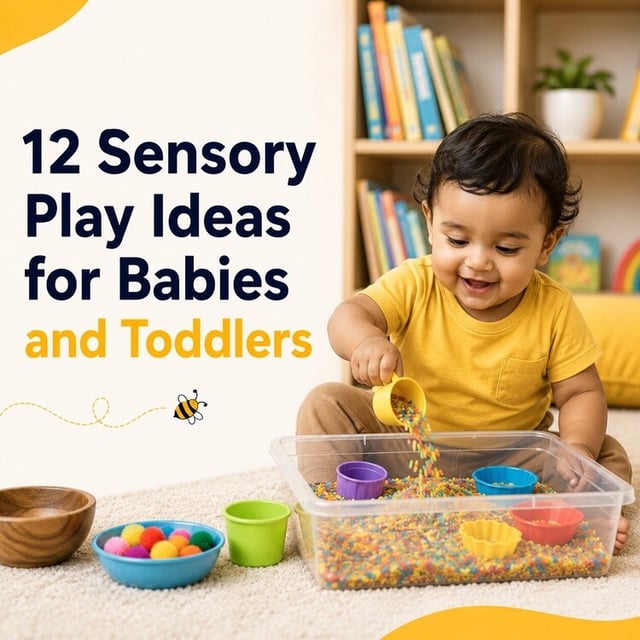
Sensory play — exploring textures, sounds, and materials — builds neural connections during the fastest period of brain development. These 12 ideas use safe household materials with realistic mess management for Indian homes.
Sensory play sounds like a specialised concept but is really just structured exploration of textures, temperatures, sounds, and materials — something babies naturally seek and something the household kitchen supplies endlessly.
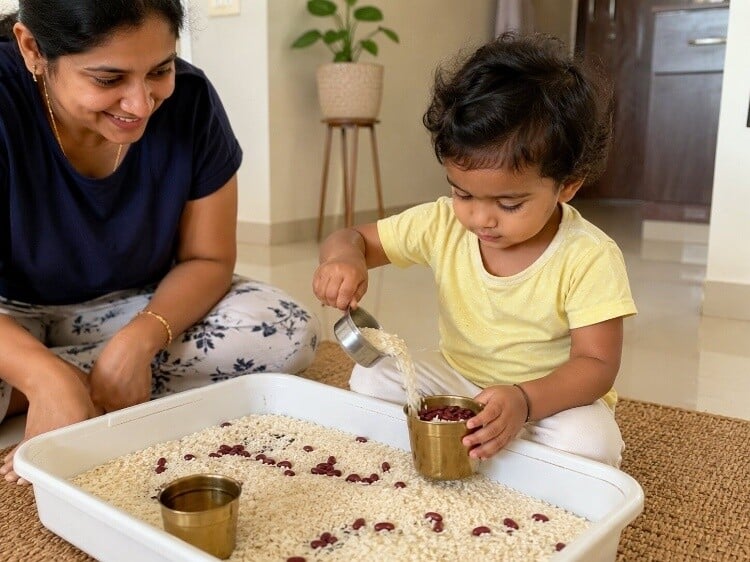
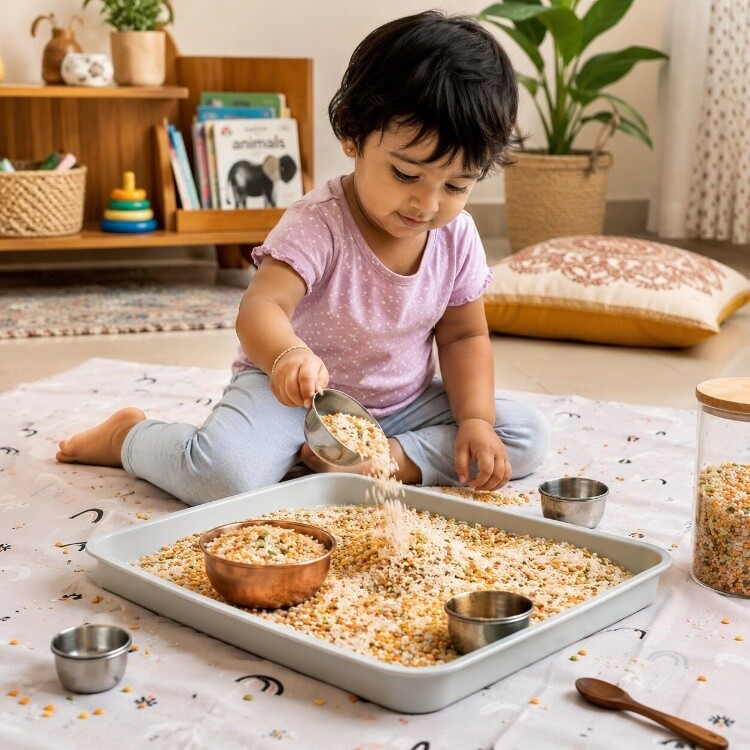
Rice and dal exploration tray
A wide tray of dry rice or rajma for scooping and pouring (supervised, past the everything-in-mouth phase). The most classic Indian household sensory setup.
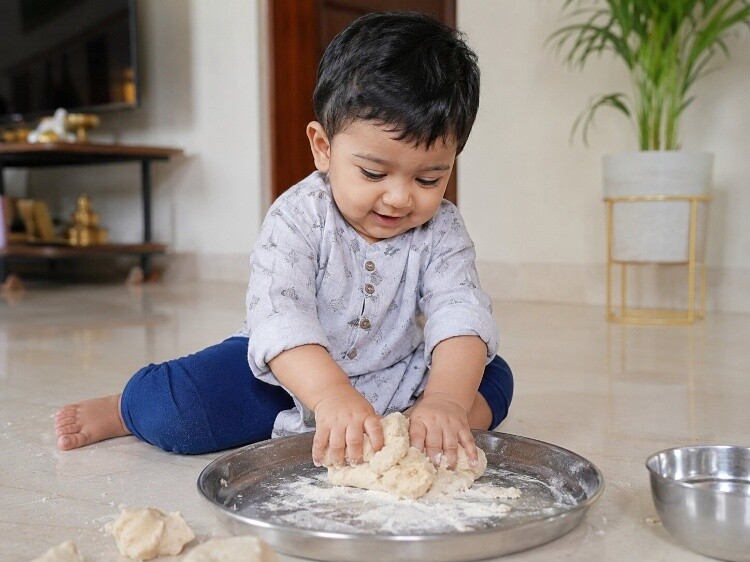
Atta dough play
Plain atta dough, soft and completely taste-safe, for squeezing and poking — a safer alternative to playdough for the youngest players.
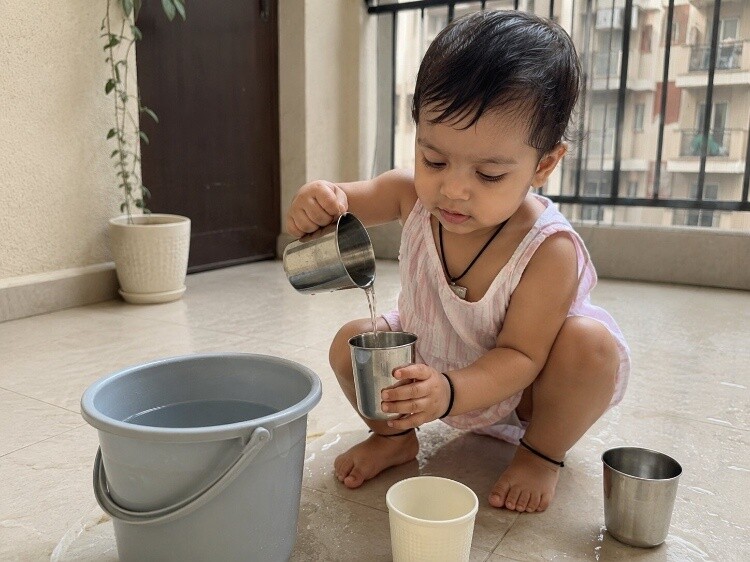
Water and cup transfer play
A bucket, some cups, and a bathroom floor or balcony. Pouring builds motor control and endlessly fascinates toddlers.
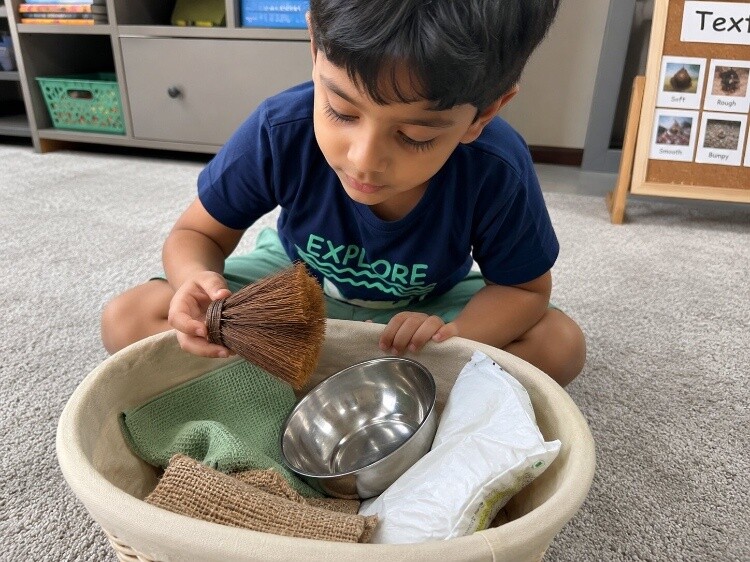
Texture basket
A basket of safe household items with varied textures: a smooth steel katori, a rough coconut shell brush, a soft cloth, a crinkly packet.
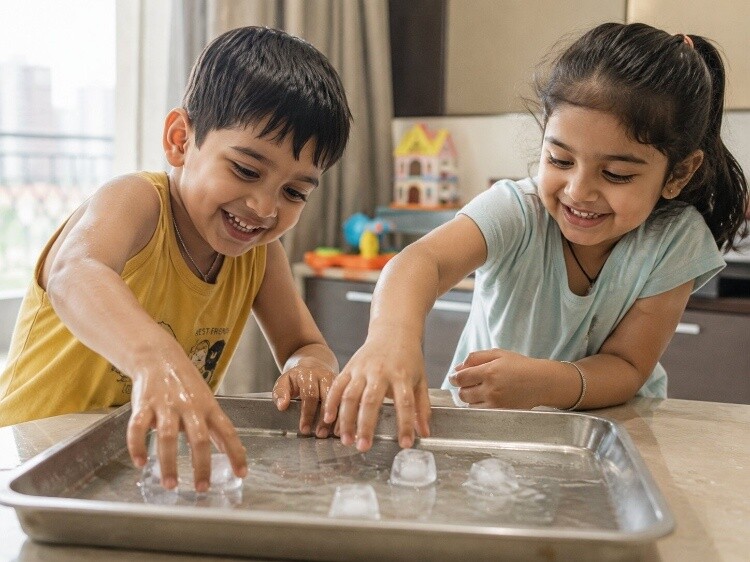
Ice cube chasing
A few ice cubes on a tray in Delhi summer — cold, slippery, melting — a complete sensory lesson that doubles as heat relief.
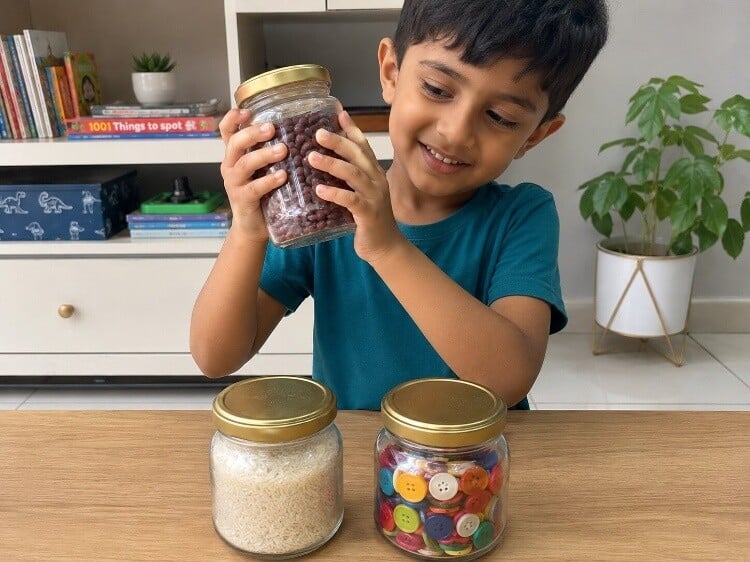
Sound shakers
Closed dabbas filled with different items (rajma, rice, buttons) to shake and compare sounds.
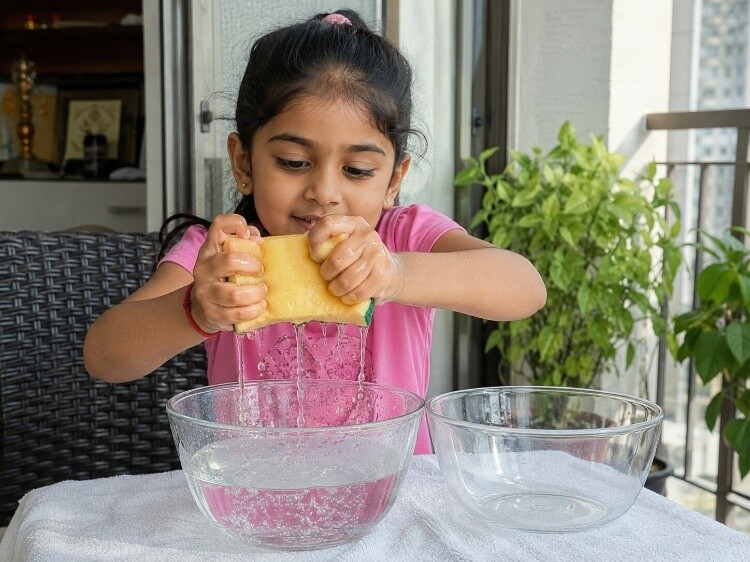
Sponge squeezing
A bowl of water and a sponge — squeezing builds hand strength while the water transfer fascinates.
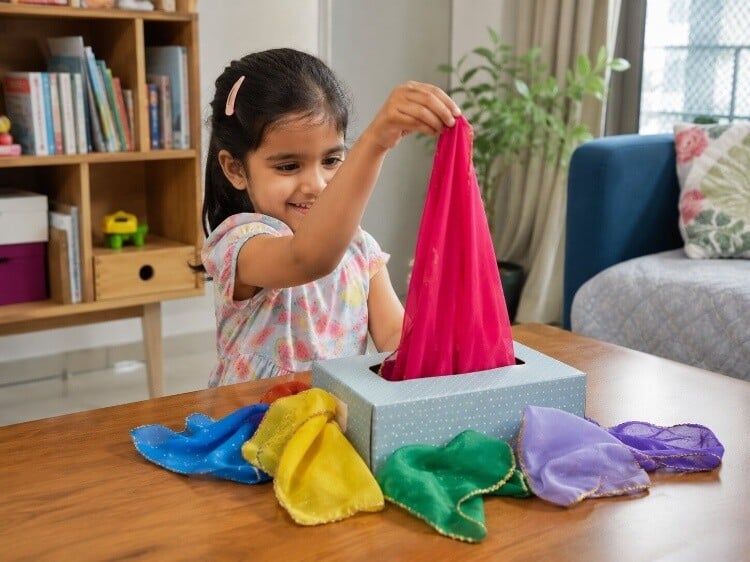
Fabric peek boxes
A tissue box filled with colourful dupatta scraps or handkerchiefs to pull out one by one.
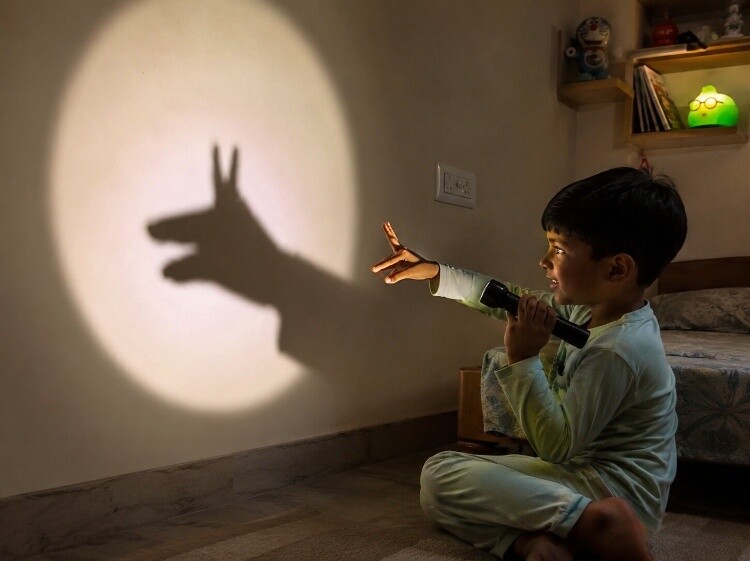
Torch and shadow play
In a dim room, a torch making shadows on the wall — visual sensory exploration that becomes a favourite pre-bedtime game.
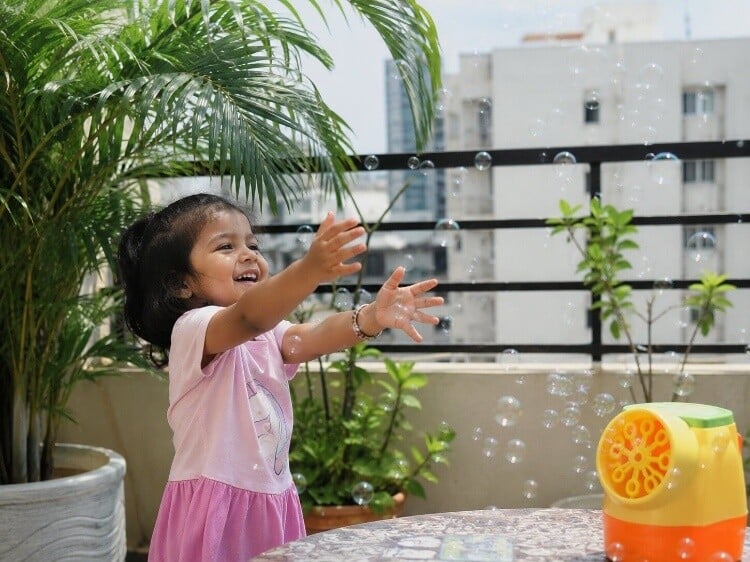
Bubble watching and popping
Simple soap bubbles build visual tracking and reaching coordination.
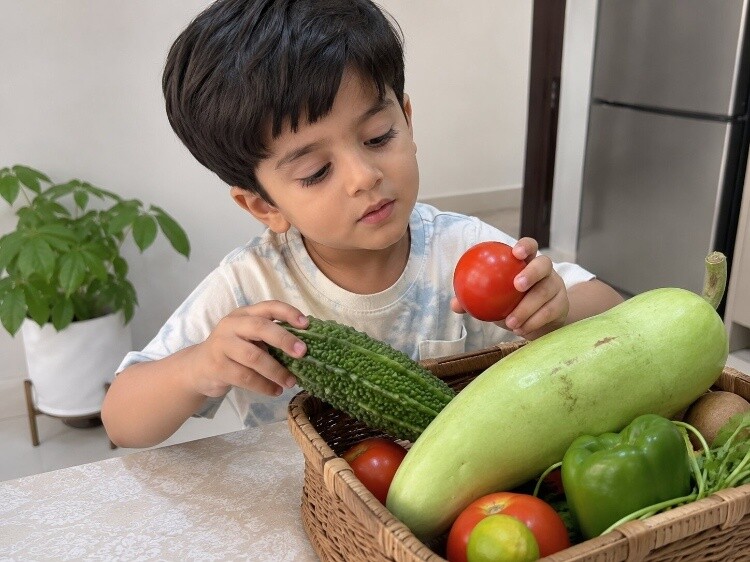
Vegetable texture exploration
Before cooking, letting a toddler handle a rough lauki, smooth tomato, or bumpy karela — sensory input from the daily sabzi basket.
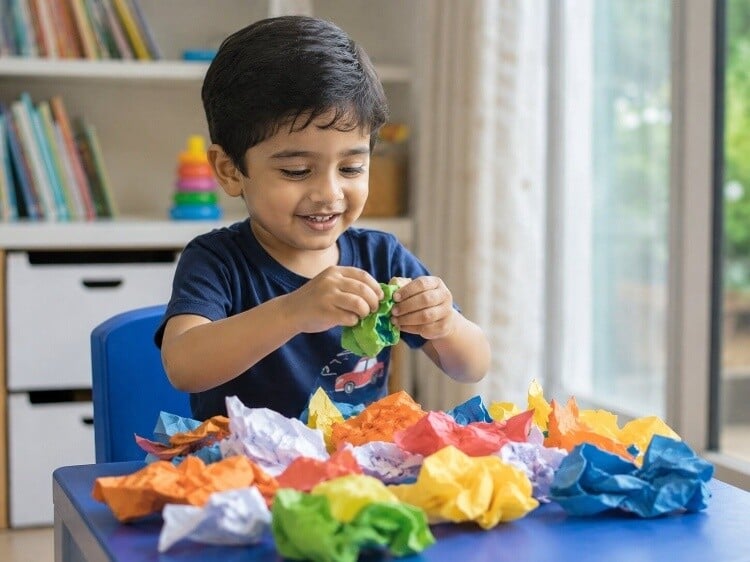
Crinkle paper play
Clean paper for crumpling, tearing (great for motor skills), and crinkling.
The mess question, honestly addressed
Sensory play and mess are inseparable, and pretending otherwise sets parents up to abandon it. Realistic containment: a plastic sheet or old bedsheet under the play area, sensory play scheduled before bath time, and outdoor or bathroom locations for the wettest activities. Ten minutes of cleanup is a fair trade for the developmental value — but choosing lower-mess options on exhausting days is also completely fine.
Safety notes
Anything smaller than a toilet-paper-roll circumference is a choking risk for children still mouthing objects. Dry rice and dal trays suit toddlers past that phase; younger babies get the taste-safe options (atta dough, large fabric pieces, water play).
When sensory seeking seems unusually intense
Most toddlers are enthusiastic sensory explorers. If a child seems extremely distressed by common textures or exclusively seeks intense sensory input to the exclusion of other play, mentioning it at a routine paediatric visit is reasonable — usually it's normal variation, but it's an easy question to ask.