
 Summer Camp
 Reading Writing
 Book Club
 Calligraphy
 Creative Writing
 English Speaking
 Handwriting
 Library
 Phonics
 Story Telling
 Art and Craft
 Clay Moulding
 Drawing
 Painting
 Pottery
 Sketching
 Drama Theatre
 Personality Development
 Public Speaking
 Languages
 Arabic
 Chinese
 French
 German
 Hindi
Hindi Italian
 Japanese
 Korean
 Persian
 Portuguese
 Russian
 Spanish
 Turkish
 Uzbek
Uzbek Sports and Fitness
 Aerobics
 Athletics
 Badminton
 Basket Ball
 Chess
Chess Cricket
 Football
 Golf
Golf Gymnastics
 Hulahoop
 Karate
 Martial Arts
 Pickleball
 Rugby
Rugby Skating
 Swimming
 Taekwondo
 Tennis
 Volleyball
 Yoga
Yoga Zumba
Zumba Tuition Classes
 Accounts
 Biology
 Business Studies
 CBSE
CBSE Chemistry
 Commerce
 Economics
 Homework Classes
 IB Board
 IGCSE
IGCSE Mathematics
 Physics
 Psychology
 Science
 Social Studies
 Vedic Maths
 Dance and Music
 Ballet
 Bhangra
 Bharatnatyam
 Bollywood Dance
 Casio
Casio Dandiya and Garba
 Drums
Drums Flute
Flute Guitar
 Harmonium
 Hip Hop
 Jazz
Jazz Kathak
 Keyboard
 Piano
Piano Salsa
Salsa Shlokas
 Sitar
Sitar Tabla
Tabla Ukulele
 Violin
 Vocal
Vocal Play School
 STEM
STEM
 Abacus
 App Development
 Artificial intelligence
 Basic Computer Courses
 Canva
Canva Coding
 Graphic Design
 Lego
Lego Python
 Robotics
 Rubiks Cube
 Scrabble
 Scratch
 Website Development
 Winter Camp
 Workshops
 Diwali Workshop
 Easter
 Ganesh Mahotsav
 Guru Nanak Jayanti Workshop
 Holi
Holi Independence day workshop
 Janmashtami Workshop
 Mothers day
 Navratri Workshops
 Raksha Bandhan workshop
 Ramayana Workshop
 Spring Camp
 Valentines Day Workshops
 Festive
 Daycare
 Cooking and Food
 Spring Camp
 Contests and Competitions
 Special abled
 Republic Day Workshops
 Mela
Mela
 Mela
Mela Cognitive Development
 Mother-Toddler Program
-Jul-03-2026-06-59-25-1926-AM.webp?width=30&height=30&name=Smart_20Skills_20(2)-Jul-03-2026-06-59-25-1926-AM.webp) Smart Skills
Smart Skills
 Financial Literacy
 Mental Wellbeing
 Meditation
 Reiki
Reiki




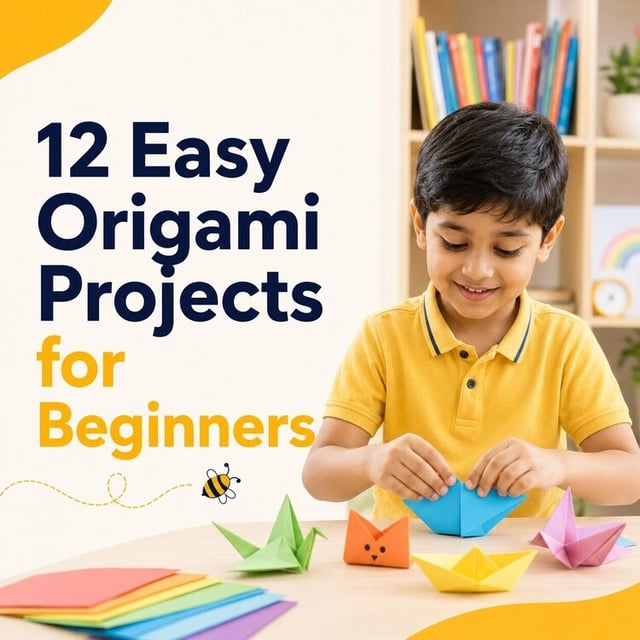
Origami builds precise fine motor control and sequential instruction-following in a uniquely structured way — these 12 beginner projects start with the simplest folds and build toward slightly more complex shapes.
Origami offers a genuinely unique developmental combination — precise fine motor control, spatial reasoning, and the ability to follow multi-step sequential instructions, all within a naturally engaging, screen-free activity.
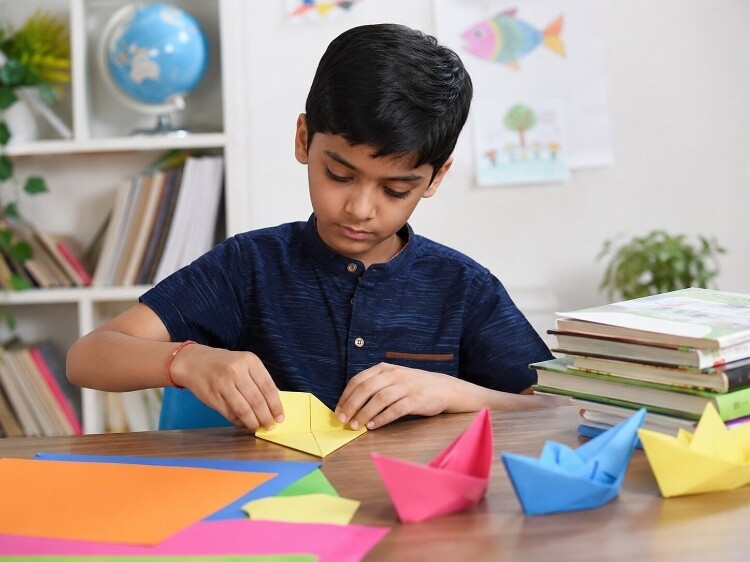
Simple paper boat
One of the most classic beginner folds, building basic fold-line understanding with an immediately recognisable, satisfying result.
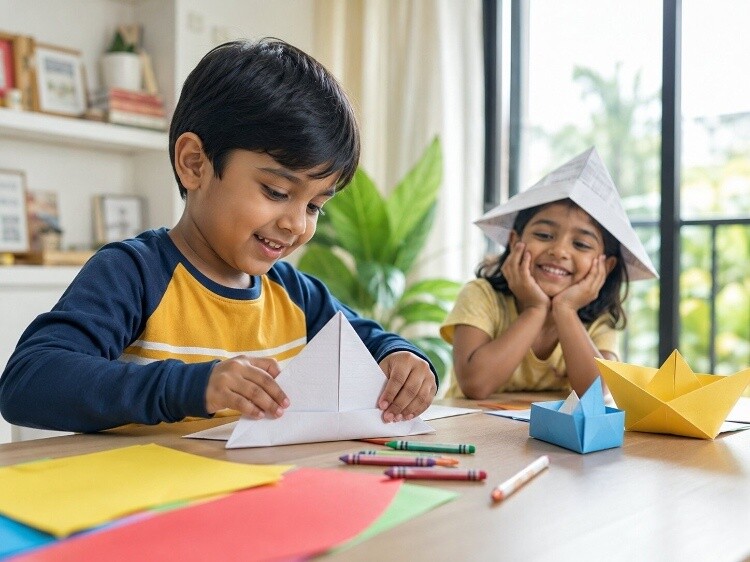
Paper hat
Another classic, genuinely playful fold that produces a wearable end product, adding motivation through immediate imaginative play value.
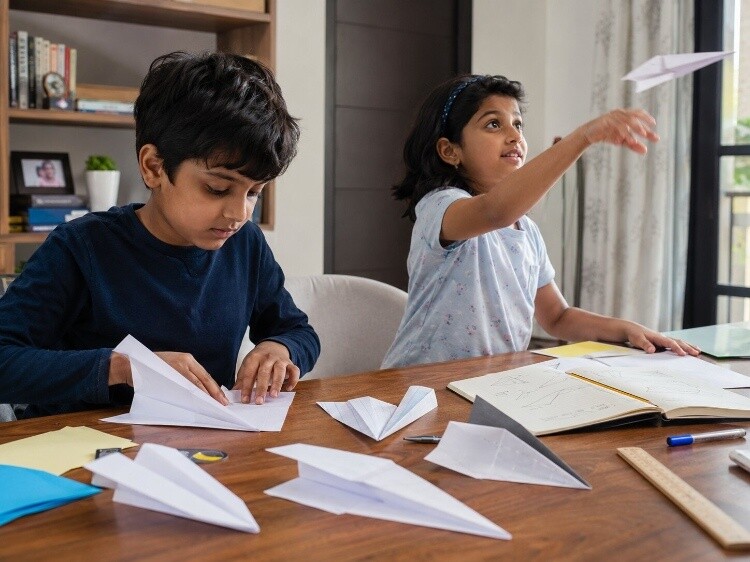
Simple paper airplane variations
Beyond just folding skill, experimenting with different fold patterns and observing how they affect flight builds early physics intuition alongside origami technique.
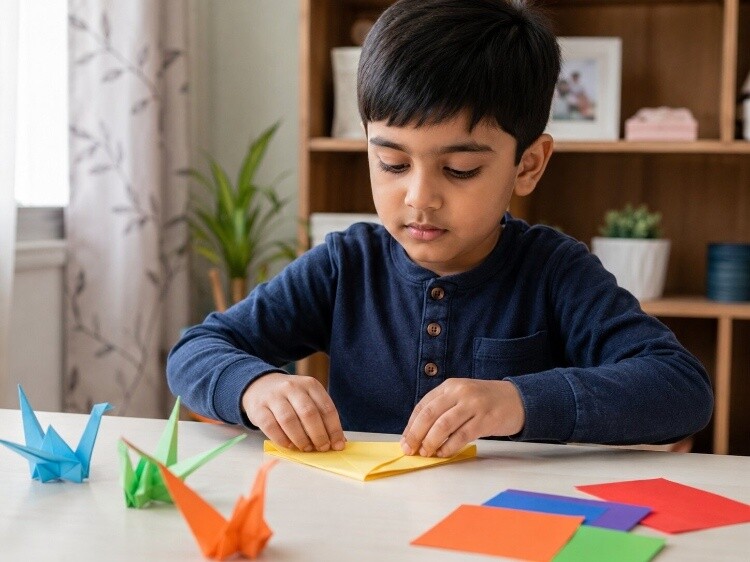
Basic paper crane (simplified version for beginners)
While the full traditional crane is complex, simplified beginner versions build toward this classic, culturally significant origami form.
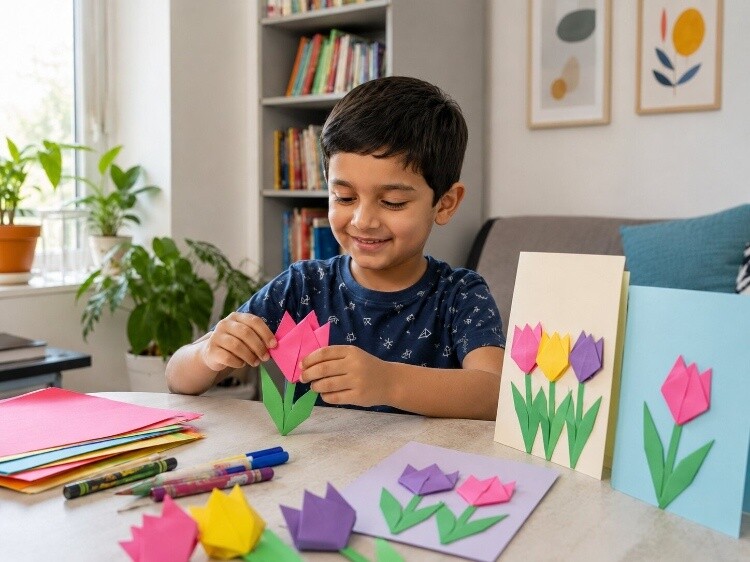
Simple flower or tulip fold
A genuinely satisfying, moderately simple fold producing a decorative result suitable for cards or displays.
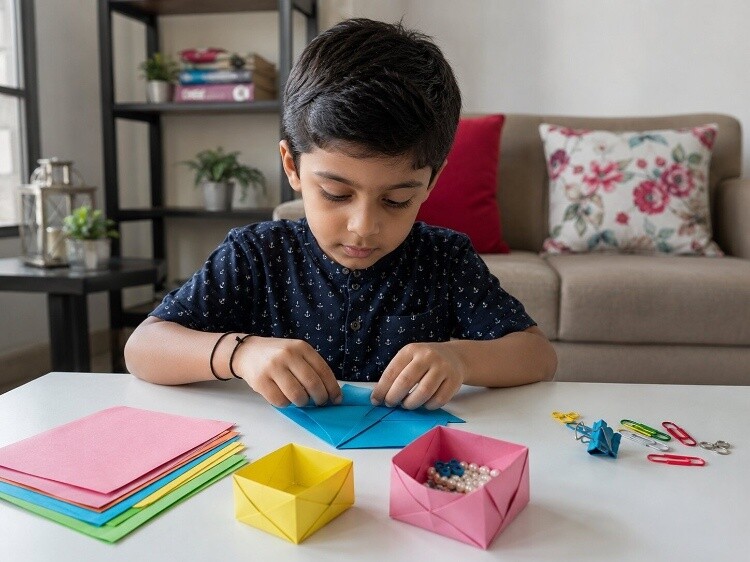
Origami box or container
A practical fold producing a genuinely usable small box, combining craft skill with functional application.
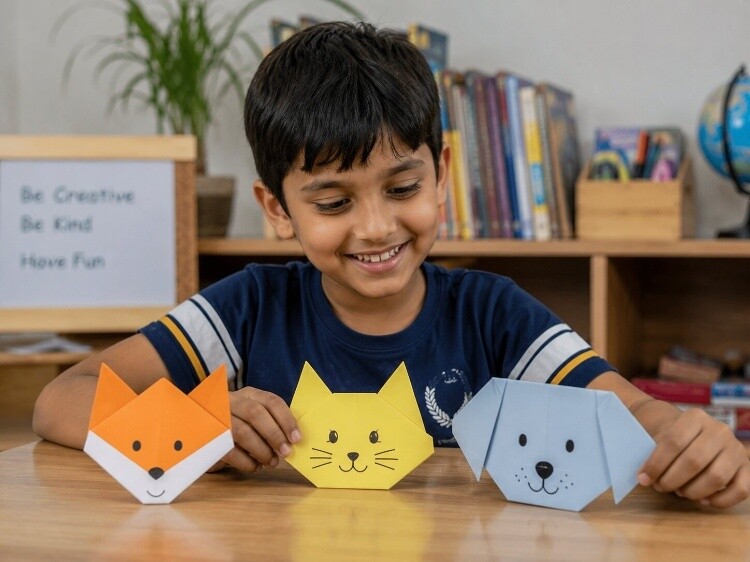
Simple animal faces — fox, cat, dog
Beginner-friendly animal folds that build recognisable, characterful results without requiring advanced technique.
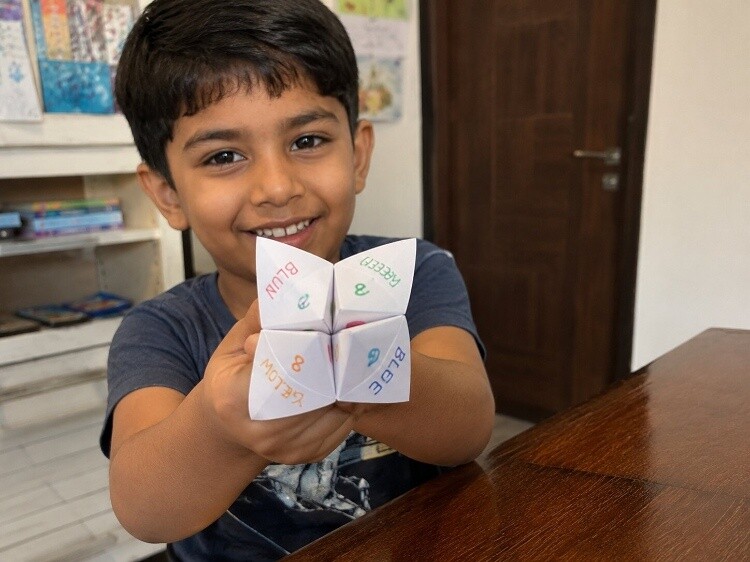
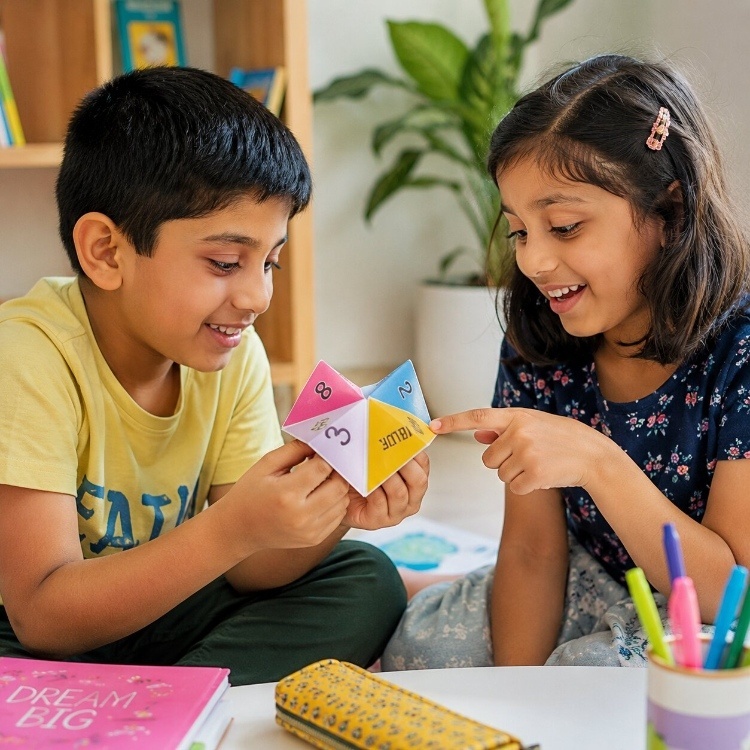
Fortune teller / paper cootie catcher
A genuinely fun, interactive fold that doubles as a game once completed, adding social play value beyond the folding itself.
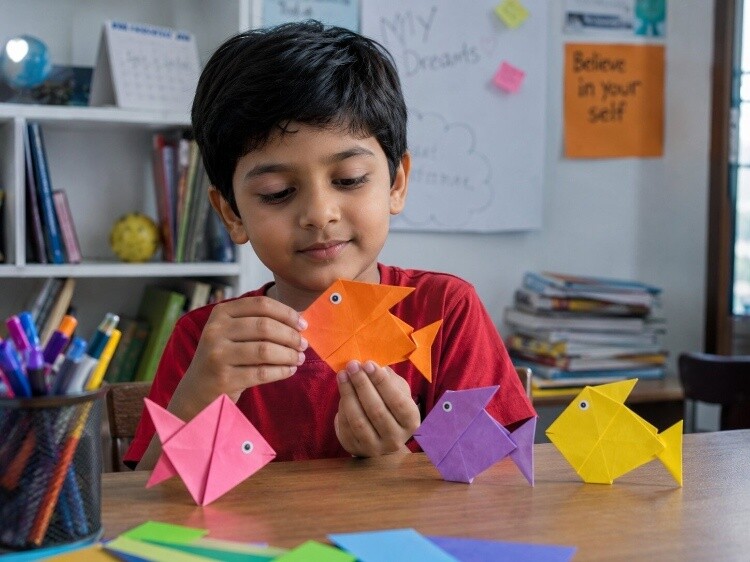
Simple fish shape
An accessible fold building toward more advanced animal origami later.
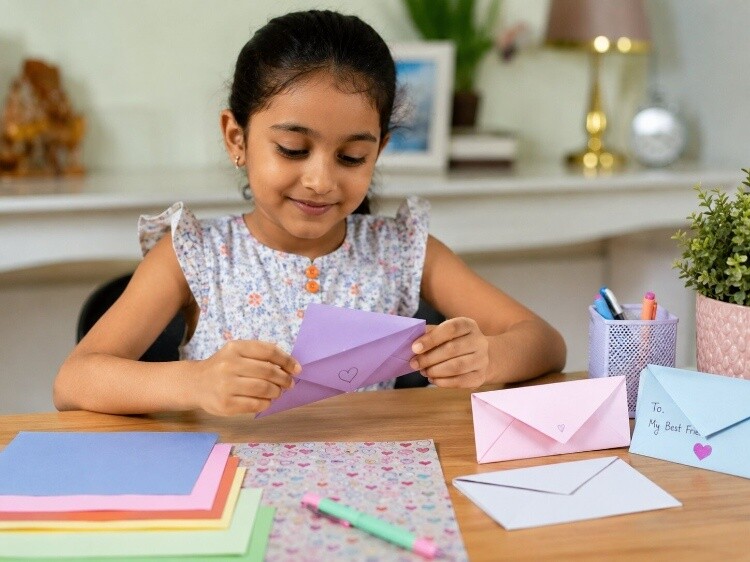
Envelope fold for handwritten notes
A practical origami application, teaching a child to make their own envelope for letters or cards.
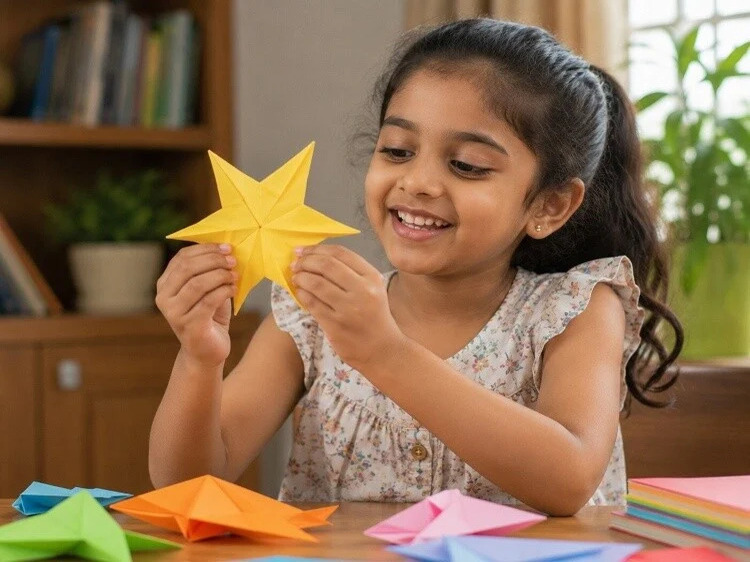
Simple star shape
A moderately challenging fold producing a genuinely satisfying decorative result, good for festival or celebration displays.
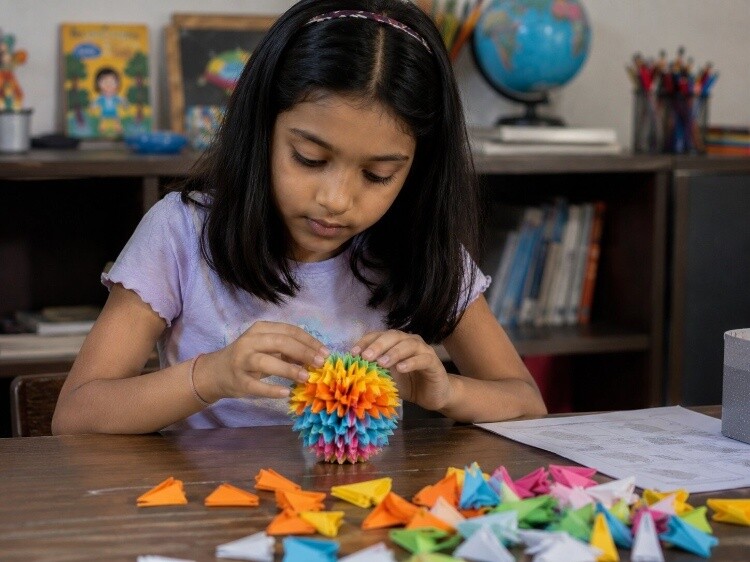
Basic modular origami (multiple simple pieces combined)
Making several simple identical folded pieces and combining them into a larger shape introduces the concept of modular construction in an accessible format.
Why origami builds precision differently than other craft activities
Unlike more forgiving mediums like clay or paint, origami requires genuinely precise folding along exact lines — this precision demand builds a specific kind of careful, deliberate fine motor control that complements the more expressive, less exacting skills built through painting or drawing.
Managing frustration during the learning process
Origami can be genuinely frustrating for beginners when folds don't align precisely — starting with larger paper (easier to fold precisely than small pieces) and choosing genuinely simple projects first builds confidence before progressing to more complex folds.
Making origami a portable, anywhere activity
Since origami requires only paper, it travels well — genuinely useful for car rides, waiting rooms, or any situation requiring a quiet, engaging activity without additional materials or setup.