
 Reading Writing
 Book Club
 Calligraphy
 Creative Writing
 English Speaking
 Handwriting
 Library
 Phonics
 Story Telling
 Art and Craft
 Clay Moulding
 Drawing
 Painting
 Pottery
 Sketching
 Drama Theatre
 Personality Development
 Public Speaking
 Languages
 Arabic
 Chinese
 French
 German
 Hindi
 Italian
 Japanese
 Korean
 Persian
 Portuguese
 Russian
 Spanish
 Turkish
 Uzbek
 Sports and Fitness
 Aerobics
 Athletics
 Badminton
 Basket Ball
 Chess
 Cricket
 Football
 Golf
 Gymnastics
 Hulahoop
 Karate
 Martial Arts
 Pickleball
 Rugby
 Skating
 Swimming
 Taekwondo
 Tennis
 Volleyball
 Yoga
 Zumba
 Tuition Classes
 Accounts
 Biology
 Business Studies
 CBSE
 Chemistry
 Commerce
 Economics
 Homework Classes
 IB Board
 IGCSE
 Mathematics
 Physics
 Psychology
 Science
 Social Studies
 Vedic Maths
 Dance and Music
 Ballet
 Bhangra
 Bharatnatyam
 Bollywood Dance
 Casio
 Dandiya and Garba
 Drums
 Flute
 Guitar
 Harmonium
 Hip Hop
 Jazz
 Kathak
 Keyboard
 Piano
 Salsa
 Shlokas
 Sitar
 Tabla
 Ukulele
 Violin
 Vocal
 Play School
 STEM
 Abacus
 App Development
 Artificial intelligence
 Basic Computer Courses
 Canva
 Coding
 Graphic Design
 Lego
 Python
 Robotics
 Rubiks Cube
 Scrabble
 Scratch
 Website Development
 Workshops
 Diwali Workshops
 Guru Nanak Jayanti Workshop
 Halloween
 Independence day workshop
 Navratri Workshops
 Raksha Bandhan workshop
 Ramayana Workshop
 Spring Camp
 Valentines Day Workshops
 Festive
 Daycare
 Cooking and Food
 Spring Camp
 Contests and Competitions
 Special abled
 Republic Day Workshops
 Mela
 Mela
 Cognitive Development
 Mother-Toddler Program
 Music
 Dance
 Smart Skills
 Financial Literacy
 Mental Wellbeing
 Meditation
 Reiki





Chandigarh's distinctive sector-based urban planning creates genuinely strong, walkable community structures that support a different, often more connected style of everyday parenting. Here's what makes this genuinely distinctive, worth understanding and leveraging.
Chandigarh's urban design — Le Corbusier's original planned-city vision, organised into self-contained sectors each with their own markets, schools, and green spaces — creates a genuinely distinctive parenting environment worth understanding on its own terms, rather than through a Delhi NCR-centric lens.
What makes sector-based living genuinely different
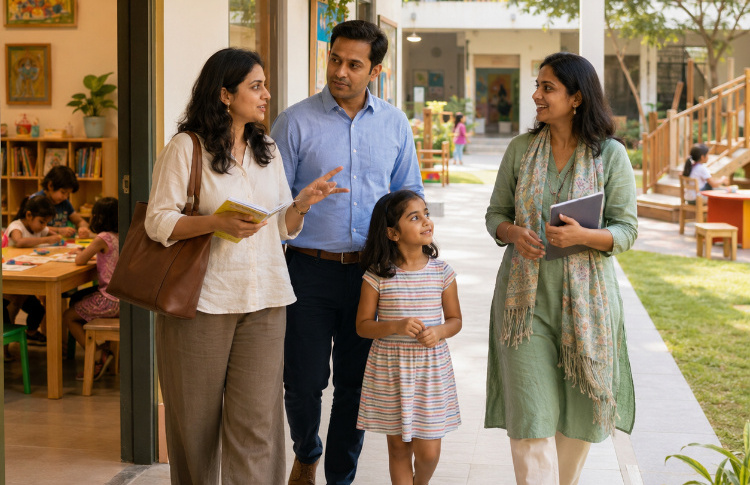
Each sector functions as a largely self-contained neighbourhood unit, with most daily needs (markets, schools, parks, basic services) accessible within comfortable walking or short-cycling distance — a genuinely different daily logistics reality than much of sprawling Delhi NCR, where car-dependent travel between disconnected residential, school, and activity locations is often unavoidable.
How this shapes community-based informal childcare and social structure
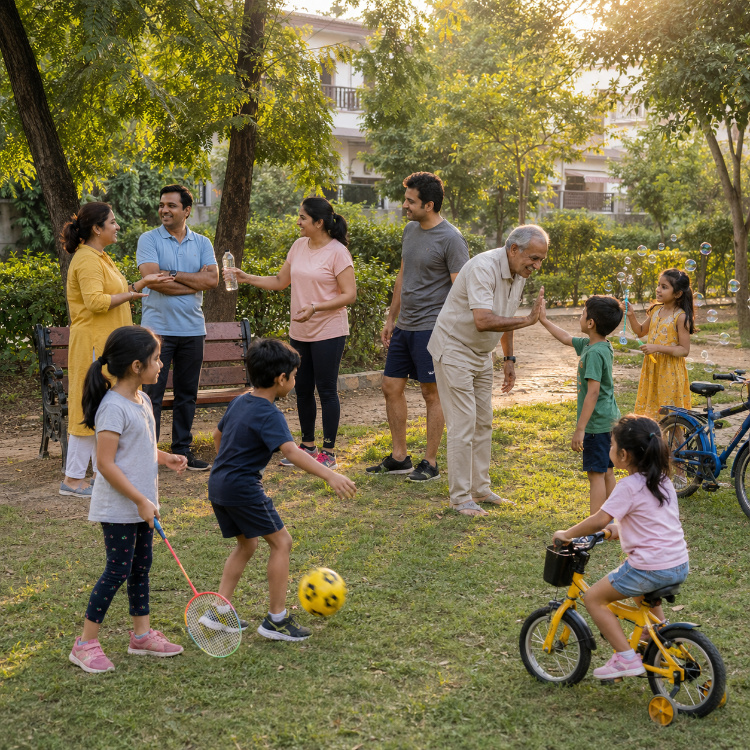
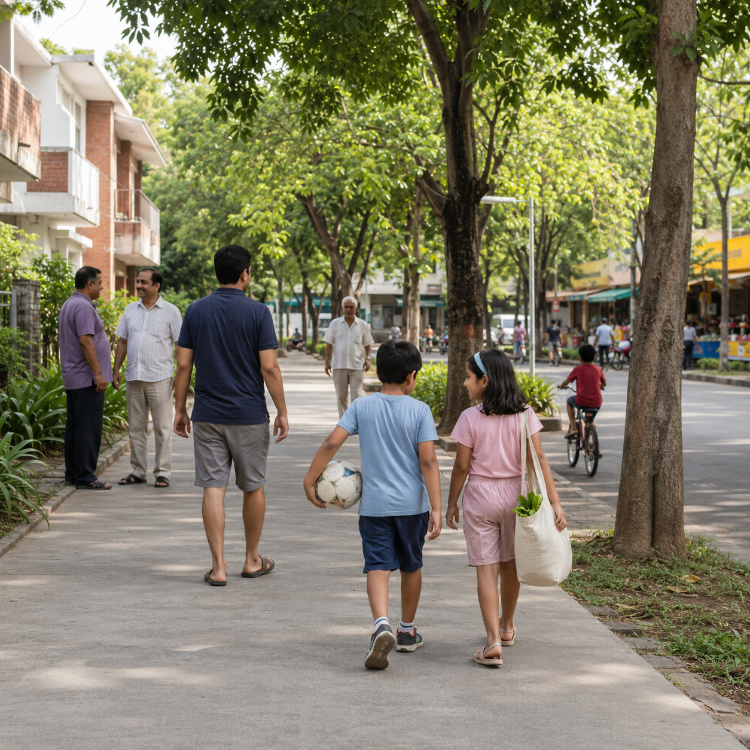
The walkability and self-contained nature of sectors genuinely supports the kind of organic, informal community structure many parents elsewhere actively seek but struggle to build — children walking to nearby friends' homes independently at appropriate ages, parents developing genuine, sustained relationships with sector neighbours through repeated casual encounters (at the local market, the sector park, the walk to school) rather than only through deliberately arranged, effortful socialising.
The genuine advantages this creates for family life
Reduced overall daily logistics burden (less time spent on transport, more time available for actual family and community connection) compared to many Delhi NCR families' more demanding commute-heavy daily reality. Stronger informal community safety net — children known by name across a sector's shopkeepers, neighbours, and community members create a genuine, if informal, community-wide watchfulness that supports gradually increasing childhood independence (the age-appropriate independence content covered elsewhere in this series) more naturally than in many less connected urban environments. And generally higher green space and park access per capita, given Chandigarh's original planning explicitly prioritised this, supporting the outdoor play and nature access covered extensively throughout this broader content library.
What this means practically for parenting choices in Chandigarh specifically
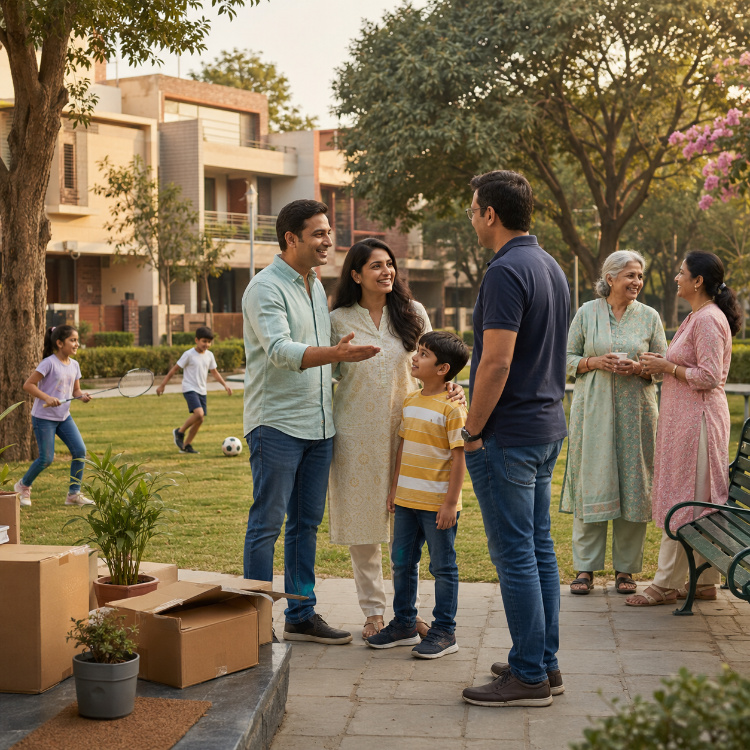
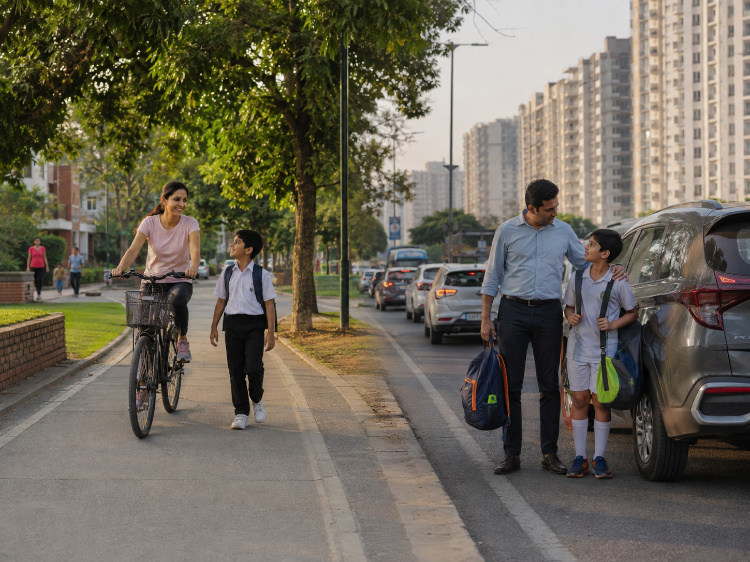
Leveraging sector-based community structure deliberately — actively engaging with sector-level community groups, markets, and casual neighbourhood connection points — tends to yield genuine, sustained community support that some families, accustomed to more anonymous or dispersed urban living patterns, don't automatically think to build. Independent mobility milestones (a child walking to a nearby friend's home, to a sector market for a small errand) may reasonably arrive earlier for Chandigarh children than for children in less walkable, more traffic-dense environments, given the genuinely different physical safety and community-oversight context.
The genuine trade-offs worth naming honestly
This same compact, self-contained structure that supports community connection also means somewhat narrower specialised activity and service options within any single sector, often requiring travel across sectors for more specialised needs (connecting to the broader Chandigarh-Delhi NCR comparison covered in the earlier post in this series) — the community-connection advantage doesn't eliminate all logistics considerations, though it does meaningfully reduce daily friction for most routine family needs.
Why this matters for how families new to Chandigarh should approach settling in
Families relocating to Chandigarh from more anonymous, less structurally community-oriented urban environments (including from parts of Delhi NCR) sometimes underestimate how much the sector-based community structure rewards active, early engagement — deliberately connecting with sector-level parent networks, community groups, and local markets early after relocation tends to unlock the genuine community-parenting advantages this urban structure offers considerably faster than a more passive, wait-and-see settling-in approach.