
 Summer Camp
 Reading Writing
 Book Club
 Calligraphy
 Creative Writing
 English Speaking
 Handwriting
 Library
 Phonics
 Story Telling
 Art and Craft
 Clay Moulding
 Drawing
 Painting
 Pottery
 Sketching
 Drama Theatre
 Personality Development
 Public Speaking
 Languages
 Arabic
 Chinese
 French
 German
 Hindi
Hindi Italian
 Japanese
 Korean
 Persian
 Portuguese
 Russian
 Spanish
 Turkish
 Uzbek
Uzbek Sports and Fitness
 Aerobics
 Athletics
 Badminton
 Basket Ball
 Chess
Chess Cricket
 Football
 Golf
Golf Gymnastics
 Hulahoop
 Karate
 Martial Arts
 Pickleball
 Rugby
Rugby Skating
 Swimming
 Taekwondo
 Tennis
 Volleyball
 Yoga
Yoga Zumba
Zumba Tuition Classes
 Accounts
 Biology
 Business Studies
 CBSE
CBSE Chemistry
 Commerce
 Economics
 Homework Classes
 IB Board
 IGCSE
IGCSE Mathematics
 Physics
 Psychology
 Science
 Social Studies
 Vedic Maths
 Dance and Music
 Ballet
 Bhangra
 Bharatnatyam
 Bollywood Dance
 Casio
Casio Dandiya and Garba
 Drums
Drums Flute
Flute Guitar
 Harmonium
 Hip Hop
 Jazz
Jazz Kathak
 Keyboard
 Piano
Piano Salsa
Salsa Shlokas
 Sitar
Sitar Tabla
Tabla Ukulele
 Violin
 Vocal
Vocal Play School
 STEM
STEM
 Abacus
 App Development
 Artificial intelligence
 Basic Computer Courses
 Canva
Canva Coding
 Graphic Design
 Lego
Lego Python
 Robotics
 Rubiks Cube
 Scrabble
 Scratch
 Website Development
 Winter Camp
 Workshops
 Diwali Workshop
 Easter
 Ganesh Mahotsav
 Guru Nanak Jayanti Workshop
 Holi
Holi Independence day workshop
 Janmashtami Workshop
 Mothers day
 Navratri Workshops
 Raksha Bandhan workshop
 Ramayana Workshop
 Spring Camp
 Valentines Day Workshops
 Festive
 Daycare
 Cooking and Food
 Spring Camp
 Contests and Competitions
 Special abled
 Republic Day Workshops
 Mela
Mela
 Mela
Mela Cognitive Development
 Mother-Toddler Program
-Jul-03-2026-06-59-25-1926-AM.webp?width=30&height=30&name=Smart_20Skills_20(2)-Jul-03-2026-06-59-25-1926-AM.webp) Smart Skills
Smart Skills
 Financial Literacy
 Mental Wellbeing
 Meditation
 Reiki
Reiki




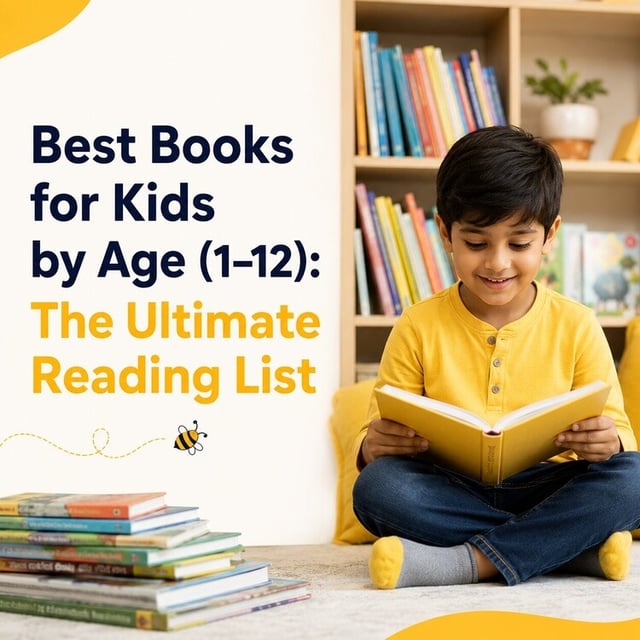
Book selection matters more than most parents realise — the right book at the right age builds lasting reading habits, while a mismatched one can create resistance. Here's a practical, age-banded list mixing Indian authors and accessible international titles.
Walking into a bookshop or scrolling an online store with no clear sense of what's age-appropriate often ends in either overwhelm or a random pick that doesn't land. A rough age-banded framework, plus specific starting points, makes this far easier.
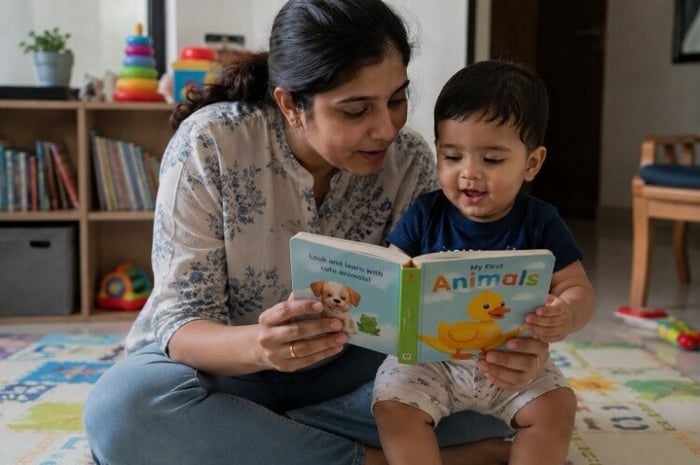
Look for sturdy board books with simple, repetitive text and bright images. Indian titles worth exploring include Tulika and Karadi Tales publications, which offer genuinely well-made board books reflecting Indian settings and characters, alongside classic repetitive-text international titles.
- Brown Bear, Brown Bear, What Do You See?
- Dear Zoo
- Where Is Baby’s Belly Button?
- Peek-a-Who?
- Goodnight Moon
- The Very Hungry Caterpillar
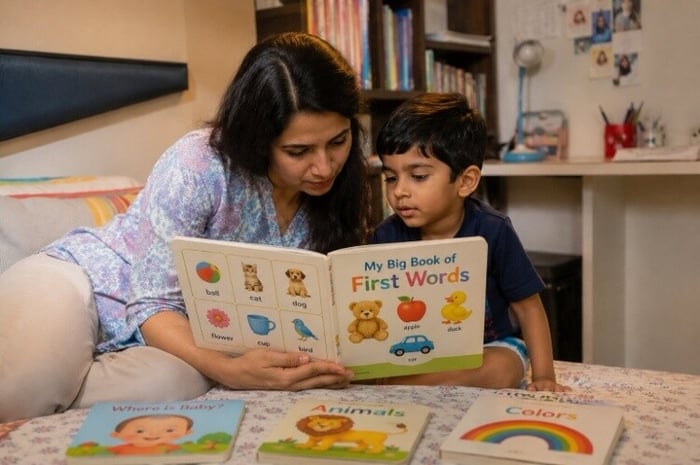
This is the age for picture books with a clear, simple narrative arc. Panchatantra retellings in picture book format work beautifully here, alongside well-illustrated international picture books with strong, simple stories.
- The Gruffalo
- We’re Going on a Bear Hunt
- The Rainbow Fish
- Gajapati Kulapati
- The Lion and the Clever Rabbit
- The Monkey and the Crocodile
- Pratham Books
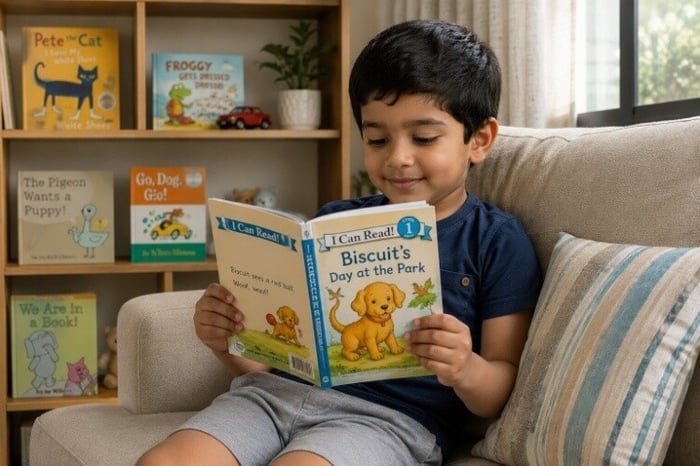
Simple sentence structures, controlled vocabulary, and larger font sizes support a child just beginning to decode independently. Look specifically for "early reader" or "level 1" labelled series, which are designed with this transition in mind.
- Elephant & Piggie Series
- Frog and Toad Are Friends
- Biscuit Series
- Pratham Books – Early Reader Collection
- Karadi Tales – Early Readers
- Amar Chitra Katha Starter Titles
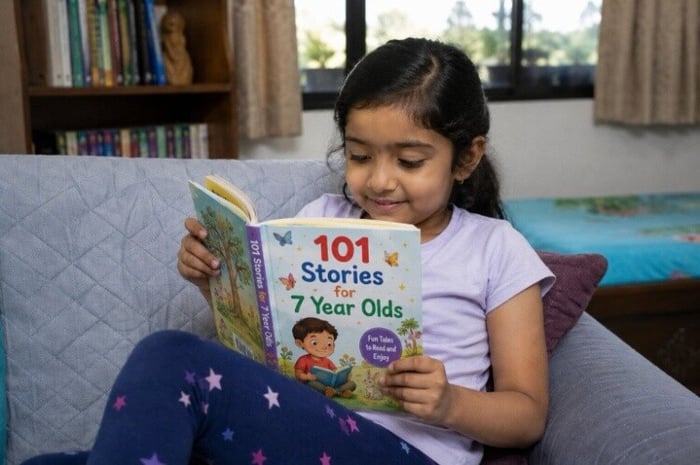
Shorter chapter books with frequent illustrations bridge the gap between picture books and full prose — genuinely useful for building reading stamina without overwhelming a still-developing reader.
- Magic Tree House Series
- Mercy Watson Series
- The Princess in Black Series
- Diary of an Ice Princess Series
- Geronimo Stilton Series
- Amar Chitra Katha
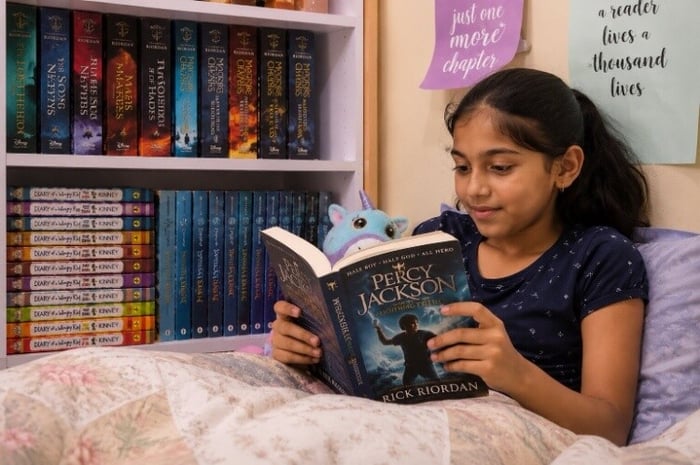
This is often when a child finds a genre or series they love and reads voraciously — mystery series, adventure stories, and Indian mythology retellings tend to perform particularly well at this age.
- Percy Jackson & the Olympians: The Lightning Thief
- Harry Potter and the Philosopher’s Stone
- The Mysterious Benedict Society
- Thea Stilton Series
- Aru Shah and the End of Time
- Amar Chitra Katha: Mahabharata

Longer, more complex narratives with more nuanced themes. This is a good age to start letting a child choose more independently from a wider range, including some genuinely challenging vocabulary and more mature (but still age-appropriate) themes.
- Wonder
- The Hobbit
- Keeper of the Lost Cities
- The Girl Who Drank the Moon
- A Wizard of Earthsea
- The Serpent’s Secret
A note on Indian representation in children's books
The availability of genuinely well-written Indian children's books has expanded significantly over the past decade — publishers like Tulika, Karadi Tales, Duckbill, and Puffin India consistently produce quality titles reflecting Indian settings, festivals, and family structures, which often resonate more immediately with children than books set in unfamiliar contexts.
Balancing Indian and international titles
There's genuine value in both — Indian titles for representation and cultural connection, international titles for broadening perspective and vocabulary exposure. Neither needs to dominate; a healthy reading diet includes both.