
 Summer Camp
 Reading Writing
 Book Club
 Calligraphy
 Creative Writing
 English Speaking
 Handwriting
 Library
 Phonics
 Story Telling
 Art and Craft
 Clay Moulding
 Drawing
 Painting
 Pottery
 Sketching
 Drama Theatre
 Personality Development
 Public Speaking
 Languages
 Arabic
 Chinese
 French
 German
 Hindi
Hindi Italian
 Japanese
 Korean
 Persian
 Portuguese
 Russian
 Spanish
 Turkish
 Uzbek
Uzbek Sports and Fitness
 Aerobics
 Athletics
 Badminton
 Basket Ball
 Chess
Chess Cricket
 Football
 Golf
Golf Gymnastics
 Hulahoop
 Karate
 Martial Arts
 Pickleball
 Rugby
Rugby Skating
 Swimming
 Taekwondo
 Tennis
 Volleyball
 Yoga
Yoga Zumba
Zumba Tuition Classes
 Accounts
 Biology
 Business Studies
 CBSE
CBSE Chemistry
 Commerce
 Economics
 Homework Classes
 IB Board
 IGCSE
IGCSE Mathematics
 Physics
 Psychology
 Science
 Social Studies
 Vedic Maths
 Dance and Music
 Ballet
 Bhangra
 Bharatnatyam
 Bollywood Dance
 Casio
Casio Dandiya and Garba
 Drums
Drums Flute
Flute Guitar
 Harmonium
 Hip Hop
 Jazz
Jazz Kathak
 Keyboard
 Piano
Piano Salsa
Salsa Shlokas
 Sitar
Sitar Tabla
Tabla Ukulele
 Violin
 Vocal
Vocal Play School
 STEM
STEM
 Abacus
 App Development
 Artificial intelligence
 Basic Computer Courses
 Canva
Canva Coding
 Graphic Design
 Lego
Lego Python
 Robotics
 Rubiks Cube
 Scrabble
 Scratch
 Website Development
 Winter Camp
 Workshops
 Diwali Workshop
 Easter
 Ganesh Mahotsav
 Guru Nanak Jayanti Workshop
 Holi
Holi Independence day workshop
 Janmashtami Workshop
 Mothers day
 Navratri Workshops
 Raksha Bandhan workshop
 Ramayana Workshop
 Spring Camp
 Valentines Day Workshops
 Festive
 Daycare
 Cooking and Food
 Spring Camp
 Contests and Competitions
 Special abled
 Republic Day Workshops
 Mela
Mela
 Mela
Mela Cognitive Development
 Mother-Toddler Program
-Jul-03-2026-06-59-25-1926-AM.webp?width=30&height=30&name=Smart_20Skills_20(2)-Jul-03-2026-06-59-25-1926-AM.webp) Smart Skills
Smart Skills
 Financial Literacy
 Mental Wellbeing
 Meditation
 Reiki
Reiki




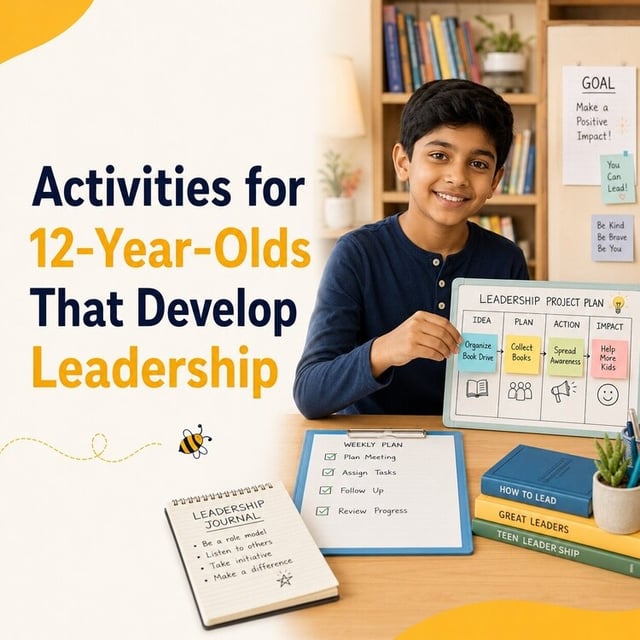
Twelve is a genuine leadership-readiness age — organising, mentoring, and decision-making capacity have matured enough for real leadership roles, not just symbolic ones. These activities build it authentically.
By twelve, children have the cognitive and social maturity for genuine leadership experiences — not token titles, but real organising, real responsibility for others, and real consequences from their decisions.
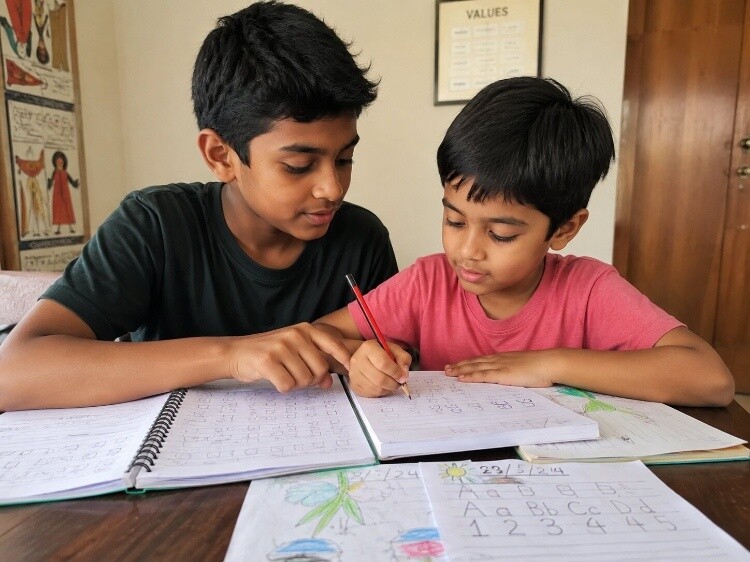
Mentoring younger children
Teaching a skill to a younger sibling or cousin over weeks, not just once — sustained mentoring builds patience and communication leadership requires.
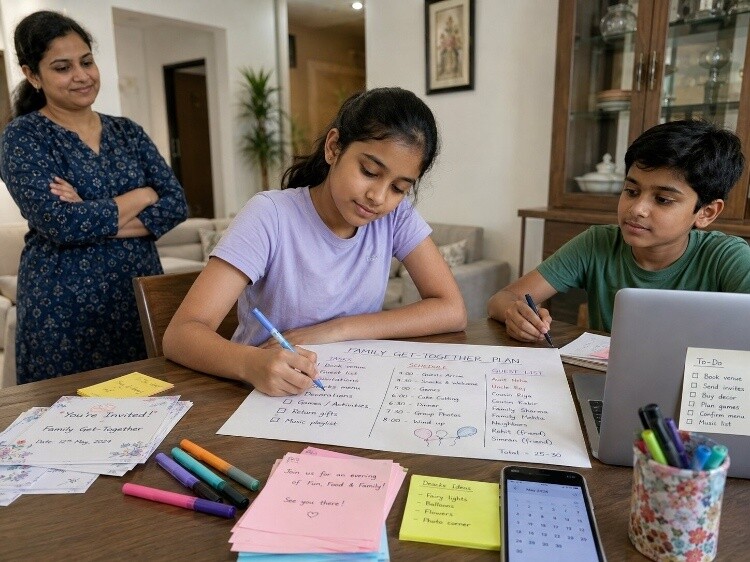
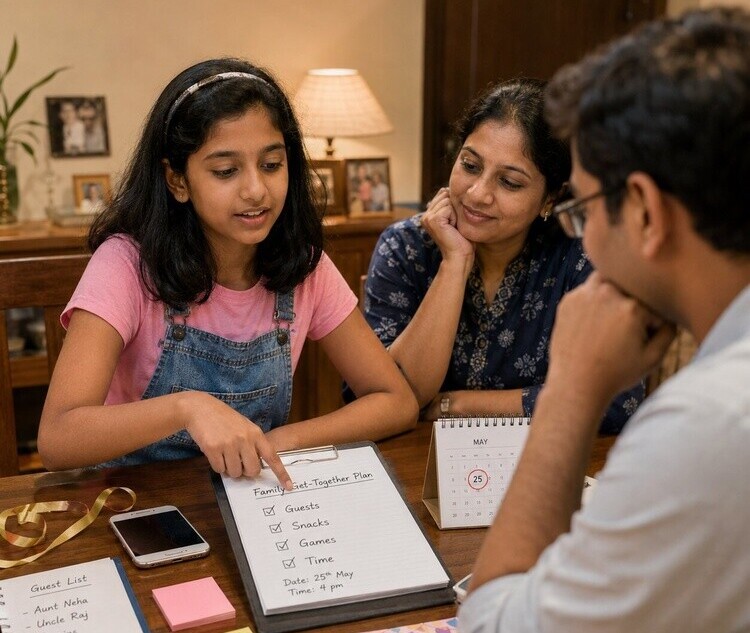
Organising a family or friend event
Planning an actual gathering — leadership as genuine project management.
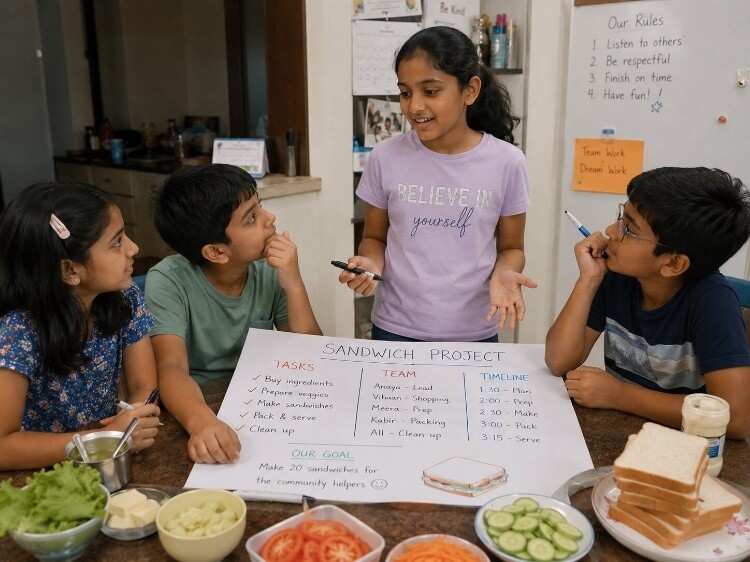
Leading a small team project
A school group project, a family cooking production, a neighbourhood initiative — practicing delegation and coordination with real stakeholders.
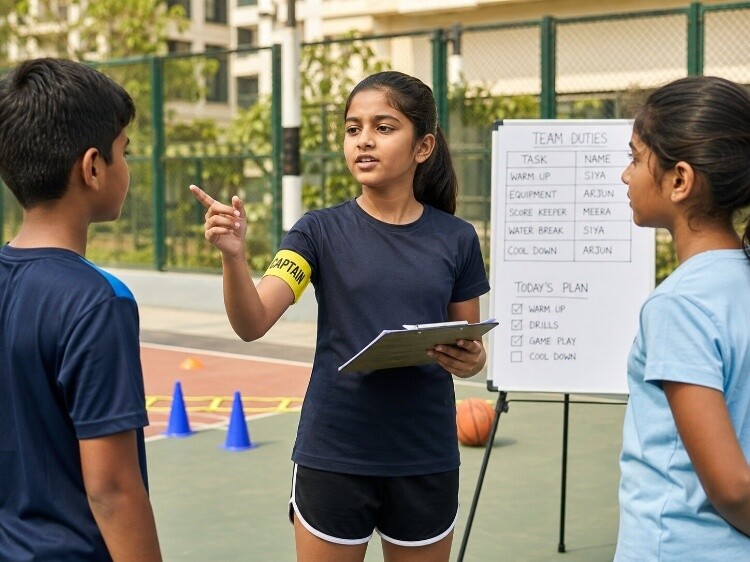
Captain or leadership roles in sports and activities
Team captaincy, class monitor roles, activity group leads — structured leadership practice with built-in accountability.
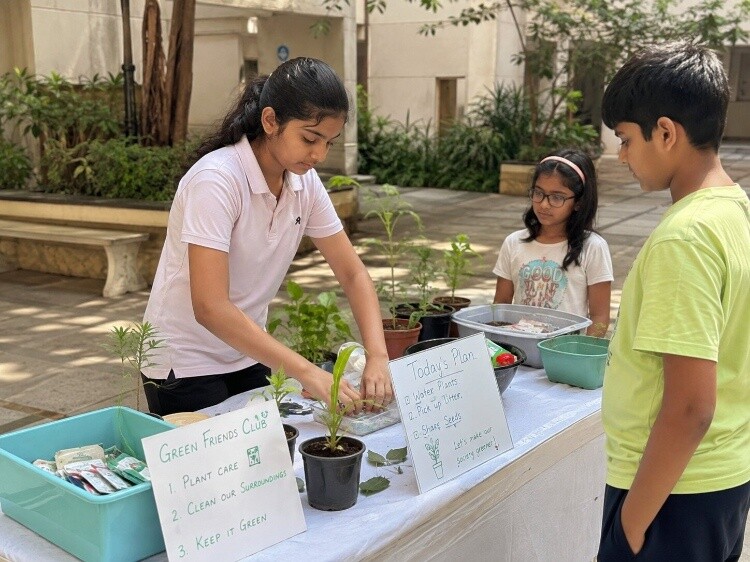
Starting something independently
A small neighbourhood initiative — leadership from initiative, not appointment.
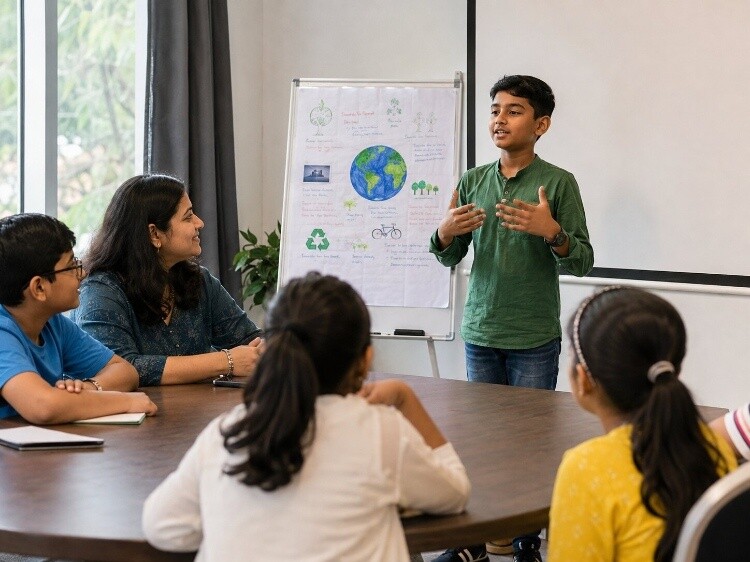
Public speaking and presentation practice
Genuine presentation opportunities — communication as core leadership infrastructure.

Conflict mediation practice
Helping resolve a younger sibling's or cousin's dispute, with guidance — the hardest and most valuable leadership skill, practiced at low stakes.
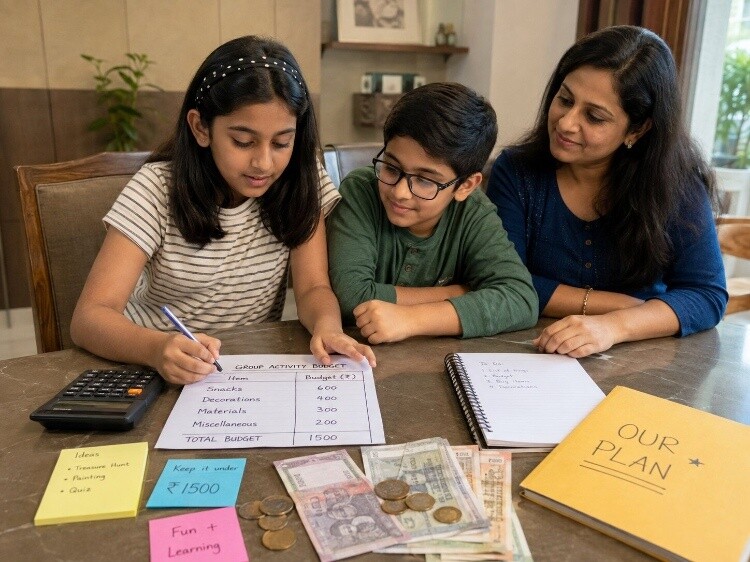
Financial leadership within limits
Managing a group activity's budget with guidance — leadership meeting real numbers.
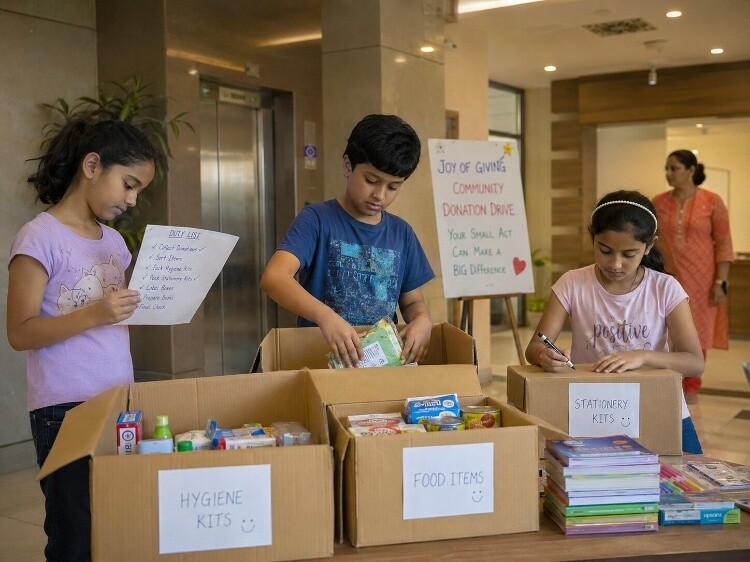
Volunteering with responsibility
Age-appropriate volunteer roles with actual duties — purpose-driven leadership experience.
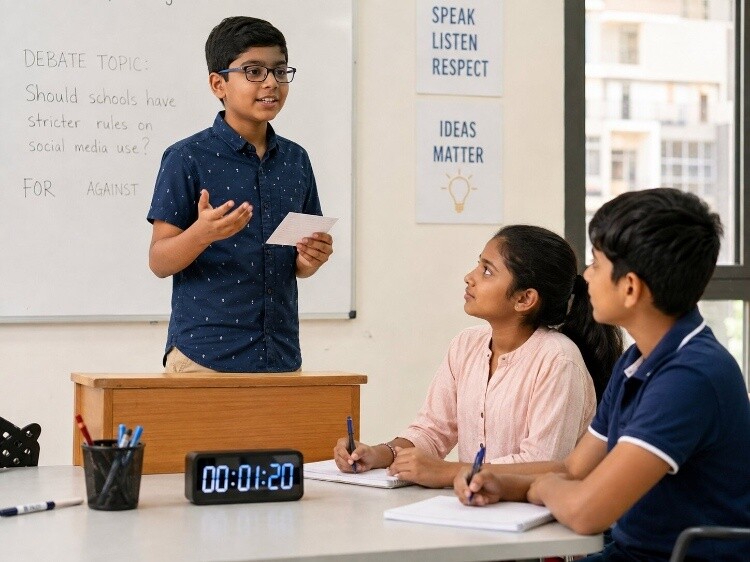
Debate and structured argument practice
Formal or informal debate participation — persuasion and perspective-taking as leadership communication.
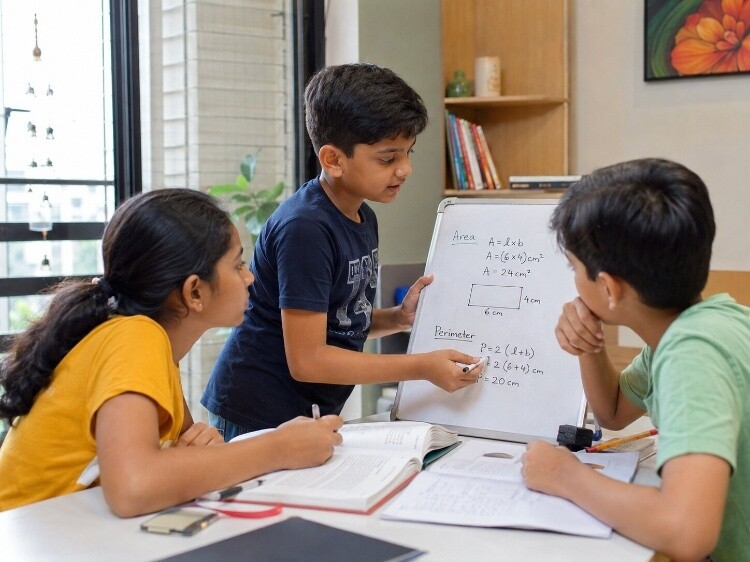
Peer tutoring
Formally or informally helping classmates with subjects they're strong in — teaching as leadership's purest form.
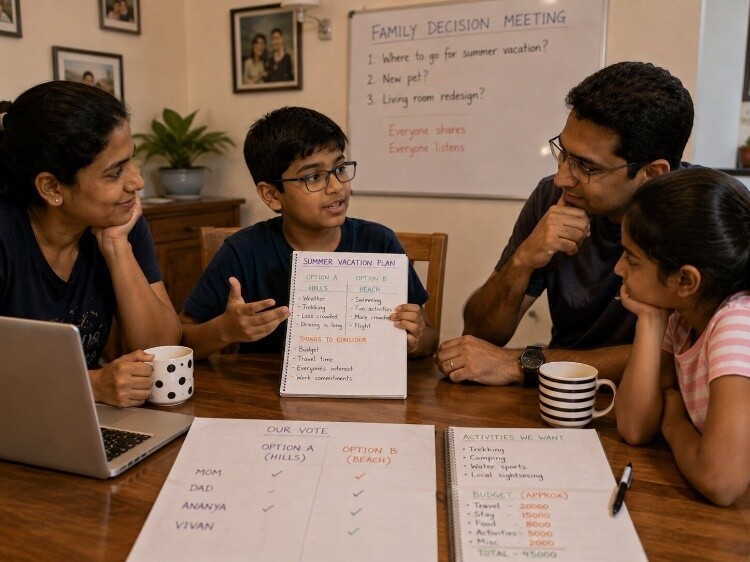
Family decision involvement
Genuine consultation on age-appropriate family decisions — leadership experienced through real voice, not performance.
What makes leadership experience genuine versus symbolic
Real accountability, real stakeholders, and real ambiguity distinguish authentic leadership practice from title-only positions that teach little.
Supporting without taking over
The parental role shifts to consultant rather than co-pilot at this age — available for genuine stuck-points, but resisting the urge to run the event, solve the conflict, or make the decision the child was meant to own. The mistakes made under real (bounded) stakes at twelve are considerably cheaper than the same mistakes made without any prior practice at eighteen.