

 Summer Camp
 Reading Writing
 Book Club
 Calligraphy
 Creative Writing
 English Speaking
 Handwriting
 Library
 Phonics
 Story Telling
 Art and Craft
 Clay Moulding
 Drawing
 Painting
 Pottery
 Sketching
 Drama Theatre
 Personality Development
 Public Speaking
 Languages
 Arabic
 Chinese
 French
 German
 Hindi
Hindi Italian
 Japanese
 Korean
 Persian
 Portuguese
 Russian
 Spanish
 Turkish
 Uzbek
Uzbek Sports and Fitness
 Aerobics
 Athletics
 Badminton
 Basket Ball
 Chess
Chess Cricket
 Football
 Golf
Golf Gymnastics
 Hulahoop
 Karate
 Martial Arts
 Pickleball
 Rugby
Rugby Skating
 Swimming
 Taekwondo
 Tennis
 Volleyball
 Yoga
Yoga Zumba
Zumba Tuition Classes
 Accounts
 Biology
 Business Studies
 CBSE
CBSE Chemistry
 Commerce
 Economics
 Homework Classes
 IB Board
 IGCSE
IGCSE Mathematics
 Physics
 Psychology
 Science
 Social Studies
 Vedic Maths
 Dance and Music
 Ballet
 Bhangra
 Bharatnatyam
 Bollywood Dance
 Casio
Casio Dandiya and Garba
 Drums
Drums Flute
Flute Guitar
 Harmonium
 Hip Hop
 Jazz
Jazz Kathak
 Keyboard
 Piano
Piano Salsa
Salsa Shlokas
 Sitar
Sitar Tabla
Tabla Ukulele
 Violin
 Vocal
Vocal Play School
 STEM
STEM
 Abacus
 App Development
 Artificial intelligence
 Basic Computer Courses
 Canva
Canva Coding
 Graphic Design
 Lego
Lego Python
 Robotics
 Rubiks Cube
 Scrabble
 Scratch
 Website Development
 Winter Camp
 Workshops
 Diwali Workshop
 Easter
 Ganesh Mahotsav
 Guru Nanak Jayanti Workshop
 Holi
Holi Independence day workshop
 Janmashtami Workshop
 Mothers day
 Navratri Workshops
 Raksha Bandhan workshop
 Ramayana Workshop
 Spring Camp
 Valentines Day Workshops
 Festive
 Daycare
 Cooking and Food
 Spring Camp
 Contests and Competitions
 Special abled
 Republic Day Workshops
 Mela
Mela
 Mela
Mela Cognitive Development
 Mother-Toddler Program
-Jul-03-2026-06-59-25-1926-AM.webp?width=30&height=30&name=Smart_20Skills_20(2)-Jul-03-2026-06-59-25-1926-AM.webp) Smart Skills
Smart Skills
 Financial Literacy




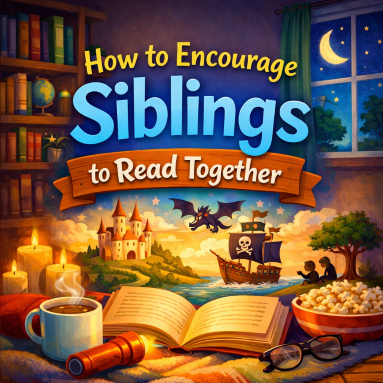
Reading doesn’t always have to be a solo activity—especially when you have more than one child at home. Encouraging siblings to read together not only fosters a love for books but also helps build stronger bonds, improve communication, and support each other’s learning journeys. When children share stories, they practice listening, taking turns, and expressing their thoughts, all while discovering new ideas side by side. Whether your kids are close in age or years apart, shared reading can be fun, educational, and even hilarious (especially with silly voices, dramatic pauses, and over-the-top sound effects involved!). It can become a special family ritual—before bedtime, on lazy weekends, or even during car rides—where everyone looks forward to diving into a story together.
Here’s how you can encourage your children to become reading buddies at home:
Create a Shared Reading Ritual
Designate a specific time every day—perhaps after school, after dinner, or before bedtime—for a “sibling story time.” Choose a time that naturally fits into your family’s rhythm so it’s easy to stick with and feels predictable for everyone. Let one child pick a book each day so they both get a turn to share their interests over the week, and talk briefly about why they chose it so the other sibling learns more about what they enjoy. Over time, this ritual can become a safe space for them to connect, laugh over silly stories, and feel proud of what they can do together.
Tip: Make this a no-screen zone so the focus stays on each other, not on devices. Add cozy cushions, a favorite blanket, or a small tent or reading nook to make it feel like a special hideaway.

Choose Books They Can Enjoy Together
Look for books that appeal to both kids’ interests and are age-appropriate. Some great options include:
-
Picture books with simple, repetitive sentences and engaging illustrations that an older child can help read aloud to the younger one, taking turns with pages or characters.
-
Chapter books with short episodes or stories that can be paused and resumed over time, so you can read a little each night and easily pick up where you left off.
-
Funny or rhyming books that invite expressive reading and giggles, encouraging siblings to join in with silly voices, sound effects, and repeated phrases so they can laugh together and anticipate the next rhyme or punchline.
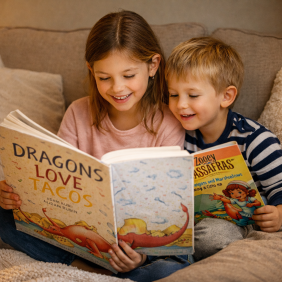
Let the Older Sibling Be the “Story Captain”
Give the older sibling a role in guiding the session—they can ask questions about the story, explain tricky words, or even act out parts of the book. You might invite them to choose a “word of the day” from the story to teach their younger sibling, come up with their own ending, or pause after each page to ask, “What do you think will happen next?” They can also help turn pages, point to pictures, or make up voices for different characters. This builds their confidence and helps the younger one feel involved.
Bonus: You’re also developing leadership and empathy in your older child, as they learn to be patient, explain things in simple terms, and notice how their younger sibling is feeling!
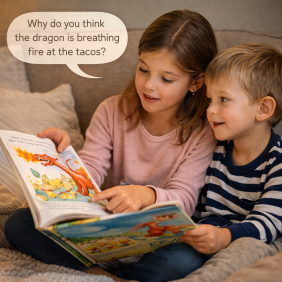
Incorporate Book-Based Games
Turn story time into fun time by turning reading into a game:
-
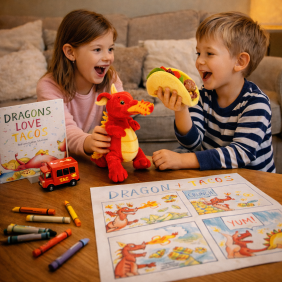
Act out scenes from the book together, taking turns as different characters, using voices, or even costumes to bring the story to life
-
Use puppets or toys to recreate the plot, having your child move the characters through the key events of the story, and even improvise new scenes or endings to deepen their understanding.
-
Draw a shared story comic strip after reading, working together to choose the important or funniest parts of the book, sketch each scene in its own panel, and add captions in your child’s words so they can retell the story in a visual, creative way.
Celebrate Their Reading Bond
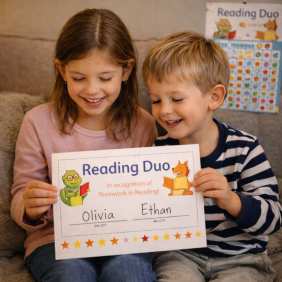
Acknowledge the effort both kids are making, and let them see that you truly notice their hard work. Praise them for listening, sharing, and helping each other read, and point out specific moments you noticed You might say things like, “I love how you waited so calmly while your brother finished his page,” etc., This tells them exactly what they’re doing well and makes them feel proud of their reading partnership. To make it feel extra meaningful and fun, you can even give them a special recognition of their efforts—like a “Reading Duo” certificate you hang on the wall, a sticker chart they fill in every time they read together, or a small celebration at the end of the week to honor their reading bond.
Final Thoughts
Siblings reading together can be a heartwarming and enriching part of your family’s daily routine. It’s a great way to cultivate reading habits while also helping kids grow closer. When brothers and sisters curl up with the same book, they’re not just passing time—they’re learning how to cooperate, respect each other’s opinions, and see the world through someone else’s eyes. Older children can practice patience and leadership as they help younger ones sound out words or explain tricky parts of the story, while younger siblings gain confidence from having a built‑in reading role model they admire. Over time, these small shared moments add up, turning reading into something your children associate with comfort, connection, and fun—not just homework or school.



Leave a Reply